Supreme Court Rules "Workers of Export Vehicle Transport Partner Not Illegal Dispatched"... Sides with Hyundai Motor Company
In a lawsuit filed by subcontractor employees responsible for the so-called 'decoration work'?transporting export vehicles from Hyundai Motor's Ulsan plant to the yard and parking them by country and model?requesting recognition of their status as Hyundai Motor workers, the final verdict was a loss.
According to the legal community on the 29th, the Supreme Court's 1st Division (Presiding Justice No Tae-ak) upheld the appellate court's ruling that dismissed the appeal in the lawsuit for confirmation of worker status filed by 27 employees of Hyundai Motor's in-house subcontractor Company A against Hyundai Motor.

The court stated the reason for dismissing the appeal was that "there was no error in the appellate court's judgment that found insufficient evidence to recognize that the plaintiffs were in a dispatched worker relationship receiving substantial orders and commands from the defendant, nor was there any misapplication of the law regarding dispatched worker relationships or violation of the rules of logic and experience that would exceed the limits of free evaluation of evidence."
The plaintiffs, who were responsible for decoration work during the export new car delivery process, filed multiple lawsuits from 2016 to 2018, claiming they should be regarded as dispatched workers of Hyundai Motor. The courts consolidated the lawsuits for joint trial.
The plaintiffs were in charge of transporting vehicles that had completed the final inspection (PDI inspection) before delivery from the front yard to the storage yard and parking them. They worked by checking vehicle information with a PDA, moving the vehicles to designated parking areas, and transmitting the vehicle locations to Hyundai Motor.
Although the subcontractors changed several times after the plaintiffs joined, each time the subcontractors succeeded the employees' employment and continued the work without changes to the plaintiffs' duties. Notably, before July 1, 2012, the plaintiffs were employees of subcontractor Company C, which had a secondary subcontract with Company B that had a contract with Hyundai Motor. After July 1, 2012, Company C signed a direct subcontract with Hyundai Motor, making the plaintiffs employees of the primary in-house subcontractor. Company A succeeded the employment of the plaintiffs and other employees from Company C and took over the work on January 1, 2015.
The plaintiffs requested confirmation of their status as Hyundai Motor employees depending on the timing of their labor contract with Company A or requested an expression of intent to employ them. Some plaintiffs also claimed the wage difference (between Hyundai Motor employees and subcontractor employees) and interest for the period after the point when direct employment by Hyundai Motor was deemed to have occurred.
Dispatched workers belong to subcontractors but work on-site under the direction of the primary contractor and can be used for up to two years. According to the Dispatch Act, if the period exceeds two years, direct employment is required, and dispatch is prohibited in direct production processes in manufacturing.
On the other hand, if a subcontract contract is signed, the workers belong to the subcontractor and work under its direction, and in this case, there is no obligation for direct employment.
The workers who filed the lawsuit argued that the decoration work was part of the production process and that Hyundai Motor directed the work through the PDA, making it an illegal dispatch.
The first-instance court accepted the plaintiffs' claims.
The court granted the plaintiffs' requests for confirmation of worker status and expression of intent to employ and also provisionally accepted claims for wages or damages.
The court ruled, "For workers employed by subcontractor Company A who worked continuously for more than two years, direct employment is deemed from the day after the two-year period from the start of dispatch work, thus they have the status of Hyundai Motor employees. Since Hyundai Motor is obligated to pay wages calculated by the same standards as its employees from the deemed employment date, it must pay the difference between the wages Hyundai Motor employees received and the wages the plaintiffs received from the subcontractor."
The court cited as grounds for this judgment that ▲the president and manager of Company A attended Hyundai Motor's export shipping department meetings held every morning to receive various instructions and cautions ▲twice a year, they received safety training together with Hyundai Motor regular employees and participated in annual spring sports events (held until 2010 but suspended in 2011 due to disputes) ▲they received bonuses and holiday allowances according to Hyundai Motor's labor-management wage negotiations and received points for Hyundai Motor affiliate shopping malls during Lunar New Year and Chuseok holidays.
The court stated, "Although the subcontractor independently hired the workers, directly managed attendance, exercised disciplinary authority, and handled wage payments and social insurance contributions, it appears that some aspects of labor management were performed on behalf of Hyundai Motor, and it is difficult to recognize that the subcontractor exercised independent command and control over the plaintiffs separately from Hyundai Motor."
However, the appellate court overturned the first-instance ruling and sided with Hyundai Motor.
The court stated, "It is difficult to recognize that the plaintiffs were substantially incorporated into the defendant's business and received significant orders and commands from the defendant, forming a dispatched worker relationship as defined by the Dispatch Act."
The court cited as reasons ▲decoration work is a post-production process clearly distinct from direct production processes ▲transporting vehicles to the storage yard was a standardized task without specific work methods or work manuals ▲using a PDA does not imply work instructions, nor is there any circumstance suggesting that an automated system replaced orders and commands ▲the subcontractor independently exercised personnel authority and attendance management.
Hot Picks Today
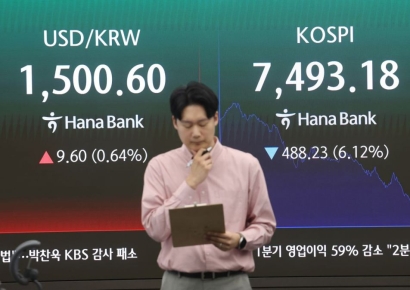 After Topping 8,000 Instead of Hitting 10,000... KOSPI Plunges—When Will It Rebound?
- "Samsung and Hynix Were Once for the Underachievers"... Hyundai Motor Employee's Lament
- [Breaking] Court Rules Against Samsung Electronics Union...1 Billion Won per Day Penalty for Exceeding Strike Scope
- Six Economic Organizations Urge Withdrawal of Samsung Electronics Strike Plan...Warn of National Loss of Opportunity
- "That? It's Already Stashed" Nightlife Scene Crosses the Line [ChwiYak Nation] ③
The Supreme Court also found no problem with this appellate court judgment.
© The Asia Business Daily(www.asiae.co.kr). All rights reserved.







