Strengthening IPEF Supply Chain External Capabilities... Choi Sang-mok: "We Will Enhance Crisis Response Abilities with the US and Japan"
Discussion on Supply Chain Restructuring Strategy at the Ministerial Meeting on External Economic Affairs

The government is preparing a response strategy for the global supply chain restructuring ahead of the implementation of the Supply Chain Stabilization Act in June. It also plans to promptly establish follow-up measures for the multilateral supply chain agreement led by the United States to enhance response capabilities, such as securing available resources within the region during supply chain crises.
On the 25th, the Ministry of Economy and Finance announced that at the 241st Ministerial Meeting on External Economic Affairs held at the Government Seoul Office, chaired by Deputy Prime Minister and Minister of Economy and Finance Choi Sang-mok, they discussed and approved the global supply chain restructuring response strategy and this year’s Indo-Pacific Economic Framework (IPEF) promotion plan.
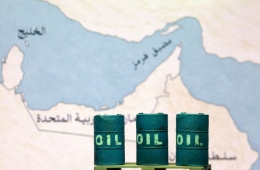
In his opening remarks at the meeting, Deputy Prime Minister Choi assessed the external economic conditions amid increasing geopolitical uncertainties such as the Middle East situation as a delicate and closely contested scenario, describing the instability of the global supply chain as a fragile situation akin to walking on thin ice.
Ahead of the Supply Chain Stabilization Act enforcement on June 27, Deputy Prime Minister Choi stated, "We will promote a global supply chain restructuring response strategy," adding, "We will enhance our negotiation capabilities to smoothly secure cooperation from counterpart countries in the event of an actual crisis, and systematically manage and utilize whole-of-government negotiation assets such as various dialogue channels and human networks by major countries."
He emphasized, "We will establish a whole-of-government platform system so that related ministries and agencies can respond in a coordinated and unified manner in case of emergencies."
Regarding the IPEF supply chain agreement that came into effect on the 17th, Deputy Prime Minister Choi said, "We will strategically utilize the supply chain agreement to swiftly secure available resources within the region during supply chain crises."
He promised, "We will improve supply chain crisis response capabilities with Indo-Pacific countries including the United States and Japan, and pursue various cooperation programs with resource-rich countries in the region, such as participating in the critical minerals dialogue, to ensure diversification of supply chains in advanced industries."
IPEF is an economic cooperation body launched through a summit in May 2022 to jointly address global challenges such as supply chains and climate change. The supply chain-related agreement, which forms one of the four pillars of IPEF along with trade, clean economy, and fair economy, came into effect in Korea on the 17th.
The IPEF supply chain agreement, involving 14 countries including Korea, promotes investment expansion, logistics improvement, joint research and development for building a stable regional supply chain, and operates a crisis response network where the 14 member countries jointly respond in case of supply chain crises.
Hot Picks Today
!["Stock Set to Double: This Company Smiles Every Time a Data Center Is Built [Click e-Stock]"](https://cwcontent.asiae.co.kr/asiaresize/93/2026050416112750184_1777878687.jpg) "Stock Set to Double: This Company Smiles Every...
"Stock Set to Double: This Company Smiles Every...
- "Continuous Groundwater Extraction Causes Mexico City of 22 Million to Sink by 2...
- “Did They Bet Too Early?” Losses Snowball for ‘Geopverse Ants’ as KOSPI Soar...
- "Going to Seongsu-dong?" Japanese Girl Group Faces Taxi Refusal in Seoul
- "Prime Minister in Underwear?"... Italy's Meloni Posts Herself to Warn of Deepfa...
Deputy Prime Minister Choi concluded by self-assessing, "Recently, the finance ministers of Korea, the United States, and Japan met and achieved progress that marks a before and after in trilateral financial cooperation," adding, "We will build a strong and dense supply chain and rise as a pivotal supply chain country."
© The Asia Business Daily(www.asiae.co.kr). All rights reserved.