Consumption Slowdown and Online Offensive Deliver Direct Blow... Chinese Department Stores Closing One After Another
Department stores in China are closing one after another. This is the result of consumers being reluctant to open their wallets due to the economic slowdown, as well as being directly hit by the rapid growth of online platforms amid changing times.
According to China’s First Financial Daily on the 26th, the Isetan department store located in Meilongjin, Minhang District, Shanghai, announced it will close on June 20. This comes after about 27 years since it opened in 1997. The department store stated, "We decided to close due to the expiration of the lease period," adding, "This decision was made last year, and we do not know how the subsequent store will be operated."

Isetan Department Store located in Meilongjin, Minhang District, Shanghai, announced its closure on the 25th of this month. The department store, which opened in 1997, is scheduled to close on June 20. (Photo by Jeil Jaegyeong Newspaper)
View original imagePrior to this, Isetan department store also announced that its Tianjin Nanjing Road branch will cease operations on the 14th of next month. With this decision, only one Japanese-affiliated Isetan department store, the Tianjin Runheng branch, will remain on the Chinese mainland.
Such fluctuations are appearing across the industry. Earlier, the Shanghai Liubai department store, which catered mainly to middle-aged and older customers, closed last month, and the landmark Taipingyang department store Shuhui branch in Shanghai, boasting a 30-year history, closed in August last year.
Industry experts and the Lianxiang Online Retail Research Center estimate that 35 department stores nationwide closed in 2022 alone, and 21 department stores ceased operations last year.
The First Financial Daily explained, "Department stores were once a popular retail format, but they have been hit by the rise of comprehensive shopping malls," adding, "Shopping malls facilitate product segmentation through brand-specific store operations and make it easier to attract investment." It further elaborated, "In recent years, the rise of experiential business formats and the internet has dealt a blow to the traditional department store model."
The sluggish recovery in consumer spending also fueled the crisis for department stores. Retail sales in January and February increased by 5.5% year-on-year, falling short of the previous month’s 7.4%. Sales growth rates by channel were 7.8% for specialty stores, 5.8% for convenience stores, 4.2% for brand stores, and 0.9% for supermarkets, but department stores were the only ones to decline, with a 3.0% decrease in performance.
Hot Picks Today
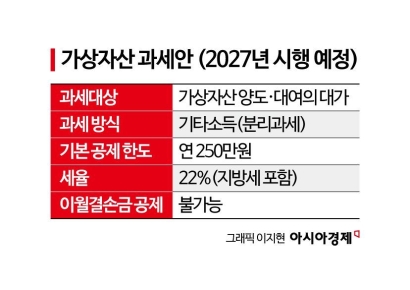 "Stocks Are Not Taxed, but Annual Crypto Gains Over 2.5 Million Won to Be Taxed Next Year... Investors Push Back"
- "Not Jealous of Winning the Lottery"... Entire Village Stunned as 200 Million Won Jackpot of Wild Ginseng Cluster Discovered at Jirisan
- "Even With a 90 Million Won Salary and Bonuses, It Doesn’t Feel Like Much"... A Latecomer Rookie Who Beat 70 to 1 Odds [Scientists Are Disappearing] ③
- General Strike D-1: Final Negotiations Between Samsung Electronics Labor and Management Over One Key Issue
- "How Did an Employee Who Loved Samsung End Up Like This?"... Past Video of Samsung Electronics Union Chairman Resurfaces
The First Financial Daily reported, "The Liubai and Taipingyang department stores in Shanghai’s Shuhui District are planned to be renovated and operated as boutique shopping malls."
© The Asia Business Daily(www.asiae.co.kr). All rights reserved.