Switzerland Lowers, Japan Raises... Diverging Interest Rate Paths Among Major Countries
As Japan, Switzerland, and others have executed pivots (shifts in monetary policy) and major countries like the United States have signaled pivots within the year, monetary policy differentiation is expected to continue globally for the time being.
![[Image source=Yonhap News]](http://www.asiae.co.kr/news/img_view.htm?img=2022061619181816430_1655374697.jpg)
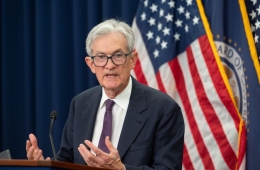
At the recent Federal Open Market Committee (FOMC) meeting, the United States revealed plans for three interest rate cuts this year through its dot plot, while the Swiss National Bank (SNB) surprised markets on the 21st (local time) by cutting its benchmark interest rate, signaling the start of rate cuts. Although the U.S. FOMC on the 20th decided to keep the benchmark rate at the current level of 5.25?5.50%, contrary to market concerns that the number of rate cuts this year would be reduced to two, it maintained the December forecast, projecting the rate at 4.6% by year-end. Following Switzerland’s sudden rate cut, the Swiss franc fell to its lowest value in the past eight months.
![[Image source=Yonhap News]](http://www.asiae.co.kr/news/img_view.htm?img=2019071007331635768_1562711597.jpg)
On the day Switzerland made its 'surprise' rate cut, Christine Lagarde, President of the European Central Bank (ECB), reaffirmed plans to cut rates in June. The annual consumer price inflation in the Eurozone dropped from a record high of 10.6% in October 2022 to 2.6% in February, but it still remains above the ECB’s target of 2%.
Unlike Switzerland, the Bank of England (BOE) kept its benchmark interest rate steady at 5.25% per annum. This marks the fifth consecutive hold since September last year, with the current rate being the highest since 2008.
The Norges Bank, Norway’s central bank, also maintained its current rate of 4.5%, the highest level since December 2008.
Meanwhile, Mexico’s central bank (Banxico) lowered its benchmark interest rate by 0.25 percentage points to 11% for the first time in three years, and Paraguay’s central bank cut its rate by 0.25 percentage points to 6% after eight consecutive rate cuts.
![[Image source=Yonhap News]](http://www.asiae.co.kr/news/img_view.htm?img=2024020609035355985_1707177833.jpg)
While most major countries’ monetary policies have focused on holding or cutting rates, some have raised them. The Bank of Japan (BOJ) raised its short-term policy rate (unsecured call rate) to 0?0.1% on the 19th, marking the first rate hike in 17 years since February 2007. This ended the negative interest rate policy that had been in place since 2016.
The Central Bank of T?rkiye also raised its benchmark interest rate by 5.0 percentage points to 50.0%, citing worsening inflation forecasts.
Hot Picks Today
With pivots being executed or anticipated among major countries, attention is also focused on the timing of the Bank of Korea’s rate cuts this year. According to the ‘February Monetary Policy Committee Minutes’ published on the Bank of Korea’s website on the 12th, two out of six committee members mentioned the timing of rate cuts, indicating that discussions on a pivot are expected. The market is predicting cuts in the second half of the year.
© The Asia Business Daily(www.asiae.co.kr). All rights reserved.