The "Modern-day Tsar" Putin, Who Won the Presidential Election by a Landslide, What's His Next Move?
With Vladimir Putin's successful bid for a fifth term as President of Russia, attention is turning to the potential impact of his future actions on the international situation. Having confirmed the justification for the war in Ukraine with a high vote share, concerns are mounting that President Putin will deepen confrontations with the West and prolong the war during his fifth term. As the close ties between North Korea and Russia intensify, there are also worries that this could become a security threat to the Korean Peninsula.
![[Image source=AFP Yonhap News]](http://www.asiae.co.kr/news/img_view.htm?img=2024031808461997723_1710719179.jpg)
President Putin was widely expected to emerge as the winner in the Russian presidential election, which concluded on the 17th (local time). With opposition figures barred from running, the election was effectively uncontested, making the key issue not whether he would be re-elected but the 'vote share.' For President Putin, who seeks to justify the invasion of Ukraine (referred to as a special military operation), this election was essentially a political event akin to a national referendum. The Wall Street Journal (WSJ) analyzed, "The vote was a formality," adding, "For President Putin, who wants to win the broad war against Ukraine and the West, it was necessary to appear as if he had achieved a major victory to maintain discretionary power."
Amid this, President Putin, who laid the foundation for long-term rule with a historic high vote share in the 80% range, judged that he had secured strong domestic support for the war's justification and is likely to expand offensives against Ukraine in the future. This means the possibility of finding a peace solution through negotiations is diminishing. Angela Stent, senior advisor at the U.S. Institute of Peace, assessed, "All signals from President Putin indicate that the war will continue," adding, "At this point, he feels that time is on his side."
Russia currently demands Ukraine's renunciation and surrender of the occupied territories as conditions for peace. CNN reported that Russia plans to produce about 3 million bombs annually, far exceeding the U.S. and Europe, and stated, "After the election, Russia will continue to apply pressure based on its growing advantage in Ukraine."
Ultimately, under President Putin's fifth term, confrontation between the West and Russia is bound to intensify further. Ahead of the election, President Putin issued so-called nuclear warnings, stating, "If our sovereignty is threatened, Russia is always ready to use nuclear weapons." It is also expected that anti-Western alliances will be strengthened in response to NATO's eastward expansion. So far, Russia has responded to Western sanctions by expanding trade with China, enhancing military cooperation with Iran, providing diplomatic support to Arab countries, and expanding membership of BRICS (Brazil, Russia, India, China, South Africa). Additionally, solidarity centered on the Collective Security Treaty Organization (CSTO), a military and security cooperation body involving former Soviet states, is also expected to be reinforced.
The close ties with North Korea raise concerns about security on the Korean Peninsula. As the war in Ukraine drags on, Russia is demonstrating an increasingly close relationship by receiving ammunition supplies from North Korea. Following a meeting with Chairman Kim Jong-un in Russia last September, a visit by President Putin to North Korea is anticipated soon. With China, President Putin has already met twice last year with President Xi Jinping, confirming their intention to strengthen strategic cooperation. The close relationship among these three countries not only deepens the new Cold War dynamics but also inevitably affects the situation on the Korean Peninsula.
The WSJ noted, "The more important election will be the U.S. presidential election this November," adding, "President Putin will wait for the election results in Europe and the U.S. amid cracks appearing in Western support for Ukraine."
Hot Picks Today
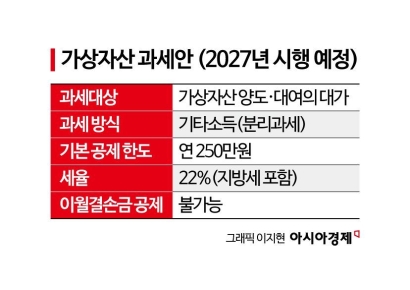 "Stocks Are Not Taxed, but Annual Crypto Gains Over 2.5 Million Won to Be Taxed Next Year... Investors Push Back"
- "Not Jealous of Winning the Lottery"... Entire Village Stunned as 200 Million Won Jackpot of Wild Ginseng Cluster Discovered at Jirisan
- "Even With a 90 Million Won Salary and Bonuses, It Doesn’t Feel Like Much"... A Latecomer Rookie Who Beat 70 to 1 Odds [Scientists Are Disappearing] ③
- "Rather Than Endure a 1.5 Million KRW Stipend, I'd Rather Earn 500 Million in the U.S." Top Talent from SNU and KAIST Are Leaving [Scientists Are Disappearing] ①
- "How Did an Employee Who Loved Samsung End Up Like This?"... Past Video of Samsung Electronics Union Chairman Resurfaces
Domestically in Russia, new laws to suppress opposition and wealth taxation are expected to be pursued. Earlier, President Putin announced plans to increase fiscal spending and rebuild infrastructure to eradicate poverty. Analysts interpret this as a strategy to appease Russian citizens who may be growing weary of the prolonged war.
© The Asia Business Daily(www.asiae.co.kr). All rights reserved.







