14-Year High in Proportion of Economists Criticizing US Fed... 24% of Experts Predict Recession This Year
NABE Survey
21% of Respondents Say "Monetary Policy Too Restrictive"
Middle East Instability and China's Economic Slowdown Also Cited as Concerns
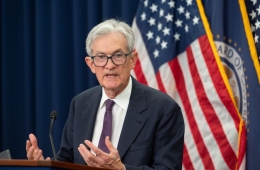
The proportion of economists criticizing the U.S. central bank, the Federal Reserve (Fed), for excessively tight monetary policy has reached its highest level in 14 years. While expectations for a soft landing of the U.S. economy are gaining momentum and the S&P 500 index has surpassed the 5000 mark for the first time, about 25% of experts still warn of a possible recession this year. With the Fed dismissing expectations of an early rate cut in March, concerns remain that a delayed pivot could lead to an economic downturn.
![[Image source=Yonhap News]](http://www.asiae.co.kr/news/img_view.htm?img=2024020508404154280_1707090041.jpg)
According to the National Association for Business Economics (NABE) on the 12th (local time), a survey conducted from the 23rd to the 30th of last month targeting economists showed that 21% of respondents evaluated the Fed's current monetary policy as 'too restrictive.'
This figure represents a 7 percentage point increase compared to 14% in the survey conducted six months ago. It is the highest level since August 2010, when 22% of economists judged the Fed's monetary policy stance to be too restrictive.
As the Fed's high interest rate stance prolongs, 24% of economists forecast that the U.S. will experience a recession this year. Although this is a significant improvement from the 58% who expected a recession in the survey conducted a year ago, a considerable number of experts still present recession as the baseline scenario. Additionally, 2% of respondents believe that a recession has already begun. Most respondents expect inflation to be around 2.5% by the end of the year, which is higher than the Fed's target of 2%.
Some experts warned that the rise in real interest rates due to slowing inflation could negatively impact the economy because of high borrowing costs. The Fed raised the benchmark interest rate from 0.25% to 5.5%, an increase of 5.25 percentage points, from March 2022 to July 2023. This is the fastest pace of hikes since the 1980s. The timing of a pivot is being pushed back. Fed Chair Jerome Powell reiterated after last month's Federal Open Market Committee (FOMC) meeting that further evidence of inflation slowing is needed, drawing a clear line against market expectations of a rate cut in March.
On the other hand, inflation is already clearly slowing. The consumer price index (CPI) for January, to be released on the 13th, is expected to show a 2.9% increase year-on-year, significantly down from 3.4% in December last year. If this meets expert expectations, it will mark the first time in two years and ten months since March 2021 that inflation falls into the 2% range. Earlier, the core personal consumption expenditures (PCE) price index for December last year also rose 2.9% compared to a year ago, dropping into the 2% range for the first time in two years and nine months since March 2021.
However, employment indicators are sending mixed signals compared to inflation, causing the market to delay expectations for a rate cut. Nonfarm payrolls for January, released by the U.S. Department of Labor, increased by 353,000 compared to the previous month, more than double the expert forecast of 185,000. According to the Chicago Mercantile Exchange (CME) FedWatch tool, the federal funds futures market now prices in over a 41% chance that the Fed will hold rates steady at the May FOMC meeting, up from about 37% a week ago.
Furthermore, economists cited external factors such as a Chinese economic downturn and Middle East conflicts, as well as the outcome of the U.S. presidential election in November, as additional sources of economic uncertainty. Ellen Zentner, NABE president and Morgan Stanley’s chief U.S. economist and managing director, stated, "Respondents identified the most plausible geopolitical risks as concerns over Middle East conflicts causing oil price increases and supply chain disruptions, the Chinese economic slowdown, and uncertainty surrounding the U.S. election."
Hot Picks Today
Regarding the U.S. government's fiscal policy, 57% of respondents evaluated it as 'too stimulative,' up from 54% in the August survey last year. Sam Carter, NABE policy survey chair and senior economist at Freddie Mac, analyzed, "Concerns are growing about the risk of imbalance between overly restrictive monetary policy and overly stimulative fiscal policy."
© The Asia Business Daily(www.asiae.co.kr). All rights reserved.