Geopolitical Risks Drive Sharp Rise in KRW-USD Exchange Rate... Highest Level of the Year (Update)
![On the morning of the 16th, a dealer is heading to their seat in the Hana Bank dealing room in Jung-gu, Seoul. [Image source=Yonhap News]](http://www.asiae.co.kr/news/img_view.htm?img=2024011610150430956_1705367704.jpg)
On the morning of the 16th, a dealer is heading to their seat in the Hana Bank dealing room in Jung-gu, Seoul. [Image source=Yonhap News]
View original imageThe won-dollar exchange rate closed sharply higher as geopolitical risks emerged in the Middle East and North Korea.
On the 16th, in the Seoul foreign exchange market, the won-dollar exchange rate closed at 1,331.8 won, up 11.6 won from the previous trading day.
The won-dollar exchange rate started at 1,321.0 won, up 0.8 won from the previous day, and widened its intraday gains. This is the highest closing level since November 14 last year (1,328.90 won).
The dollar index, which indicates the value of the dollar against six major currencies, rose to around 102.63, the highest level in about a month.
It is analyzed that geopolitical risks have driven the dollar's strength.
Following the U.S. airstrike on Yemen's Houthi rebels, the Iranian Revolutionary Guard destroyed Israeli intelligence facilities, increasing geopolitical risks in the Middle East.
Tensions on the Korean Peninsula are also rising, as North Korea accelerates the reorganization of its inter-Korean agencies.
Hot Picks Today
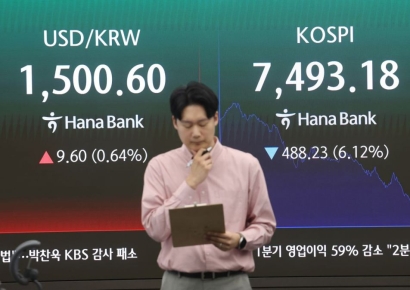 After Topping 8,000 Instead of Hitting 10,000... KOSPI Plunges—When Will It Rebound?
- "Samsung and Hynix Were Once for the Underachievers"... Hyundai Motor Employee's Lament
- [Breaking] Court Rules Against Samsung Electronics Union...1 Billion Won per Day Penalty for Exceeding Strike Scope
- Six Economic Organizations Urge Withdrawal of Samsung Electronics Strike Plan...Warn of National Loss of Opportunity
- "That? It's Already Stashed" Nightlife Scene Crosses the Line [ChwiYak Nation] ③
Foreign investors' cooling sentiment toward domestic investments also appears to have influenced the dollar's strength. On this day, foreign investors showed net sales worth 183.4 billion won in the KOSPI market.
© The Asia Business Daily(www.asiae.co.kr). All rights reserved.







