Spouse's Contribution to Property Acquired Solely in One's Name During Marriage: "De Facto Marital Property Upon Divorce"
Presiding Court Panel, Ongoing Appeal Hearing for Chey Tae-won and Noh So-young
It was determined that if one spouse contributed to the maintenance of stocks or other assets acquired solely in the name of the other spouse during the marriage, it is reasonable to include such assets in the division of property. The court handling this case is currently hearing the appeal trial of the divorce lawsuit between SK Group Chairman Chey Tae-won and No So-young, director of the Art Center Nabi Museum.

The Family Division 2 of the Seoul High Court (Presiding Judge Kim Si-cheol, High Court Judges Kang Sang-wook and Lee Dong-hyun) on November 2 overturned the first-instance ruling that granted the divorce and set the property division ratio at 40% for husband A and 60% for wife B, changing the ratio to 30% for A and 70% for B in the appeal trial filed by husband A against wife B. Neither party appealed this ruling, so it became final as is.
According to the judgment, A and B married in April 1991 and began their newlywed life in an apartment in Seoul, which was prepared with a jeonse deposit supported by B’s parents. During the marriage, A worked as a doctor, while B took care of the household and was fully responsible for raising their children. In 1995, they purchased another apartment in Seoul under A’s name, and at that time, B’s parents were living in the same apartment complex.
A operated a hospital in Yongin, Gyeonggi Province from around 1998 to 2003, then left for the United States with B in January 2004 to study. Later, in August 2009, he opened and operated a spine neurology hospital in Los Angeles, which he transferred to an acquaintance before returning to Korea with his family in June 2019. Afterward, during preparations to open a hospital in Seoul, frequent disputes with B occurred, leading to their separation starting the following year.
The first trial granted the divorce and set the property division ratio at 40% for A and 60% for B. However, both parties appealed, claiming their respective property division ratios were too low.
The appellate court considered △ that during the marriage, A was economically active as a doctor while B mainly took care of household duties and child-rearing △ that B’s parents provided the jeonse deposit for the Seoul apartment at the time of marriage and that the deposit was used again when they moved to another apartment △ that a significant portion of B’s C Mulsan stocks were acquired as gifts from B’s father and uncle.
In particular, the court ruled that even if the C Mulsan stocks gifted to B by her father and uncle from 1998 to 2021 are B’s separate property, it is reasonable to include them in the property division because A contributed directly or indirectly to maintaining the value and preventing the depreciation of those stocks during their marriage through his economic activities. This follows the Supreme Court’s decision that even if an asset is one spouse’s separate property, if the other spouse actively cooperated in maintaining it and preventing its decrease, it can be subject to property division.
The court stated, “Considering that A was economically active as a doctor for most of the marriage and that B managed a significant portion of his income, it is equitable to recognize the dividends B received from C Mulsan during the marriage as marital property. Since the number of C Mulsan stocks held by B increased based on dividends payable from C Mulsan, it is reasonable to view this as an increase in stocks through marital property.”
It continued, “At the time of marriage, A’s family appeared to be in a less favorable economic situation compared to B’s family, which was judged to be much better off. Considering A’s income, the children’s ages, living expenses, and child-rearing costs when the ownership transfer registration of the other apartment in Seoul was completed, as well as the fact that B’s parents lived in a different building of the same apartment complex, it is reasonable to conclude that the apartment was prepared with support from B’s parents.”
Furthermore, the court ruled, “Taking into account that the money from selling the apartment prepared with B’s parents’ support was also used to purchase a house in the United States, the property division ratio is set accordingly.”
Hot Picks Today
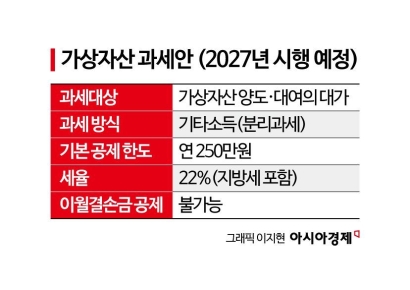 "Stocks Are Not Taxed, but Annual Crypto Gains Over 2.5 Million Won to Be Taxed Next Year... Investors Push Back"
- "Not Jealous of Winning the Lottery"... Entire Village Stunned as 200 Million Won Jackpot of Wild Ginseng Cluster Discovered at Jirisan
- "Even With a 90 Million Won Salary and Bonuses, It Doesn’t Feel Like Much"... A Latecomer Rookie Who Beat 70 to 1 Odds [Scientists Are Disappearing] ③
- "Rather Than Endure a 1.5 Million KRW Stipend, I'd Rather Earn 500 Million in the U.S." Top Talent from SNU and KAIST Are Leaving [Scientists Are Disappearing] ①
- "How Did an Employee Who Loved Samsung End Up Like This?"... Past Video of Samsung Electronics Union Chairman Resurfaces
Han Su-hyun, Legal Times Reporter
※This article is based on content supplied by Law Times.
© The Asia Business Daily(www.asiae.co.kr). All rights reserved.