"South Korea Doesn't Have Much Time"... CNN Says "South Korea's Military Enemy Is Low Birthrate"
"Severe Current Low Birthrate Makes Military Downsizing Inevitable"
Alternatives Introduced Including Reserve Forces Utilization and Female Conscription System
An analysis has emerged suggesting that South Korea's world-low birth rate could hinder its military. Foreign media predict that in 20 years, it will be impossible to recruit the necessary troops.
On the 30th (local time), the U.S. CNN broadcast reported in an article titled "South Korea's New Enemy: Demographic Projections" that "South Korea's total fertility rate of only 0.78 could become the military's greatest adversary."
![[Image source=Yonhap News]](http://www.asiae.co.kr/news/img_view.htm?img=2023123108441614365_1703979856.jpg)
Earlier, the U.S. New York Times (NYT) highlighted South Korea's low birth rate issue in a column titled "Is South Korea Disappearing?" on the 2nd, describing South Korea as a prominent case study of population decline problems faced by developed countries. The column introduced recent third-quarter birth rate statistics from South Korea and explained that "this population decline surpasses the demographic impact of the 14th-century Black Death in Europe."
According to the manpower supply forecast analyzed by the Korea Institute for Defense Analyses (KIDA), which reflects resident registration population and survival rates, the standing military force of the Republic of Korea Armed Forces?including the Army, Navy, Air Force, and Marine Corps?is currently around 500,000 personnel. To maintain this, 200,000 people must enlist annually, but the number of births in 2022 did not reach 250,000. Assuming a balanced sex ratio, the number of males eligible for enlistment in 20 years is calculated to be only 125,000.
According to Statistics Korea, the annual number of births is expected to decrease further to 220,000 in 2025 and 160,000 in 2072. At this rate, the military force will fall below 400,000 to approximately 393,000 by 2039 and drop to around 360,000 by 2040. CNN quoted Professor Choi Byung-wook of the Department of National Security at Sangmyung University, stating, "With the current birth rate, a reduction in military personnel is inevitable."
![[Image source=Yonhap News]](http://www.asiae.co.kr/news/img_view.htm?img=2023123108444014366_1703979880.jpg)
It continued, "South Korea decided to reduce the number of active-duty soldiers from 674,000 in 2006 to 500,000 by 2020 and actually achieved this goal," but pointed out that "this was based on the incorrect assumption that the threat from North Korea would gradually decrease." North Korea launched its fifth intercontinental ballistic missile (ICBM) this year, and Chairman Kim Jong-un threatened, "If the enemy provokes with nuclear weapons, we will not hesitate to launch a nuclear strike."
CNN cited a recent announcement from Statistics Korea predicting that South Korea's record low fertility rate will worsen, with the total fertility rate per woman dropping to 0.65 by 2025, and forecasted that "South Korea may not have much time left."
It then introduced the use of reservists as a proposed solution to the manpower shortage issue within South Korea. Improving the mobilization system for the 3.1 million reservists could partially alleviate the manpower shortage. Currently, a pilot program is in operation where some reservists undergo training for 180 days per year to enhance technical proficiency.
![[Image source=Yonhap News]](http://www.asiae.co.kr/news/img_view.htm?img=2023123108445814367_1703979898.png)
The female conscription system is also mentioned as one alternative. Considering the patriarchal society still prevalent in South Korea and the complex factors such as social costs and female childbirth, there is opposition arguing that the necessary costs may outweigh the benefits. However, there are observations that if the salary conditions are attractive, it could be effective.
Hot Picks Today
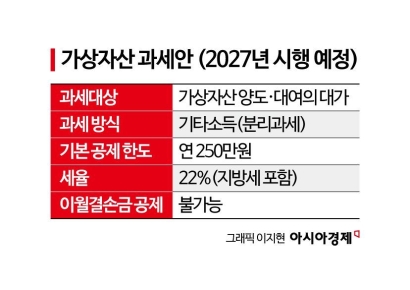 "Stocks Are Not Taxed, but Annual Crypto Gains Over 2.5 Million Won to Be Taxed Next Year... Investors Push Back"
- "Not Jealous of Winning the Lottery"... Entire Village Stunned as 200 Million Won Jackpot of Wild Ginseng Cluster Discovered at Jirisan
- "Even With a 90 Million Won Salary and Bonuses, It Doesn’t Feel Like Much"... A Latecomer Rookie Who Beat 70 to 1 Odds [Scientists Are Disappearing] ③
- "Rather Than Endure a 1.5 Million KRW Stipend, I'd Rather Earn 500 Million in the U.S." Top Talent from SNU and KAIST Are Leaving [Scientists Are Disappearing] ①
- "How Did an Employee Who Loved Samsung End Up Like This?"... Past Video of Samsung Electronics Union Chairman Resurfaces
Increasing the number of professional non-commissioned officers and other specialized personnel is also under consideration, but due to a lack of economic and social benefits, the application rate for military officers is actually declining. According to the Ministry of National Defense, the number of applicants for non-commissioned officer positions decreased from about 30,000 in 2018 to 19,000 in 2022.
© The Asia Business Daily(www.asiae.co.kr). All rights reserved.







