Shin Won-sik: "North Korea's Yongbyon Light Water Reactor to Operate Normally by Next Summer"
"No Country Has Produced Nuclear Weapons by Producing Plutonium with a Pressurized Water Reactor"
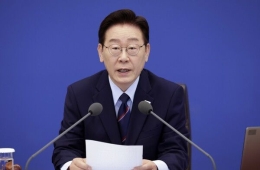
Defense Minister Shin Won-sik stated on the 28th that the experimental light water reactor (ELWR) within North Korea's Yongbyon nuclear complex, which has raised concerns over plutonium production for nuclear weapons, is expected to be "fully operational by next summer."
![[Image source=Yonhap News]](http://www.asiae.co.kr/news/img_view.htm?img=2023110609181341522_1699229893.jpg)
At a briefing with reporters from the Ministry of National Defense on the same day, Minister Shin said in response to related questions, "We learned about the test operation of the (North Korean Yongbyon) light water reactor this summer through the identification of cooling water."
North Korea has been constructing an experimental light water reactor at Yongbyon since 2010, but it failed to complete it by the original target date of 2012 and has only now begun operating it. The Yongbyon light water reactor is reportedly a reverse-engineered version of the 1000 MW-class Korean-type light water reactor that the Korean Peninsula Energy Development Organization (KEDO) planned to build in North Korea under the 1994 Geneva Agreed Framework, with a power generation capacity of about 25 to 30 MW.
Regarding the operational stage of the Yongbyon light water reactor, Minister Shin said, "They have loaded a very small amount of nuclear material and conducted a test operation of the reactor," adding, "It is a stage of test operation to supplement equipment and facilities." He noted that it took 11 months from test operation to full operation for Korean-type light water reactors such as Shin-Kori, and since North Korea's Yongbyon reactor began test operation this summer, he expects it to be fully operational next year.
On concerns about North Korea increasing nuclear weapon material production due to the operation of the Yongbyon light water reactor, Minister Shin responded, "No country has produced plutonium for nuclear weapons through a light water reactor," calling such concerns excessive. He explained that while the 5 MW graphite-moderated reactor currently operated at Yongbyon can produce plutonium usable as nuclear weapon fuel, the light water reactor is not suitable for producing plutonium for nuclear weapons.
Regarding North Korea's reason for operating the light water reactor, Minister Shin said, "North Korea claims it is to supply electricity to Yongbyon, and I do not think that is an unreasonable statement," adding, "A 25 to 30 MW reactor roughly matches the electricity demand of the Yongbyon area, so it is difficult to conclude that North Korea is lying."
He also stated that if North Korea uses the light water reactor for military purposes, it could be testing small reactors used in nuclear-powered submarines, and that tritium produced during the reactor's operation is used as material for hydrogen bombs. While such cases have never been seen worldwide, he said they will closely monitor whether North Korea is pioneering a new path to produce plutonium for nuclear weapons using a light water reactor.
Minister Shin also revealed that in response to China's unauthorized entry into South Korea's Air Defense Identification Zone (KADIZ), the South Korean Air Force has been entering the Chinese Air Defense Identification Zone (CADIZ) after prior notification. He explained that this year, Chinese military aircraft have entered South Korea's ADIZ without authorization 133 times, about twice the average from 2019 to last year, and that for several months, whenever Chinese military aircraft enter South Korea's ADIZ, South Korean military aircraft enter the Chinese ADIZ at the same distance.
Hot Picks Today
 "Stocks Are Not Taxed, but Annual Crypto Gains Over 2.5 Million Won to Be Taxed Next Year... Investors Push Back"
- "Don't Throw Away Coffee Grounds" Transformed into 'High-Grade Fuel' in Just 90 Seconds [Reading Science]
- Signed Without Viewing for 1.6 Billion Won... Jamsil and Seongbuk Jeonse Prices Jump 200 Million Won in a Month [Real Estate AtoZ]
- [Breaking] Lee Targets Samsung Electronics Union: "Collective Bargaining Should Not Be Abused... There Is an Appropriate Limit"
- "Even With a 90 Million Won Salary and Bonuses, It Doesn’t Feel Like Much"... A Latecomer Rookie Who Beat 70 to 1 Odds [Scientists Are Disappearing] ③
Minister Shin said, "China enters without notifying us, but we notify them according to international norms and enter the Chinese Air Defense Identification Zone."
© The Asia Business Daily(www.asiae.co.kr). All rights reserved.