[Good Deal Bad Deal] New Financial Power Private Equity... Why Is MBK Acting Like That?
Influence of PE Revealed in Acquisition Battle Between Osstem and Korea & Company
Promoting Responsible Investment to Overcome Negative "Muktwi" Image
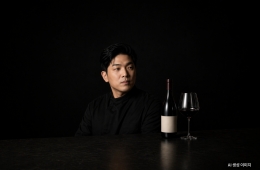
Who is the richest person in Korea? It is not Lee Jae-yong, the chairman of Samsung Electronics. The American economic media Forbes named Kim Byung-ju, chairman of MBK Partners, as Korea's top asset holder. Private equity funds, once regarded as 'eat-and-run,' 'corporate raiders,' and 'hyenas of the capital market,' have now seen their chairman surpass chaebol heads to become Korea's wealthiest individual. It's not just about asset size. MBK Partners attempted to acquire the national platform Kakao Mobility and wielded the scalpel of governance reform against problematic companies like Osstem Implant and Korea & Company. Who are these new financial powers shaking up Korea's business world?
![[Good Deal Bad Deal] New Financial Power Private Equity... Why Is MBK Acting Like That?](http://www.asiae.co.kr/news/img_view.htm?img=2024010214070315863_1704172023.png)
Shaking Korea's Business World... Calculated Failures in M&A Where Money Alone Isn't Enough
As the domestic investment banking (IB) market expands, deals led by private equity funds are increasingly impacting the national economy and society. The social power of private equity funds and their role as key players in industry and capital markets are becoming clearer. Recently, MBK Partners carried out three 'problematic deals' that stirred Korea's business circles.
As a native private equity fund entrusted with managing funds from the National Pension Service, this fund attempted but failed to acquire Kakao Mobility two years ago. MBK was salivating over Kakao Mobility, a national platform with limitless growth potential as a future-oriented platform involving autonomous driving, urban air mobility (UAM), drone delivery, and robot delivery. However, the acquisition fell through amid negative perceptions of private equity funds and strong social backlash. Despite having money and a future blueprint, the public did not trust the sincerity of the private equity fund. An era has arrived where 'big deals' are impossible without social consensus, even if money is available. (#1 Kakao Mobility Acquisition Failure)
Subsequently, MBK turned its attention to Osstem Implant, where an embezzlement incident involving about 200 billion won occurred. From the fund's perspective, the shaky governance was an opportunity, and the global expansion potential of the dental industry was the future. The shareholder activism firm KCGI ignited demands for governance reform at Osstem Implant. UCK Partners, skilled at persuading mid-sized company owners, convinced Chairman Choi Kyu-ok to sell his shares. Then, MBK, with its financial power, conducted a public tender offer for the circulating shares and even delisted the company. This is a successful M&A case combining the massive capital of a private equity fund and the rationale of governance reform. (#2 Osstem Implant Acquisition Success)
MBK proceeded with a public tender offer to acquire management rights held by the second son of Korea & Company Group, partnering with the eldest son. Despite judicial risks and the fact that the largest shareholder's stake exceeded 40%, making success difficult, MBK pushed forward with the tender offer. From start to finish, MBK's stated rationale was 'governance reform.' Although the management rights acquisition failed, MBK adopted a new image as a fund attempting ESG (environmental, social, governance) responsible investment. It was a calculated failure. (#3 Korea & Company Acquisition Failure)
![[Good Deal Bad Deal] New Financial Power Private Equity... Why Is MBK Acting Like That?](http://www.asiae.co.kr/news/img_view.htm?img=2023122908570013286_1703807821.jpg)
Who Owns PE... Global Pension Funds 'Eagle Investment' Avoid Funding
To understand the background of MBK's unusual recent M&A attempts, one must look at who truly owns the fund. MBK manages assets worth $26 billion (about 33.5 trillion won). The owners of this money are domestic and international institutional investors. It receives capital from over 150 pension funds worldwide, including the National Pension Service. As a management company entrusted with growing the money of large domestic and foreign pension funds, most of MBK's investment capital comes from institutional investors. Personal friendships or calculations hardly influence investment decisions. Every move of the fund originates from investments that satisfy institutional investors' preferences.
An IB industry insider said, "Recently, Goldman Sachs officially declared that it will not engage in vulture investing?extracting money like an eagle?when raising investor funds, making responsible investment a global standard," adding, "Large pension funds emphasize ESG investment performance and tend to avoid funding investments that are opaque or socially criticized, demanding thorough due diligence."
A senior official from a domestic pension fund said, "In actual investment execution, responsible investment must be considered." Recently, global institutional investors have officially joined the United Nations Principles for Responsible Investment (UN PRI) and are strengthening responsible investment. Currently, over 5,000 institutions have joined UN PRI, with total assets under management of about $121 trillion (17,400 trillion won). Large domestic institutions like the National Pension Service and Korea Investment Corporation (KIC) have also joined UN PRI. Private equity funds that do not comply with responsible investment principles are excluded from the list of entrusted managers and increasingly shunned by large investors like the National Pension Service.
Funds' M&A attempts under the pretext of governance reform also outwardly claim responsible investment but are, in reality, calculated moves for fundraising and profit pursuit. The recent public tender offer by MBK can be interpreted as an attempt to build a track record that meets the investment standards required by pension funds, i.e., responsible investment principles. An industry insider explained, "MBK's recent attempt may seem reckless at first glance, but investors nowadays prefer to actively intervene and voice opposition if management is incompetent or morally flawed," adding, "Even if it fails, it is calculated to meet social demands and receive applause."
Professor Kwon Jae-yeol of Kyung Hee University Law School said, "Funds must continuously show differentiated appearances to build their careers and approach smartly with reasonable demands rather than reckless ones as in the past," interpreting, "They care about public opinion and try not to give a negative image like 'eat-and-run' to attract investors."
Responsible Investment Applauded Even in Failure... In Korea's Undervalued Market, Returns Matter
Interpretations differ between the business community and capital markets regarding MBK's large-scale M&A attempts under the pretext of governance reform, reminiscent of shareholder activism.
The business community views it as a 'bad deal' threatening management rights. Private equity funds have maintained friendly relations with large corporations, sometimes taking over business units that need to be divested for future strategies or jointly acquiring assets that are difficult to sell due to high valuations.
From the business community's perspective, M&A attempts under the guise of governance reform resemble corporate raiders more than corporate saviors. They see it as an attempt to seize management rights by exploiting owner risks and internal corporate conflicts.
Repeated threats to management rights could shrink not only the targeted companies but the entire industry, which is interpreted as the 'dysfunction' of private equity funds.
On the other hand, the capital market, concerned about the 'Korea discount' where stock prices are undervalued relative to actual corporate value, interprets these moves as 'good deals.' It is seen as a wake-up call for undervalued domestic corporate groups due to major shareholder risks and opaque governance.
With large funds possessing financial power joining governance reform demands previously pursued only by some activist funds, pressure to improve undervaluation of Korean companies is expected to intensify.
A senior IB industry official said, "The fundamental reason good Korean companies are undervalued lies in governance," adding, "Situations where major shareholders deliberately suppress stock prices to pay less tax or operate companies like one-person firms with minority shares are serious problems hindering capital market development." He evaluated, "MBK's recent moves have shown that private equity funds can conduct hostile M&A at any time, making companies more alert."
Related Articles
 MBK Partners Acquires Japanese Healthcare Company for 820 Billion KRW
- MBK "Korea & Company Tender Offer Falls Short of Target... Will Monitor Corporate Governance Improvement" (Comprehensive)
- MBK's 'Financial Power - Justification - Legal Risk - Casting Vote' Cards Simultaneously... Final All-Out Attack
- MBK Partners Increases Tender Offer Price by Korea & Company to "24,000 KRW per Share"
Professor Lee Jun-seo of Dongguk University's Department of Business Administration said, "Private equity funds do not shout empty governance reform slogans to fulfill social responsibility but engage in activist actions because securing and normalizing corporate shares helps generate profits when reselling," adding, "Given Korea's characteristics, attacks on companies with weak governance by funds will increase, potentially enhancing corporate value."
© The Asia Business Daily(www.asiae.co.kr). All rights reserved.