Supreme Court Confirms Partial Victory for 'Victims and Bereaved Families' Against Japanese Forced Mobilization Companies
The Supreme Court has finally recognized the liability of Japanese companies in the 'second damage compensation lawsuit' filed by victims and bereaved families of forced labor during the Japanese colonial period against Japanese companies.

On the 28th, the Supreme Court's 3rd Division (Presiding Justice Ahn Cheol-sang) upheld the appellate court ruling partially in favor of the plaintiffs, ordering Mitsubishi Heavy Industries to pay 90 million KRW each to the victims in the damage compensation lawsuit filed by forced labor victims and their families.
The court stated, "Until the 2018 plenary session ruling was announced, there was an objective obstacle preventing forced labor victims or their heirs from effectively exercising their rights against the defendant (Japanese companies)," and added, "The claim for consolation money by forced labor victims against Japanese companies cannot be considered subject to the 'Korea-Japan Claims Agreement.'
Furthermore, the court explained, "Since the former Mitsubishi Heavy Industries and the defendant Mitsubishi Heavy Industries maintain substantial identity, the appellate court's judgment that the plaintiffs can exercise their damage compensation claims against the former Mitsubishi Heavy Industries also against the defendant is not erroneous in terms of the criteria for determining the identity of foreign corporations and does not violate public order and morals in applying foreign law, and thus does not affect the judgment," dismissing the appeal.
On the same day, the Supreme Court's 3rd Division (Presiding Justice Oh Seok-jun) also upheld the appellate court ruling partially in favor of the plaintiff, ordering Hitachi Zosen to pay 50 million KRW to another forced labor victim in the damage compensation lawsuit appeal.
The court stated, "There is no error in the appellate court's judgment that the claim for consolation money by forced labor victims against Japanese companies cannot be considered subject to the Claims Agreement, and no legal error regarding the scope and effect of the Claims Agreement that would affect the judgment."
The lawsuit against Mitsubishi Heavy Industries was filed in July 2013 by 14 forced labor victims, including the late Hong Mo, who worked at the Mitsubishi military factory in Hiroshima from 1944 to 1945, and their families.
The first and second trials ruled partially in favor of the plaintiffs, ordering compensation of 90 million KRW each, but Mitsubishi appealed.
The lawsuit against Hitachi Zosen was filed by Lee Mo in November 2014. Lee was forcibly mobilized to work at the Hitachi shipyard in Osaka, Japan, in September 1944.
The first and second trials ordered Hitachi Zosen to pay 50 million KRW to Lee, but Hitachi Zosen also appealed.
The Supreme Court had already confirmed rulings recognizing the liability of Japanese companies in past forced labor lawsuits with similar legal issues to this case.
In October 2018, the Supreme Court plenary session ruled, "Even though some compensation and reparation were made between the two countries under the 1965 Korea-Japan Claims Agreement, individual damage compensation claims and the responsibility of Japanese companies do not disappear," siding with the victims.
The victims who received the confirmed favorable ruling proceeded with the forced disposition of Japanese companies' domestic assets after refusal to pay compensation, but the Japanese side delayed the process through appeals and re-appeals, leaving the case pending at the Supreme Court.
This year, as the government sought to improve relations with Japan, it proposed a 'third-party payment plan' where the Korean government and companies would pay the judgment amount on behalf of Japan, but some victims, including grandmother Yang Geum-deok, have refused to accept the compensation.
Hot Picks Today
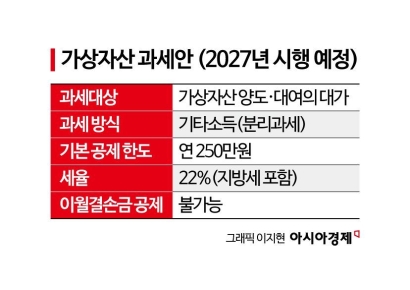 "Stocks Are Not Taxed, but Annual Crypto Gains Over 2.5 Million Won to Be Taxed Next Year... Investors Push Back"
- "Not Jealous of Winning the Lottery"... Entire Village Stunned as 200 Million Won Jackpot of Wild Ginseng Cluster Discovered at Jirisan
- "Rather Than Endure a 1.5 Million KRW Stipend, I'd Rather Earn 500 Million in the U.S." Top Talent from SNU and KAIST Are Leaving [Scientists Are Disappearing] ①
- "How Did an Employee Who Loved Samsung End Up Like This?"... Past Video of Samsung Electronics Union Chairman Resurfaces
- "Even With a 90 Million Won Salary and Bonuses, It Doesn’t Feel Like Much"... A Latecomer Rookie Who Beat 70 to 1 Odds [Scientists Are Disappearing] ③
This lawsuit is called the 'second lawsuit' because it was filed by other victims who gained courage after the Supreme Court first recognized the right to claim compensation in the 2012 damage compensation lawsuit against Nippon Steel.
© The Asia Business Daily(www.asiae.co.kr). All rights reserved.







