Ministry of Land, Infrastructure and Transport: "Establishing a Quality Spatial Environment through the Advancement of the Architectural Services Industry"
'The 2nd Basic Plan for Promoting the Architectural Service Industry'
Includes 3 Major Strategies and 7 Key Tasks such as Structural Rationalization
The Ministry of Land, Infrastructure and Transport announced on the 28th that it will establish and announce the "2nd Basic Plan for the Promotion of the Architectural Service Industry (2024~2028)" on the 29th, which sets the policy goals and directions for the architectural service industry for the next five years.

Ministry of Land, Infrastructure and Transport / Photo by Hyunmin Kim kimhyun81@
View original imageThis basic plan envisions "building a refined spatial environment through the advancement of the architectural service industry." Since April this year, it has undergone a task force (TF) advisory meeting composed of industry, academia, and research experts, expert surveys, consultations with related ministries, and deliberations and resolutions by the National Architectural Policy Committee. The Ministry of Land, Infrastructure and Transport stated that the plan was established considering social and economic structures, market changes, and digital transformation.
The Ministry included three major promotion strategies and seven key tasks. First, it proposed rationalizing the structure of the architectural service industry and establishing a fair trade support system for this purpose, improving related administrative procedures and systems, and setting standards to protect creativity in architectural services. It also aims to establish planning for small-scale public buildings, enhance the design competition system and the operation of public architectural review committees, and ensure the safety and quality of buildings.
Advancing the architectural service industry market is also one of the promotion strategies. Detailed tasks to achieve this include planning the development of smart architectural service technologies, building industrial cooperation networks, and fostering and spreading Building Information Modeling (BIM) experts in the architectural field. Additionally, to nurture and innovate small and medium-sized enterprises, the plan includes establishing startup support programs for the industry, supporting overseas market entry, and building promotion facilities.
Furthermore, to expand the information utilization base of the architectural service industry, governance will be established, and a mid- to long-term informatization strategy will be formulated to strengthen the system. Tasks include collecting architectural service industry information based on artificial intelligence (AI), conducting demand surveys, devising information disclosure strategies tailored to different users, and sharing industrial information in the private sector.
The Ministry expects that through this basic plan, the ranking of sales per business entity in the Organization for Economic Cooperation and Development (OECD) will rise from 10th place in 2022 to 8th place in 2027, and the proportion of businesses utilizing smart technologies will increase from 3.4% to 20% during the same period. Public satisfaction with construction quality and safety is also expected to rise from 55.3% this year to 80% in five years.
Hot Picks Today
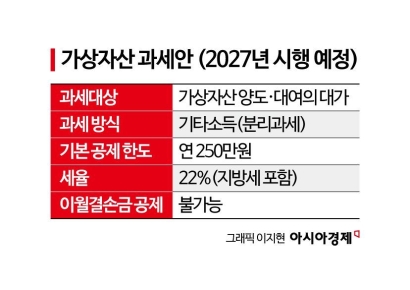 "Stocks Are Not Taxed, but Annual Crypto Gains Over 2.5 Million Won to Be Taxed Next Year... Investors Push Back"
- "Not Jealous of Winning the Lottery"... Entire Village Stunned as 200 Million Won Jackpot of Wild Ginseng Cluster Discovered at Jirisan
- "Rather Than Endure a 1.5 Million KRW Stipend, I'd Rather Earn 500 Million in the U.S." Top Talent from SNU and KAIST Are Leaving [Scientists Are Disappearing] ①
- "How Did an Employee Who Loved Samsung End Up Like This?"... Past Video of Samsung Electronics Union Chairman Resurfaces
- "Even With a 90 Million Won Salary and Bonuses, It Doesn’t Feel Like Much"... A Latecomer Rookie Who Beat 70 to 1 Odds [Scientists Are Disappearing] ③
Lee Woo-je, Director of Architectural Policy at the Ministry of Land, Infrastructure and Transport, said, "The architectural service industry is a representative high value-added industry based on knowledge, with unlimited growth potential through integration with new technologies of the 4th Industrial Revolution." "Based on this basic plan, we will advance the architectural service industry to enhance the quality of spatial environments and improve the quality of life for the public."
© The Asia Business Daily(www.asiae.co.kr). All rights reserved.