[Why&Next] Expanding Influence of CNY Amid High Interest Rates and War... Dollar Overtaking Is 'A Distant Story'
China Expands Influence as ASEAN Production Base
Israel's Use of Yuan Rises Amid Russia War
However, Challenging Dollar's Status Is Difficult... Value Instability
Growth Rate Also Slows... "Yuan as Key Currency Is a Distant Prospect"
![[Why&Next] Expanding Influence of CNY Amid High Interest Rates and War... Dollar Overtaking Is 'A Distant Story'](http://www.asiae.co.kr/news/img_view.htm?img=2023121209045185227_1702339491.png)
There is an analysis that the global influence of the Chinese yuan is strengthening by taking advantage of the tightening monetary policies of major countries such as the United States and the geopolitical risks in Russia and the Middle East. As China, which is competing for hegemony with the United States, significantly increases the use of the yuan in ASEAN and the Middle East, it is pointed out that the solid status of the dollar is gradually being shaken.
However, many also believe that it is still premature to mention the yuan surpassing the dollar in reality. While the yuan usage in trade settlements may continue to increase as China is a global economic power, considering China's slowing growth rate and the instability of the yuan's value, it is not yet at a level comparable to the dollar.
![[Image source=Yonhap News]](http://www.asiae.co.kr/news/img_view.htm?img=2022031111005474942_1646964054.jpg)
Chinese Economy Sluggish... Yuan is Stretching Out
According to experts in the Chinese foreign exchange market on the 12th, despite the recent sluggish Chinese economy, the use of the yuan is showing a significant increase. The issuance of 'Panda Bonds' and 'Dim Sum Bonds,' which are yuan-denominated bonds issued by foreign companies and governments in mainland China and Hong Kong, surged by 45.8% and 179.3% respectively from January to September this year compared to the same period last year, marking an all-time high.
This is interpreted as an increase in demand for the relatively cheap yuan as major countries such as the United States and Europe maintain high interest rates to combat inflation. Unlike the US and others, China is suppressing interest rates at a low level due to its weak economy. Many foreigners judged that borrowing money in China, where funding costs are low, is better, which naturally helps the internationalization of the yuan.
At the '9th Anniversary Conference of the Seoul Won-Yuan Direct Trading Market' held yesterday by the International Finance Center and the Bank of Communications of China, it was analyzed that the use of the yuan is also increasing in South Korea. According to the Bank of Korea and the International Finance Center, the average daily volume of Seoul Won-Yuan direct trading from January to November this year was $3.3 billion, significantly exceeding the past average of $2.16 billion.
In the first half of this year, the amount of yuan settlement in South Korea's trade with China was $12.67 billion, a 9.4% increase compared to the same period last year. Despite a 16% decrease in exports to China due to the economic slowdown in China this year, the increase in yuan settlements means that the use of the yuan is rapidly growing.
In particular, in September, the Society for Worldwide Interbank Financial Telecommunication (SWIFT) announced data showing that the yuan's share in global trade finance rose to 5.8%, up 1.6 percentage points in one year, surpassing the euro (5.4%) to become the world's second largest currency, which caused a shock. Professor Koo Ki-bo of Soongsil University's Department of Global Trade said, "The gap with the euro was actually very large, but it reversed this year," adding, "The growth speed is definitely fast."
![Chinese President Xi Jinping arrived at San Francisco International Airport in California, USA, on the 14th of last month (local time). [Image source=Yonhap News]](http://www.asiae.co.kr/news/img_view.htm?img=2023121114231884333_1702272199.jpg)
Chinese President Xi Jinping arrived at San Francisco International Airport in California, USA, on the 14th of last month (local time). [Image source=Yonhap News]
View original imageExpanding Yuan Influence Using Middle East and ASEAN as a Foothold?
Experts predict that the internationalization of the yuan could continue to advance rapidly. China's extensive trade relations with almost all emerging countries and many developed countries are cited as its greatest strength. In particular, Chinese banks are known to have significant lending influence in emerging countries.
China's use of ASEAN (Association of Southeast Asian Nations) countries as production bases to strengthen its economic bloc also acts as a factor increasing yuan usage. In the past, South Korea exported raw materials or semi-finished products to China, which then processed and exported them overseas (processing trade), but now China is implanting this structure in ASEAN.
According to foreign media, in Vietnam, China's direct investment doubled from January to November this year compared to the previous year, making China the largest economic partner, surpassing South Korea. Analysts suggest that as China builds supply chains in ASEAN and later expands them to Latin America, the number of countries using the yuan will also increase significantly.
Above all, experts explain that China's penetration into the Middle East and pursuit of the 'Petro Yuan' is significant. In the 1970s, the United States militarily supported Saudi Arabia in exchange for a promise to settle crude oil only in dollars, establishing the 'Petrodollar' system. China is interpreted as trying to raise the status of the yuan through a similar method.
Recently, the Israel-Hamas war and the Russia-Ukraine war have become a golden opportunity for China. Due to these events, key oil-exporting countries such as Saudi Arabia and Russia, whose relations with the US have become more awkward, may support China and the yuan. In fact, Russia recently began settling its crude oil exports and imports in yuan, and Saudi Arabia signed its first currency swap worth $7 billion with China last month.
![[Why&Next] Expanding Influence of CNY Amid High Interest Rates and War... Dollar Overtaking Is 'A Distant Story'](http://www.asiae.co.kr/news/img_view.htm?img=2023080416160430542_1691133364.png)
Still Difficult to Shake the Overwhelming 'Dollar Status'
Of course, despite the yuan's expanding global influence, the dominant opinion is that it is still not enough to shake the dollar's status. This is because the dollar holds an overwhelming share in global trade, finance, and foreign exchange markets.
Although the yuan's share in global trade finance has approached 6% this year, surpassing the euro, it is still difficult to compare with the US (81.08%).
The instability of the yuan's value is also a problem. Recently, the yuan's value against the dollar has fluctuated sharply according to the US Federal Reserve's monetary policy. Chinese state-owned banks have actively defended the yuan's value by buying heavily when the yuan plunged.
As a result, the proportion of yuan settlements in domestic exports to China is still not very high. According to a survey conducted by Jaehjin Han, a research fellow at Hyundai Research Institute, targeting Korean export companies from June to July this year (sample size 995), 64.4% of companies answered that the yuan's share in trade with China was 0-5%, the highest proportion.
Researcher Han explained, "Since the trade conditions with China have been very poor recently, companies seem to consider the dollar more than the yuan for currency hedging (risk diversification). Also, the Won-Yuan direct trading market is not yet mature, and there are many inconveniences such as fees from the perspective of small and medium-sized enterprises."
![[Why&Next] Expanding Influence of CNY Amid High Interest Rates and War... Dollar Overtaking Is 'A Distant Story'](http://www.asiae.co.kr/news/img_view.htm?img=2017101611163936708_2.jpg)
Yuan Usage Will Increase... But Reserve Currency Status is a Distant Story
The fact that China's economy has ended its rapid growth phase and started to slow down is also an obstacle to the internationalization of the yuan.
China's economic growth rate reached 9.6% in 2011 but fell to 3% last year. According to the International Monetary Fund (IMF) forecast, it is expected to recover to the 5% range this year and then fall back to the 4% range next year. If this trend continues, it will be virtually impossible for China to obtain the status of a reserve currency country.
Related Articles
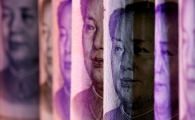 China's Yuan Payment Rate Rises to 3.6%... Cracks in Dollar Hegemony
Lee Chi-hoon, head of the Emerging Economies Department at the International Finance Center, said about the possibility of the yuan becoming a reserve currency, "I think China and the US will take a complex form under a multipolar economic order with two poles. In that process, the use of the yuan will increase in the long term, but (becoming a reserve currency) is a matter that will take at least 20 years, and it is difficult to specify the timing."
© The Asia Business Daily(www.asiae.co.kr). All rights reserved.







