Hundreds of Patients Flock to Chinese Hospitals... Is the Fearsome 'Jenkangma' Making a Comeback? [Beijing Diary]
Has Jenkangma Been Revived?
"Jenkangma (Health Code) Has Been Revived"
A few days ago, chilling news began to surface in several WeChat groups. It was that Jenkangma, which had become a symbol of China’s ‘Zero COVID’ prevention measures, had been revived. This comes almost exactly one year after the complete abolition of the related system following the full implementation of the ‘With COVID’ policy at the end of last year.
![[Image source=Yonhap News]](http://www.asiae.co.kr/news/img_view.htm?img=2022112411435828670_1669257838.jpg)
Jenkangma was a kind of ‘health ID’ that people had to carry during China’s Zero COVID period to maintain normal daily life. It was a smartphone application containing information such as PCR test results, vaccination status, and places visited. Without Jenkangma, access to public places, public transportation, and restaurants was restricted. It was also the main culprit behind the harsh lockdown society that gripped China for about three years.
The recent rumors originated from a report by the US-based Radio Free Asia (RFA), which stated that the governments of Sichuan and Guangdong provinces had revived Jenkangma starting from the 1st of this month. The report said that the authorities reinstated the health code due to the spread of respiratory illnesses such as influenza and pneumonia. However, the original article from the Chinese local media (Zhengdan News), which RFA initially cited as evidence, has since been deleted online.
Adding fuel to the ‘Jenkangma revival’ speculation, He Xiaopeng, founder of the Chinese electric vehicle company Xiaopeng, posted on his Weibo on the 1st, complaining that upon returning to China via Shanghai, he was immediately required to take a nucleic acid test at Pudong Airport. He wrote, “I asked why testing was still required after the ‘With COVID’ policy was implemented, but they said it was a random test.” The fear that PCR testing, which people endured daily through harsh cold and heat for three years, might become a routine term again spread rapidly. However, He Xiaopeng’s post is no longer available. So far, no credible evidence or phenomena have been presented to support the revival of Jenkangma.
Moreover, it has been confirmed recently that in some regions, the Jenkangma app is still accessible and the system is operational, fueling the rumors. It is also known that most personal data of China’s 1.4 billion population entered into Jenkangma over the past three years has not been destroyed. Only a few cities, such as Wuxi and Nantong, have announced that they have deleted COVID-19-related personal data.
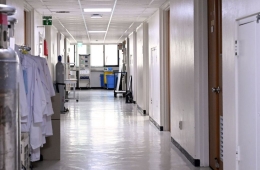
It is true that the spread of pneumonia in China has been alarming recently. On weekdays, hundreds of fever patients wait at major hospitals in Beijing, often unable to receive timely treatment. The National Health Commission has acknowledged an increase in respiratory disease incidence but has not disclosed specific patient numbers. On some Chinese social networking services (SNS), images of crowded hospitals, with patients including children receiving IV drips in hallways while waiting, have been shared, heightening public anxiety.
Hot Picks Today
!["Rather Than Endure a 1.5 Million KRW Stipend, I'd Rather Earn 500 Million in the U.S." Top Talent from SNU and KAIST Are Leaving [Scientists Are Disappearing] ①](https://cwcontent.asiae.co.kr/asiaresize/93/2026051414165763158_1778735817.jpg) "Rather Than Endure a 1.5 Million KRW Stipend, I'd Rather Earn 500 Million in the U.S." Top Talent from SNU and KAIST Are Leaving [Scientists Are Disappearing] ①
"Rather Than Endure a 1.5 Million KRW Stipend, I'd Rather Earn 500 Million in the U.S." Top Talent from SNU and KAIST Are Leaving [Scientists Are Disappearing] ①
- [Breaking] Chung Yongjin Apologizes for Starbucks 'Tank Day' Controversy: "I Take Full Responsibility"
- "If That's the Case, Why Not Just Buy Stocks?" ETFs in Name Only, Now 'Semiconductor-Heavy' and a Playground for Short-Term Traders
- "Most Americans Didn't Want This"... Americans Lose 60 Trillion Won to Soaring Fuel Costs
- "No Cure Available, Spread Accelerates... Already 105 Dead, American Infected"
However, given the current level of influenza and pneumonia spread, it is safe to say that China cannot revive the Jenkangma system. This is especially true given China’s current situation, where it is suspected to be a cause of global economic stagnation rather than a savior. What we should fear is not baseless rumors but the attitude of being prematurely frightened by even foreseeable risks. The Chinese government should also disclose more accurate and objective data and response policies regarding health issues.
© The Asia Business Daily(www.asiae.co.kr). All rights reserved.