[Book Sip] People with Disabilities, Women, Migrant Workers... 'Studying to Respond to the Pain of Others'
This is the research record of an author who has devoted themselves to studying the adverse effects of discrimination on the health of minorities. It contains insights gained from "reading, meeting, and interacting" with people with disabilities, sexual minorities, female workers, and others. The book introduces a variety of academic materials, from 19th-century papers that stigmatized minorities under the guise of science to domestic research on the health of sexual minorities. According to a 1993 paper published by Dr. Knox Todd's emergency medicine research team, white patients in hospitals were prescribed painkillers at more than twice the rate of Hispanic patients. The author points to this as 'unequal treatment' and 'implicit bias.' The author also candidly admits their own mistakes. They confess that they belatedly realized that the phrase "transgender research" printed on gift cards given as thanks for participating in transgender research could have led to outing. The book also introduces conversations with various individuals. It includes dialogues with Prosecutor Seo Ji-hyun, who triggered the #MeToo movement in 2018; director Kim Il-lan of the film "Joint Criminal," which captures the individual suffering of victims of the Yongsan tragedy; and David Williams, Patrick Corrigan, Lee Badgett, and others who have experienced racial discrimination, mental illness stigma, and sexual minority hatred. The author explains that ‘studying to respond to others' pain’ means confronting the ever-present discrimination with accurate data, sharing the pain of those affected, and understanding the complex context of the issues.
![[Book Sip] People with Disabilities, Women, Migrant Workers... 'Studying to Respond to the Pain of Others'](http://www.asiae.co.kr/news/img_view.htm?img=2023112907084369553_1701209323.jpg)
Especially, those hurt by an absurd society often suffer silently without even a scream. For invisible wounds not to be trapped within the bodies of those affected but to become stories that can be shared, someone must respond to that pain. - From "Introduction"
In a society where it is normal for people with physical disabilities to go to work in the morning and return home in the evening, there is no reason they cannot go to polling stations, theaters, and hospitals. - From "Studying to Respond to Others' Pain 1"
Those opposing Mr. A's admission excluded the possibility that they themselves might be perpetrators to someone. For that reason, because they could not imagine it, they tried to erase the existence of transgender woman Mr. A from the world. - From "Are You ‘Normal’? Then You Are Privileged"
Our brain's neural network takes less than 0.1 seconds to combine visible information such as skin color or gender and classify a person into a certain category and judge accordingly. - From "The Illusion of Never Discriminating"
I wanted to tell him: It is because people like you, who make unscientific claims not recognized by any expert society worldwide, go around claiming to be ‘experts’ that sexual minorities live in a world where they contemplate death. What needs to change is not the sexual orientation of homosexuals but people like you who shamelessly violate the minimum ethics that experts should uphold. - From "Studying to Respond to Others' Pain 2"
Just as no one's human rights can be postponed, the rights of women, transgender people, people with disabilities, and many other minorities to use restrooms cannot be postponed either. - From "The Struggle for ‘Pee Rights’ Is Not Over Yet"
In a situation where lives that could have survived if a society had observed ‘minimum courtesy to humans’ continue to die unjustly, we, the ‘surviving witnesses,’ must keep asking questions. Where is the ‘slow death’ in today's Korean society? Who is the ‘ivory-less elephant’ surviving in Korean society? Who are the poachers benefiting from this absurd survival competition? - From "Who Is the ‘Ivory-less Elephant’ in Korean Society?"
The lives of sexual minorities who are denied by their families are driven to the edge of a cliff. The reason sexual minorities cannot reveal their sexual orientation and gender identity even to their parents, who live closest to them and sometimes are the ones they most want to be recognized by, is the fear of rejection and abandonment. - From "Studying to Respond to Others' Pain 3"
If it were possible to prevent all illegal drug use, and thus also prevent HIV infections transmitted through needles, that would be ideal. However, in a situation where such ideal policies cannot be realized, the New York City Department of Health found a feasible and practical way. (...) Such efforts have resulted in saving countless lives. - From "Perceptions of AIDS Stuck in the 1980s"
Kim Dohyun: I often say that people with disabilities "do not become disabled because they are discriminated against, but become disabled because they are discriminated against." If we could reach a society where the classification and category of ‘people with disabilities’ are unnecessary, it would probably be a very long journey, but that society would be fundamentally more advanced than now. - From "Change Begins with Cracks and Confusion"
Lee Badgett: We need to go beyond calling anti-homosexual people bad and analyze the forces operating behind them. Because now is a ‘political moment.’ - From "To Move Politics That Remains Silent on Discrimination"
Seo Ji-hyun: So, when I gave several media interviews this time, I said, "Please take pictures of me like Wonder Woman." Reporters ask a lot, saying, "I heard your health is not good; what hurts and how?" But I don't want to talk about that. I don't want to leave an image that looks weak or sad and evokes sympathy. - From "No One Can Change My Essence"
I want to have more conversations with a human who lived through errors and contradictions in their time rather than a stuffed hero who ‘overcame disability.’ - From "The Light and Shadow of Helen Keller"
No matter how much anger and sadness I have inside, when a scholar writes, they have to digest and organize the content. I wanted to present the best weapon I could as a scholar to the world. - From "This Is My Fight"
Hot Picks Today
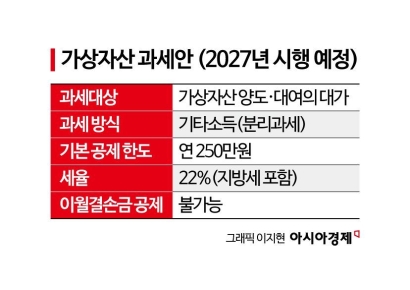 "Stocks Are Not Taxed, but Annual Crypto Gains Over 2.5 Million Won to Be Taxed Next Year... Investors Push Back"
- "Not Jealous of Winning the Lottery"... Entire Village Stunned as 200 Million Won Jackpot of Wild Ginseng Cluster Discovered at Jirisan
- "Rather Than Endure a 1.5 Million KRW Stipend, I'd Rather Earn 500 Million in the U.S." Top Talent from SNU and KAIST Are Leaving [Scientists Are Disappearing] ①
- "How Did an Employee Who Loved Samsung End Up Like This?"... Past Video of Samsung Electronics Union Chairman Resurfaces
- "Even With a 90 Million Won Salary and Bonuses, It Doesn’t Feel Like Much"... A Latecomer Rookie Who Beat 70 to 1 Odds [Scientists Are Disappearing] ③
Studying to Respond to Others' Pain | Written by Kim Seungseop | Dongasia | 320 pages | 22,000 KRW
© The Asia Business Daily(www.asiae.co.kr). All rights reserved.