"South Korea Must Grow 3.5% Annually to Reach G7 Economic Power by 2030"
Report on the Possibility and Challenges of Achieving G7 Economic Power by Hankook Economic Daily
There has been a claim that institutional support capable of dramatically expanding growth potential is necessary to develop South Korea's economic scale to the level of the G7 (the Group of Seven major countries: the United States, Japan, Germany, the United Kingdom, France, Canada, and Italy).

On the 29th, the Korea Economic Association estimated the economic power requirements of current G7 countries in its report titled "Possibility and Challenges of Achieving G7 Economic Power for the Korean Economy" as ▲ per capita Gross Domestic Product (GDP) of over $30,000 ▲ and a global GDP share of over 2%. As of 2022, South Korea's per capita GDP was $32,418, meeting the first G7 economic power requirement of 'per capita GDP of $30,000.' However, South Korea's global GDP share in 2022 was 1.67%, ranking 9th among free democratic, high-income (per capita GDP over $30,000) countries, following the G7 and Australia (1.70%).
The Korea Economic Association estimated that to achieve G7 economic power by 2030, South Korea must raise its global GDP share from the expected 1.45% in 2030 to 1.63%. Among the G7 countries, Italy has the lowest global GDP share (projected at 1.63% in 2030), so South Korea must at least reach Italy's level to meet the G7 economic power criteria. To increase its global GDP share to 1.63% by 2030, South Korea needs an average annual real GDP growth of 3.5% (nominal basis 5.4%) starting this year.
The Korea Economic Association stated that since a 3.5% real economic growth rate exceeds South Korea's potential growth rate (2.1% as of 2023), expanding growth potential through revolutionary improvements in labor and capital input and total factor productivity is required.

Primarily in the labor sector, it advised improving working conditions to encourage economic participation, such as flexibilization of work types and expansion of selective and flexible working hours systems. It also raised the need to lower the single income tax rate applied to foreigners (from 19% to 10%) to strengthen incentives and to ease permanent residency criteria to lower immigration barriers. It recommended the prompt enactment of the Basic Act on Service Industry Development to establish a systematic foundation for fostering the service sector, along with expanding research and development (R&D) support and nurturing specialized personnel.
In the capital sector, it emphasized the need to expand capital input through revitalizing domestic investment and actively attracting foreign direct investment (FDI). To strengthen support for new growth engines, it suggested switching the national designation system for new growth and core technologies (262 technologies in 13 fields) eligible for tax support to a negative list system (principle of allowance, exceptions excluded) and expanding tax credit rates to encourage active corporate investment. Additionally, it advised improving labor-management laws and systems to meet global standards and establishing a cooperative labor-management culture to enhance domestic investment attractiveness.
Finally, in the total factor productivity sector, it stated that an environment encouraging corporate management innovation and technological advancement should be created through deregulation, expansion of social capital, and increased R&D tax support. Excessive discriminatory regulations against large corporations hinder their growth motivation, so it is necessary to fundamentally review size-based discriminatory regulations, minimize regulations that impede market functions, and legislate fiscal rules to establish a predictable policy environment. It also raised the need to expand R&D tax support for large corporations to the level of major overseas countries to enhance private innovation capabilities.
Related Articles
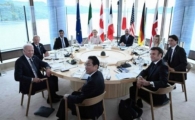 Korea Widens Income Gap with Italy, the 'Lowest in G7'
Choo Kwang-ho, head of the Economic and Industrial Headquarters at the Korea Economic Association, explained, “If we strengthen the growth momentum of the Korean economy through enhancing labor market competitiveness, expanding capital, and improving total factor productivity, South Korea can stand shoulder to shoulder with the G7 in terms of economic power and leap forward as a global leading country.”
© The Asia Business Daily(www.asiae.co.kr). All rights reserved.







