Start of Institutionalization of 'Non-Face-to-Face Medical Care'... Priority Given to Overseas Koreans
Emergency Economic Ministers' Meeting and Export Investment Measures Meeting
Plan to Expand Non-Face-to-Face Medical Service Recipients Within This Year
Breaking Distance Regulations, Hydrogen Also Included in Emergency Power

The government has decided to prioritize allowing non-face-to-face medical consultations for overseas Koreans, such as international students and travelers abroad. In the future, plans to overhaul the entire domestic Medical Service Act will also be pursued. However, due to significant differences in opinions between the medical community and industry, the realization of these plans remains uncertain. Additionally, the expedited approval system for advanced regenerative bio-pharmaceuticals will be applied when safety or efficacy is improved compared to existing treatments.
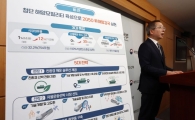
On the 27th, the government held an emergency economic ministers' meeting combined with an export and investment strategy meeting and announced the "Regulatory Innovation Plan for New Industry Sectors," which includes these measures. The plan aims to eliminate 20 regulations across four national future growth sectors. The tasks were identified through meetings with economic organizations such as the Korea Federation of SMEs and the Korea Chamber of Commerce and Industry, as well as on-site visits.

Deputy Prime Minister and Minister of Economy and Finance Choo Kyung-ho is delivering opening remarks at the Emergency Economic Ministers' Meeting and Export Investment Measures Meeting held at the Government Seoul Office in Jongno-gu, Seoul on the 27th. Photo by Jo Yong-jun jun21@
View original imageIn the bio and healthcare sector, legalization of non-face-to-face medical consultations is being promoted. Currently, the Medical Service Act prohibits non-face-to-face consultations between doctors and patients. The government plans to allow such consultations exclusively for overseas Koreans. Since non-face-to-face consultations have already been temporarily implemented under a regulatory sandbox for overseas Koreans, safety has been deemed verified. Once regulations are lifted, international students or nationals traveling abroad will be able to receive medical consultations from Korean hospitals remotely as needed.
Furthermore, an improvement plan to expand the scope of non-face-to-face consultations will be introduced within this year. Non-face-to-face consultations began temporarily due to COVID-19 and have been operated as a pilot project since June. In principle, only follow-up patients at clinics are eligible, and initial consultations are allowed only for certain groups such as residents of islands or remote areas and persons with disabilities. The supplementary plan is expected to include improvements allowing the majority of the public to receive non-face-to-face consultations starting from initial visits.
The problem lies in opposition from the medical community. While the industry hopes for regulatory innovation, the medical community expresses concerns about safety. The Korean Society of Internal Medicine recently issued a statement warning, "The government's unilateral expansion of the non-face-to-face consultation pilot project will rather put public health at greater risk." The Doctors for the Future group also strongly criticized, saying, "They are ignorantly advocating worsening a pilot project that should be terminated, putting people’s lives and safety in jeopardy."
The government maintains that this will improve public access to medical care and promote health. A Ministry of Economy and Finance official said, "It is often difficult to visit hospitals at night, on holidays, or for dual-income couples," adding, "If people use a non-face-to-face platform involving doctors instead of searching symptoms on the internet when feeling ill, it would be much more convenient." He further explained, "Currently, the system mainly covers follow-up patients, and we are in the process of improving it while gathering opinions from various sectors."
Breaking Solar Power Setback Distance Regulations and Including Hydrogen Fuel Cells in Emergency Power
At the same time, the expedited approval system for advanced regenerative bio-pharmaceuticals will be revised. Previously, the system could only be used when no domestically approved drugs existed, but now it will also be allowed when safety and efficacy are improved compared to existing treatments. Regulations on Living Modified Organisms (LMOs) will also be dismantled. The goal is to reduce companies’ facility costs by allowing joint installation and use of laboratories.
In the carbon-free energy sector, repowering of aging eco-friendly facilities will be promoted. Repowering refers to replacing old equipment parts to increase capacity and efficiency. Although repowering significantly increases energy generation, it is difficult in Korea. In the past, solar and wind power facilities were freely built, but later setback distance regulations became an obstacle. The government plans to ease these setback distance regulations through consultations with local governments.
Additionally, hydrogen fuel cells will be included as emergency power sources. Buildings above a certain size are required to have emergency generators for elevators and fire-fighting equipment, but hydrogen was excluded from the recognized sources. As a result, emergency power has mainly been supplied by diesel engines, which emit large amounts of air pollutants. The government expects that once hydrogen fuel cells begin to be used as emergency power, it will have a significant impact on the development of related industries.
Tax support is being considered for low-carbon aviation fuels for which companies are preparing initial investment plans. This would involve designating them as "new growth source technologies" under the Restriction of Special Taxation Act. For the carbon capture industry, which has ambiguous industry classification, a special classification will be created to help companies quickly settle in industrial complex factories.
Related Articles
 Korea to Achieve 70 Trillion Won in Advanced Marine Mobility by 2027... Leading New Maritime Power
- Promotion of Accounting Indicator Development for Sangjo Industry... Initiating Advancement of K Funeral Services
- Strengthening Overseas Expansion of 'K-Sanhujori'... Improving Domestic Workforce Standards
- Statistics Korea Develops CCUS 'Industrial Special Classification' to Support New Industry Growth
Furthermore, in future mobility and robotics sectors, the maximum flight altitude of high-altitude drone flight test sites will be increased, and in the content sector, pre-screening of cinema advertisements will be relaxed.
© The Asia Business Daily(www.asiae.co.kr). All rights reserved.







