Novel 'Hwanggeumjong-i' Jo Jeong-rae: "I Had to Write About Human Greed Clinging to Money"
"Over 90% of human affairs are caused by money. I wrote a novel about how money confines and controls humans, and why humans cannot help but cling to money."
![Author Jo Jung-rae is taking a commemorative photo at the publication press conference held on the morning of the 20th at the Press Center in Jung-gu, Seoul. <br>[Photo by Haenaem Publishing]](http://www.asiae.co.kr/news/img_view.htm?img=2023112015055959249_1700460359.jpg)
Author Jo Jung-rae is taking a commemorative photo at the publication press conference held on the morning of the 20th at the Press Center in Jung-gu, Seoul.
[Photo by Haenaem Publishing]
Author Jo Jeong-rae has released his new full-length novel "Hwanggeumjongi" (Golden Paper) after four years. The manuscript, consisting of 1,800 pages, is divided into two volumes. It sounds an alarm about a world becoming dehumanized by golden omnipotence. The protagonist, Lee Tae-ha, was an elite prosecutor but was ousted after opposing conglomerate corruption and now works as a human rights lawyer, a principled figure. The novel centers on him and deals with various money-related incidents, conveying reflections on how humans can live proudly without becoming slaves to money.
At the publication press conference held on the 20th at the Press Center in Jung-gu, Seoul, Jo explained that his literary world has entered the third stage, the final phase of his life. "I divide my work into three stages: the first stage before, the second stage including 'Taebaeksanmaek,' 'Hangang,' and 'Arirang,' and the third stage after. In the first and second stages, I explored the nation's history and contradictions in reality, but in the third stage, I explore human nature and desires."
The protagonist, who comes from an activist background, and his episodes evoke a sense of d?j? vu. Although it seems to deal with real-life events of actual people, Jo said, "It is no exaggeration to say that a novel is a battle of character creation. While one might guess the character resembles someone commonly seen in activist circles, there is no specific model."
Regarding setting an activist figure as the protagonist, he said, "The democratization of today owes much to the contributions of those from activist backgrounds. Although many problems arose due to distortion, I wanted to at least preserve that spirit. When I wrote 'Taebaeksanmaek,' I had political expectations for them, but eventually, they became distorted and faded away. Having an 'unchanging heart' is very important," he explained.
For Jo, who holds the belief that "literature must contribute to human beings for a humane life," this work was a challenge. Changing people's thoughts through a novel was difficult because the concepts in people's perceptions were too deeply ingrained. "I was afraid that even if I wrote about something that religion (the Buddhist teaching emphasizing non-possession) failed at, it might have no effect, but I wrote it because I had to. That is the writer's calling," he said.
Hot Picks Today
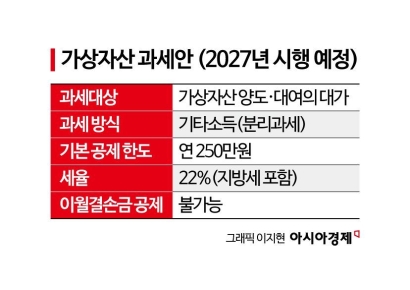 "Stocks Are Not Taxed, but Annual Crypto Gains Over 2.5 Million Won to Be Taxed Next Year... Investors Push Back"
- "Not Jealous of Winning the Lottery"... Entire Village Stunned as 200 Million Won Jackpot of Wild Ginseng Cluster Discovered at Jirisan
- "Even With a 90 Million Won Salary and Bonuses, It Doesn’t Feel Like Much"... A Latecomer Rookie Who Beat 70 to 1 Odds [Scientists Are Disappearing] ③
- "Rather Than Endure a 1.5 Million KRW Stipend, I'd Rather Earn 500 Million in the U.S." Top Talent from SNU and KAIST Are Leaving [Scientists Are Disappearing] ①
- "How Did an Employee Who Loved Samsung End Up Like This?"... Past Video of Samsung Electronics Union Chairman Resurfaces
Jo still writes with a pencil. Although he cannot write for long due to discomfort in one eye and ear, he wrote every day for at least three hours at a time. Jo said, "I have two wishes in life: to hold a diamond wedding anniversary with my wife on our 60th wedding anniversary, and to have a retirement ceremony on the 60th anniversary of my literary debut. For my final work, I plan to conclude my literary life with themes about the soul, the afterlife, and a Buddhist worldview," he shared.
© The Asia Business Daily(www.asiae.co.kr). All rights reserved.







