Government to Invest 710 Billion Won by 2028 to Achieve Super-Gap in Shipbuilding Industry (Comprehensive)
The government will concentrate an investment of 710 billion KRW by 2028 to secure a super-gap in the recently booming shipbuilding industry. It plans to commercialize technologies for core decarbonization raw materials and smarten shipyard manufacturing systems by utilizing digital and robotic technologies. Additionally, by 2030, it aims to expand the supply ratio of eco-friendly ship fuels to 30% and increase the port storage capacity for eco-friendly ship fuels to 1 million tons.

On the 15th, at the Emergency Economic Ministers' Meeting and Export Investment Measures Meeting, the government announced the ‘K-Shipbuilding Next-Generation Leading Strategy’ and the ‘Eco-Friendly Ship Fuel Supply Chain Establishment Plan’ containing these details.
◆ 360 billion KRW investment in eco-friendly and autonomous navigation = The Ministry of Trade, Industry and Energy will invest 200 billion KRW over the next five years to commercialize technologies for the three major decarbonization fuels: LNG, ammonia, and hydrogen, to maintain leadership in the shipbuilding industry. For LNG vessels, it will advance core technologies such as methane slip reduction devices and support securing track records. For ammonia vessels, it will develop fuel supply system technologies and establish testing and evaluation facilities. For hydrogen vessels, it aims to secure fundamental cargo hold technologies by 2030 and challenge the world’s first commercialization of medium-sized vessels.
For autonomous ships, 160 billion KRW will be invested by 2025. This includes supporting intelligent system performance testing and development, maritime demonstration projects utilizing regulatory sandboxes, and participation in technology standard discussions. Furthermore, it plans to nurture more than 3,000 talents annually, including 2,000 production technology personnel and 1,000 in design and other fields.
By 2027, 150 billion KRW will be invested to support digital transformation (DX) and robot deployment in shipyards. A Small and Medium-sized Shipyard Production Technology Innovation Center will also be established in Geoje, Gyeongnam Province. By 2028, 200 billion KRW will be invested in future ship equipment technology development to develop electric propulsion, carbon reduction equipment, and small modular nuclear reactors.
To secure foreign manpower, the government is considering expanding a program where foreigners enter Korea as trainees under a ‘training-type visa,’ complete on-the-job training, and upon passing, convert to an E-7 visa.

◆ 1 trillion KRW eco-friendly ship fuel fund established = The Ministry of Oceans and Fisheries will designate Ulsan Port as a hub port for eco-friendly fuel supply to respond to domestic and international shipping companies’ demand. By 2027, it plans to proactively supply at least 600,000 tons of liquefied natural gas (LNG) (25% of demand) and 230,000 tons of green methanol (full demand), utilizing the Korea Gas Corporation’s Tongyeong base as a backup supply base. By 2030, it aims to convert a total of 317 national foreign vessels and government vessels to eco-friendly ships and expand green shipping routes from Korea-US to Korea-Australia and Korea-European Union (EU).
Supply chains for each eco-friendly ship fuel will also be established. For LNG, to secure competitive supply pricing, a natural gas tariff system for ships will be introduced, and direct import will be promoted. Considering that there are no dedicated fuel supply vessels for green methanol and that shipbuilding takes considerable time, related regulations will be revised to allow coastal liquid cargo vessels to concurrently supply fuel. Plans will also be made to secure fuel by utilizing chemical infrastructure tanks at existing ports. For ammonia and hydrogen, existing port infrastructure will be used, and depending on future demand, production and storage facilities within ports will be prioritized for site allocation from the port development stage.
A plan is also being devised to establish a ‘Eco-Friendly Ship Fuel Infrastructure Fund’ (tentative name) worth 1 trillion KRW to respond to visible investment demand. When new eco-friendly fuel supply vessels are built, government subsidies covering 10-30% of the ship price will be promoted, and private investment in eco-friendly ship fuel infrastructure will be induced through investment and payment guarantees via the Korea Ocean Business Corporation.
Cho Seung-hwan, Minister of Oceans and Fisheries, said, "We will enhance the competitiveness of our shipping industry and ports through proactive public-led establishment of eco-friendly ship fuel supply chains and comprehensive support."
Related Articles
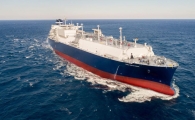 710 Billion Won Focused Investment by 2028 in 'K-Joseon Super Gap'

© The Asia Business Daily(www.asiae.co.kr). All rights reserved.




![[Breaking] Samsung Electronics Labor and Management Officially Sign Tentative Agreement](https://cwcontent.asiae.co.kr/asiaresize/307/2026052022492353201A.jpg)


