Song Featuring Indian Prime Minister Selected as Grammy Award Nominee
Global Music Performance Category Nominee
Promotional Song for Mixed Grain 'Gijang' Featured in Prime Minister's Speech
A song featuring Indian Prime Minister Narendra Modi has been nominated for the 66th Grammy Awards, the most prestigious award in American popular music.
On the 10th (local time), the Recording Academy, which hosts the Grammys, announced that "Abundance in Millets" was nominated in the Global Music Performance category.
![Prime Minister Narendra Modi speaking about Gijang. <br>[Photo by Abundance in Millets Music Video]](http://www.asiae.co.kr/news/img_view.htm?img=2023111216383049437_1699774709.jpg)
Prime Minister Narendra Modi speaking about Gijang.
[Photo by Abundance in Millets Music Video]
The song, created by Palguni Sha (stage name Palu) and her husband, singer Gaurav Sha, is about the abundance and wonder of millet, a type of small grain similar to sorghum or foxtail millet. The song's theme imagines what would happen if millet could end world hunger.
In the middle of the song, there is a voice recording of Prime Minister Modi delivering a speech commemorating the United Nations' designation of this year as the "International Year of Millets," and the official music video also features footage of Modi's speech.
Palu, who created the song, is an Indian-American who won the Best Children's Music Album award at the 64th Grammy Awards last year with an album titled "Colorful World."
She revealed on her social media (SNS) that when she met Prime Minister Modi in New Delhi last year, he suggested writing a song with a message to end world hunger, which inspired her to create the song.
On her official website, Palu described the song as "a song made to celebrate the International Year of Millets" and explained that it was created "to raise awareness about this super grain with the potential to minimize global hunger."
Prime Minister Modi also called the song "a very creative piece" and said it would "inspire more people to embrace millet for a healthy life."
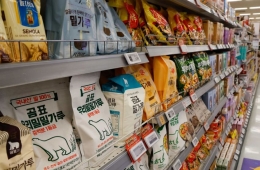
Since coming to power in 2014, the Modi administration has been working to promote the production and consumption of millet. Millet has served as a staple food in many regions of India for thousands of years, but it was marginalized after agricultural modernization in the 1960s increased the production of rice and wheat.
Compared to wheat, millet has a growing period about half as long, and it requires only 30% of the water needed for rice, allowing it to be cultivated even in arid lands. Food experts expect millet to play an important role in addressing climate change and food security issues.
India is the world's largest producer and the second-largest exporter of millet. India’s proposal was also behind the United Nations' decision to designate this year as the "International Year of Millets."
Hot Picks Today
 "Stocks Are Not Taxed, but Annual Crypto Gains Over 2.5 Million Won to Be Taxed Next Year... Investors Push Back"
- "Don't Throw Away Coffee Grounds" Transformed into 'High-Grade Fuel' in Just 90 Seconds [Reading Science]
- Signed Without Viewing for 1.6 Billion Won... Jamsil and Seongbuk Jeonse Prices Jump 200 Million Won in a Month [Real Estate AtoZ]
- [Breaking] President Lee: "Sharing operating profit before taxes are deducted?... I don't understand"
- "Even With a 90 Million Won Salary and Bonuses, It Doesn’t Feel Like Much"... A Latecomer Rookie Who Beat 70 to 1 Odds [Scientists Are Disappearing] ③
Recently, millet consumption has increased as it has been used in fusion recipes such as tortillas, pita bread, and pancakes, as well as in brewing millet beer. At the G20 summit dinner held in New Delhi last September, dishes centered on millet were also served.
© The Asia Business Daily(www.asiae.co.kr). All rights reserved.