Minju Listens to "Eliminate Anti-Corporate Sentiment"... This Time Invites SK to Seek Support
Global Corporate Competitiveness Enhancement Meeting
'SK's BBC Competitiveness and Implications of Responsible Management' Forum
Calls for Labor Market Flexibility and Continued Investment in Growth Industries
On the 7th, the Democratic Party's 'Global Corporate Competitiveness Enhancement Group' held a seminar titled 'SK's BBC (Bio·Battery·Semiconductor) - Implications for Advanced Industry Global Competitiveness and Responsible Management' at the National Assembly, where they listened to SK's core industries, strategies for securing global competitiveness, and business difficulties, and discussed support measures for related businesses.
Previously, this group held consecutive seminars with large corporations such as Samsung, Hyundai Motor, and LG to explore legislative and policy support measures at the National Assembly level to strengthen global competitiveness. On this day, SK was invited to listen to voices calling to "eliminate anti-corporate sentiment."

On the 7th, participants including Speaker of the National Assembly Kim Jin-pyo are taking a commemorative photo at the discussion forum on the global competitiveness and responsible management of SK's advanced industries in bio, battery, and semiconductor held at the National Assembly. Photo by Kim Hyun-min kimhyun81@
View original imageIn the keynote speech, Professor Lee Kyung-mook of Seoul National University Business School emphasized, "It is important to enhance corporate competitiveness," adding, "While encouraging the internationalization of companies, we must eliminate the social attitude of anti-corporate sentiment." He noted that SK Group's leap to a global company was due to the decisiveness, insight, and execution ability of owner management, including Chairman Chey Tae-won, and stressed the need for the government and National Assembly to ease unreasonable regulations to support such corporate growth.
Professor Lee explained, "SK has continuously led innovation in its era," and said, "In the case of founded companies, the company can grow as much as the founder's capabilities. SK was able to succeed because it met such a manager." The success of SK's three mergers and acquisitions was attributed to the chairman's 'insight,' the 'decisiveness' that enabled quick decision-making and continuous investment, and the 'execution ability' that raised the capabilities of members and encouraged participation in change.
He also mentioned the need for labor market flexibility to enable further growth as a global company. He said, "In national competitiveness evaluations, Korea scores lowest in the 'labor market flexibility' category," adding, "In the U.S., where layoffs are freer, unemployment is actually lower and wages are among the highest. In contrast, Korea has high youth unemployment and a dual labor market with many low-wage workers. It seems the National Assembly cannot make such (labor market flexibility and other institutional improvements) changes due to electoral concerns, but if unreasonable regulations in the labor market are eased, large companies might be able to go global."
Lee Dong-hoon, CEO of SK Biopharm, emphasized the need for continuous interest in fostering the bio industry, noting that long-term investment within the group enabled SK Biopharm to grow into a company with a market capitalization of 6 trillion won. He pointed out that new drug development requires investment for at least 5 years and up to 20 years, saying, "High investment is always a risk."

Lee Dong-hoon, President of SK Biopharm, is giving a keynote presentation on "SK Group's Investment and Status in the Bio Industry" at a forum on SK's global competitiveness and responsible management in advanced industries such as bio, battery, and semiconductors, held at the National Assembly on the 7th. Photo by Kim Hyun-min kimhyun81@
View original imageHe then detailed the background of SK Biopharm's success after numerous trials and tribulations, including the return of the technology license for the epilepsy drug Cenobamate to Johnson & Johnson in 2010 and subsequent independent development, as well as the decision to take on enormous risks by not only developing new drugs but also deciding to 'directly sell' them.
Cenobamate is a global new drug developed entirely independently by a domestic company, from candidate discovery to clinical trials and product approval. SK Biopharm established a 100% subsidiary, SK Life Sciences, locally to build its own sales network for direct sales of this drug in the U.S. market. The CEO said, "We are the only bio company that directly sells FDA-approved new drugs, and my hope is that SK Biopharm will not remain the only company directly selling FDA-approved new drugs, but that more bio companies will stand shoulder to shoulder."
Participants agreed on the need for government-level nurturing policies for growth industries. Hwang Man-soon, CEO of Korea Investment Partners, said, "The success of SK's battery, bio, and semiconductor sectors was possible because it was SK," adding, "The group provided long-term support, but others cannot do the same as SK." He emphasized, "Moderna also experienced losses. Long-term investment is necessary for industries related to growth sectors."
Regarding the new International Financial Reporting Standards (IFRS), he pointed out the need for improvements in areas that increase corporate burdens. He also stressed the need for a predictable roadmap related to the bio industry.
Lee Seung-gyu, Vice Chairman of the Bio Association, said, "It is good to have a committee related to the bio industry, but governance capable of organizing related industries under the office of the president or government agencies is necessary."
National Assembly Speaker Kim Jin-pyo also attended and said, "The path we must take is in the fields of bio, AI (artificial intelligence), and ICT (information and communication technology)," adding, "Which company secures the fields where we can dream of being number one in the world, and how efficiently the government and society support them will determine victory or defeat." Speaker Kim emphasized, "This is not a matter of conservative or progressive politics," and said, "It is a matter of South Korea's survival, so more discussion is needed."
Hot Picks Today
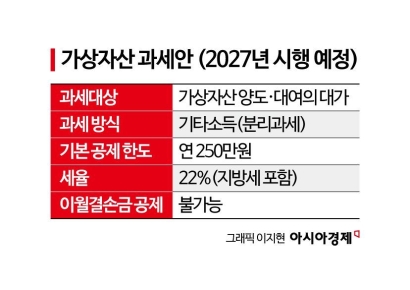 "Stocks Are Not Taxed, but Annual Crypto Gains Over 2.5 Million Won to Be Taxed Next Year... Investors Push Back"
- "Not Jealous of Winning the Lottery"... Entire Village Stunned as 200 Million Won Jackpot of Wild Ginseng Cluster Discovered at Jirisan
- "Rather Than Endure a 1.5 Million KRW Stipend, I'd Rather Earn 500 Million in the U.S." Top Talent from SNU and KAIST Are Leaving [Scientists Are Disappearing] ①
- "How Did an Employee Who Loved Samsung End Up Like This?"... Past Video of Samsung Electronics Union Chairman Resurfaces
- "Even With a 90 Million Won Salary and Bonuses, It Doesn’t Feel Like Much"... A Latecomer Rookie Who Beat 70 to 1 Odds [Scientists Are Disappearing] ③
Regarding the significant cuts to the research and development (R&D) budget in next year's government budget, he said, "Even during the foreign exchange crisis, R&D investment was increased. How can R&D investment be reduced in this situation? Especially, the R&D budget for the bio sector is too small, and this must be thoroughly discussed during the budget review process."
© The Asia Business Daily(www.asiae.co.kr). All rights reserved.