Supreme Court: "Seoul Metro Corporation Must Compensate for Breach of Contract on Train Advertising Panels"
The Supreme Court recognized partial liability for damages on the part of Seoul Metro Corporation (hereinafter referred to as the Corporation) in a lawsuit worth over 10 billion won between the Corporation and an installation company over advertising panels installed inside subway train cars.
The Corporation had notified that, citing the revision of enforcement ordinances, it would install the advertising panels on the side instead of the originally contracted location at the center of the ceiling inside the train cars. The Supreme Court ruled that since the location of the advertising panels is an essential part of the contract, the Corporation’s failure to perform according to the contract requires compensation for damages to the company.

According to the legal community on the 25th, the Supreme Court’s 2nd Division (Presiding Justice Lee Dong-won) overturned the lower court’s ruling against the plaintiff and remanded the case to the Seoul High Court in the appeal trial of automation equipment company A’s lawsuit claiming damages of approximately 10.287 billion won against the Corporation.
The court stated, "The lower court’s rejection of the plaintiff’s claim of refusal to perform on the grounds that the defendant (the Corporation) had no contractual obligation to approve or cooperate in installing a car display device consisting of four LCD monitors on the ceiling center inside the train car to operate the advertising business was a misapplication of the law regarding refusal to perform and contract interpretation, and failed to conduct necessary investigations, which affected the judgment," explaining the reason for the reversal and remand.
Company A was granted advertising rights using display devices inside train cars and stations for 16 years under the 2009 contract between its parent company and the Corporation for the "Real-time Information Provision System Construction Project in Stations and Train Cars." A was to install and operate a video guidance system (car display device) inside Line 2 train cars and stations and pay the Corporation 25 billion won in advertising fees.
However, in July 2014, a new mandatory regulation was introduced by the revision of the Urban Railroad Act enforcement ordinance requiring closed-circuit televisions (CCTV) to be installed inside train cars without blind spots. This made it difficult for the Corporation to comply with the ordinance if the car display devices were installed in the center of the train cars as originally contracted.
Eventually, when replacing 500 old train cars with new ones, the Corporation notified A that the car display devices would be installed on the side (above the doors) instead of the ceiling center. A requested to relocate the existing display devices from the old cars to the new ones and tried to negotiate, but the negotiations failed due to the Corporation’s refusal, leading A to file a lawsuit in March 2019. The Corporation announced its intention to terminate the contract in March 2021 during the ongoing lawsuit.
A made two claims as the basis for its lawsuit.
First, primarily, A claimed that it had agreed with the Corporation around July 2018 to return the advertising operation rights and receive compensation equivalent to the value of the installed facilities, and demanded payment of the settlement amount.
Second, alternatively, even if the settlement agreement with the Corporation was not recognized as valid, A argued that the Corporation breached its contractual obligations and should compensate for damages due to non-performance (refusal to perform).
The lower courts rejected both of A’s claims.
The court found it difficult to recognize an agreement to terminate the part of the contract concerning advertising operation rights inside train cars and to pay the corresponding settlement amount, citing the absence of a written contract confirming the settlement and the fact that negotiations between the parties continued even after the alleged termination date claimed by A.
The court stated, "The original contract stipulated that 'any changes to this contract shall only take effect through a written amendment signed by both parties,' no amendment reflecting the settlement exists, and the parties continued negotiations after August 31, 2018, to determine appropriate compensation for the return of advertising rights. Therefore, the plaintiff’s primary claim cannot be accepted."
The court also rejected A’s alternative claim asserting the Corporation’s liability for breach of contract.
While acknowledging that the LCD for the car is composed of four monitors as one set, the court stated, "It is difficult to conclude that the Corporation has a contractual obligation to approve or cooperate in installing four LCD monitors on the ceiling center inside the train car to operate the advertising business. Furthermore, there is insufficient evidence to recognize that definite damages were caused by the breach of this obligation."
It added, "The contract does not explicitly state the obligation claimed by the plaintiff, and it appears that the plaintiff is only obligated to accept adjustments to the types and scale of facilities due to the introduction of new train cars."
However, the Supreme Court’s judgment differed.
The Supreme Court, assuming that an agreement on settlement was reached, found it difficult to accept A’s primary claim for payment of the settlement amount worth over 10 billion won, consistent with the lower courts.
On the other hand, the Supreme Court found that A’s alternative claim regarding non-performance had merit. It found a problem with the lower court’s dismissal of A’s claim for damages of approximately 1.028 billion won and delayed interest due to the Corporation’s refusal to fulfill the contractual obligation to install the car display device in the center.
The court stated that the issue of whether to install the display device in the center or on the side "is the most essential part of this contract as it directly relates to the operating conditions of the advertising business, which is linked to the revenue and profit of the train business," and "the defendant (the Corporation) has the obligation to maintain the advertising business operating conditions agreed upon by both parties at the time of contract throughout the contract period."
Hot Picks Today
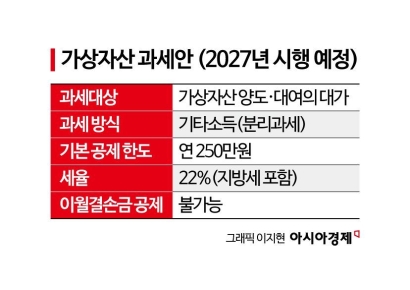 "Stocks Are Not Taxed, but Annual Crypto Gains Over 2.5 Million Won to Be Taxed Next Year... Investors Push Back"
- "Not Jealous of Winning the Lottery"... Entire Village Stunned as 200 Million Won Jackpot of Wild Ginseng Cluster Discovered at Jirisan
- "Rather Than Endure a 1.5 Million KRW Stipend, I'd Rather Earn 500 Million in the U.S." Top Talent from SNU and KAIST Are Leaving [Scientists Are Disappearing] ①
- "How Did an Employee Who Loved Samsung End Up Like This?"... Past Video of Samsung Electronics Union Chairman Resurfaces
- "Even With a 90 Million Won Salary and Bonuses, It Doesn’t Feel Like Much"... A Latecomer Rookie Who Beat 70 to 1 Odds [Scientists Are Disappearing] ③
Furthermore, the court noted, "The Urban Railroad Act does not prohibit the central installation of the car display device, it is difficult to conclude that installing the display device centrally makes it impossible to install CCTV cameras or causes blind spots, and among the new trains introduced after the amendment of the Urban Railroad Act, some have centrally installed display devices. The defendant also expressed willingness in February 2019 to accept the plaintiff’s request for central installation of the display device. Considering these facts, it cannot be said that the amendment of the Urban Railroad Act created an unavoidable circumstance that forced the change from central to side installation of the car display device."
© The Asia Business Daily(www.asiae.co.kr). All rights reserved.







