[Inside Chodong] Active Real Estate PF Restructuring Is Needed
Concerns Over Bridge Loan Maturity Extensions: Delaying Recognition of Defaults
Principal and Interest Reductions, Equity Conversions Needed
![[Inside Chodong] Active Real Estate PF Restructuring Is Needed](http://www.asiae.co.kr/news/img_view.htm?img=2023032806371068401_1691109409.jpg)
A malfunctioning bomb is ironically safest after it has exploded. If it is impossible to remove the gunpowder and detonator to restore it to a completely safe state, it must be moved to a safe location where it can be deliberately detonated to minimize damage. This approach accepts relatively less risk and pain to prevent a disaster caused by an accidental explosion. If risks are not gradually eliminated while the situation is manageable, the scale of danger continues to grow. The uncertainty of where it might explode increases, and the total amount of gunpowder and detonators only rises.
Authorities are employing a two-track strategy to prevent the detonation of the real estate project financing (PF) loan default bomb. Through the ‘PF Lenders’ Agreement,’ they extend the maturity of PF loans and the government provides liquidity support to partially resolve liquidity issues in PF projects. The PF normalization measures announced in April and the expanded measures in September follow the same logic.
The PF Lenders’ Agreement, involving financial companies such as banks, insurance firms, capital companies, securities firms, as well as mutual finance institutions like Nonghyup and Saemaeul Geumgo, began operating in April. According to the agreement, if two-thirds of creditors by bond amount agree, the maturity of PF loans taken by developers and contractors can be extended. This aims to prevent some creditors opposing the PF extension from declaring an effective default through the loss of maturity benefit (EOD), which would increase damage to other creditors. The policy also states that if more than three-quarters agree, support such as new funds and interest rate reductions will be provided.
Thanks to the PF Lenders’ Agreement and related measures, over 70% of domestic PF projects maturing in the first half of the year extended their loan maturities. Among bridge loans that have not converted to main PF loans, 80% extended their maturities. Only a very small number of projects transitioned to main PF loans. Most others extended their maturities while still in bridge loan status. Bridge loans are short-term loans taken to purchase land before obtaining development permits. If the project does not proceed normally to convert to main PF loans, it becomes difficult to recover the loans.
There have been numerous cases where financial companies extended bridge loan maturities through irregular methods to reduce defaults. When insolvent developers lost the ability to repay interest, methods such as ‘deferred interest’ or adding interest repayment amounts to existing loans to extend them were observed. Successfully extending loans this way is effectively a delinquency but is not recorded as such. There is no need to set aside loan loss provisions. This is essentially hiding defaults by turning a blind eye.
There have been no reports of active debt restructuring such as principal and interest reductions or equity conversions through the PF Lenders’ Agreement. Most cases simply defer recognition of defaults or blindly wait for the feasibility of development projects to improve. Financial companies appear to be caught in a ‘moral hazard,’ expecting only government policy support without sharing the pain.
Meanwhile, overseas commercial real estate investments have emerged as another detonator of financial company defaults, increasing market anxiety. Following the 133 trillion won PF loans, 73 trillion won in overseas real estate funds have joined, expanding the financial market’s powder keg. Interest rates, which seemed likely to fall in the second half, are instead rising due to the prolonged US tightening stance. Coupled with rising procurement costs and construction expenses, it is difficult to expect short-term improvements in project feasibility or virtuous cycles of private capital.
Hot Picks Today
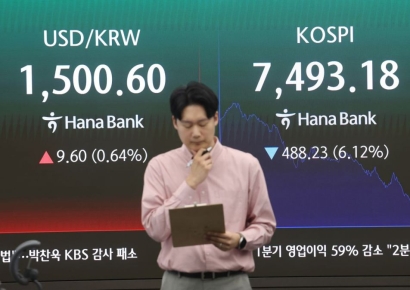 After Topping 8,000 Instead of Hitting 10,000... KOSPI Plunges—When Will It Rebound?
- "Samsung and Hynix Were Once for the Underachievers"... Hyundai Motor Employee's Lament
- [Breaking] Court Rules Against Samsung Electronics Union...1 Billion Won per Day Penalty for Exceeding Strike Scope
- Six Economic Organizations Urge Withdrawal of Samsung Electronics Strike Plan...Warn of National Loss of Opportunity
- "That? It's Already Stashed" Nightlife Scene Crosses the Line [ChwiYak Nation] ③
In this situation, it is impossible to properly resolve PF problems with only the PF Lenders’ Agreement or government liquidity support. If there is no sign of improvement, the government must actively intervene and undertake PF restructuring. Delaying restructuring risks worsening PF defaults into a condition that is difficult to treat.
© The Asia Business Daily(www.asiae.co.kr). All rights reserved.







