My Gaining Weight Is Not My Fault but Society's?..."Obesity Should Be Viewed as a Chronic Disease"
Korean Society for the Study of Obesity Insurance and Policy Symposium
Obesity, a Disease Caused by Environmental Changes
Due to Severe Complications, It Should Be Recognized as a Chronic Disease
Pediatric and Adolescent Obesity Requires Early Intervention
Concerns Over School Violence Victimization and Increased Post-Growth Mortality
"Obesity is caused by environmental changes, not an individual's problem. It should be recognized as a major chronic disease."
![Professor Kim Kyung-gon, Department of Family Medicine, Gachon University Gil Medical Center (Vice President of the Korean Society for the Study of Obesity), is speaking at the Korean Society for the Study of Obesity Insurance and Policy Symposium held on the 7th at the Conrad Hotel in Yeouido, Yeongdeungpo-gu, Seoul. <br>[Photo by Lee Chun-hee]](http://www.asiae.co.kr/news/img_view.htm?img=2023090800465867810_1694101654.jpg)
Professor Kim Kyung-gon, Department of Family Medicine, Gachon University Gil Medical Center (Vice President of the Korean Society for the Study of Obesity), is speaking at the Korean Society for the Study of Obesity Insurance and Policy Symposium held on the 7th at the Conrad Hotel in Yeouido, Yeongdeungpo-gu, Seoul.
[Photo by Lee Chun-hee]
Professor Kim Kyung-gon, Department of Family Medicine at Gachon University Gil Medical Center and Vice President of the Korean Society for the Study of Obesity, repeatedly emphasized at the Korean Society for the Study of Obesity Insurance and Policy Symposium held on the 7th at the Conrad Hotel in Yeouido, Yeongdeungpo-gu, Seoul, that "Obesity is a problem caused by rapid environmental changes" and "It is not caused by failure to control lifestyle habits." Looking at human history, those who could efficiently store food in their bodies and move efficiently were the ones who survived. However, Professor Kim explained that now, with the shift to a prosperous society where food is abundant, the population with obesity is increasing.
At the symposium, experts voiced that active government intervention in obesity treatment and management is necessary for proper obesity control, and for this, a shift in social perception is required. Currently, in our society, obesity is often regarded as a personal issue with the perception that "people gain weight because they are lazy." As a result, there are limitations to increasing government support, and except for metabolic surgeries such as gastrectomy in 2019, there are virtually no obesity treatment methods covered by health insurance benefits.
Professor Kim emphasized, "Obesity itself is a problem, but it is accompanied by dozens of complications, and the incidence of various cancers also increases significantly," adding, "Early detection of complications related to prevention is important." He also warned, "if attitudes toward obesity do not change, within 10 to 20 years, we will soon catch up to the situations seen in the United States and several Western countries."
He also pointed out the need for in-depth consideration regarding actual treatment accessibility. Professor Kim expressed concern, saying, "Many new obesity drugs are emerging, but because they are expensive, they are mostly used by wealthy groups where obesity rates are not high," and "there are also issues such as regional differences in accessibility to metabolic surgery, raising questions about whether those who need treatment can sufficiently receive it." According to the Health Insurance Review & Assessment Service, since metabolic surgery was covered by insurance in 2019, only slightly over 2,000 claims have been made annually, indicating that the actual number of surgeries performed is not very high.

Concerns were also raised that the risks of obesity are particularly pronounced in children and adolescents, necessitating early intervention. Professor Hong Yong-hee, Department of Pediatrics and Adolescents at Soonchunhyang University Bucheon Hospital and Director of the Pediatric and Adolescent Committee of the Korean Society for the Study of Obesity, emphasized, "Most childhood and adolescent obesity progresses to adult obesity," adding, "If adolescents spend their youth in an obese state, the associated problems persist for a long time, making correction difficult." Childhood and adolescent obesity is accompanied by various complications such as hypertension, diabetes, dyslipidemia, sleep apnea, and precocious puberty, and is known as a "time bomb for cardiovascular disease," with high cardiovascular mortality and cancer incidence rates in adulthood.
Professor Hong also pointed out that many problems can arise in the social relationships and mental health of growing children and adolescents. He explained, "When treating obese children and adolescents, I often hear that 'the kids teased and fought,'" and "compared to children with normal weight, they are often victims of school violence." Due to these factors, many receive psychiatric treatment for depression and other issues.
Hot Picks Today
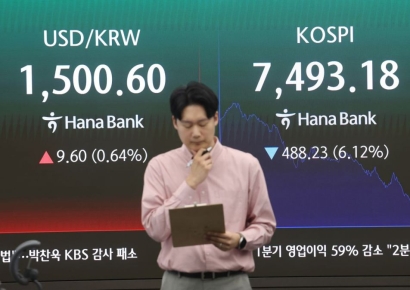 After Topping 8,000 Instead of Hitting 10,000... KOSPI Plunges—When Will It Rebound?
- "Samsung and Hynix Were Once for the Underachievers"... Hyundai Motor Employee's Lament
- "What? It Wasn't a Wristwatch?" This Brand's Stock Soared 15%, Then Plunged After Official Announcement
- [Breaking] Court Rules Against Samsung Electronics Union...1 Billion Won per Day Penalty for Exceeding Strike Scope
- "That? It's Already Stashed" Nightlife Scene Crosses the Line [ChwiYak Nation] ③
Therefore, Professor Hong diagnosed that active early intervention is necessary. He stressed, "Even if children are born with normal weight, if their parents are obese, they tend to become obese as they grow," and "it is necessary to break this cycle through active intervention during childhood and adolescence."
© The Asia Business Daily(www.asiae.co.kr). All rights reserved.