[Inside Chodong]In the Era of 'Lifetime Appliances'...Luck in Picking Still Doesn't Match
"You need luck when picking home appliances."
This is a common saying when buying home appliances. When the reporter purchased Samsung Electronics' new concept kitchen appliance, the Bespoke Cooker, which integrates a microwave, grill, air fryer, and toaster functions into one, the biggest concern was 'luck in picking.' This was because many posts on internet communities mentioned that although the product's functions are excellent, if you pick the wrong one, strange noises occur when the product operates. Fortunately, the reporter's luck was good. The product has been used without any issues for a year.
![[Inside Chodong]In the Era of 'Lifetime Appliances'...Luck in Picking Still Doesn't Match](http://www.asiae.co.kr/news/img_view.htm?img=2023072511232218639_1690251802.jpg)
With the improved technology and product durability of Korean companies, it is now an era where white goods can be used for more than 10 years. LG Electronics even coined the term 'UP (UP) Appliances.' They emphasized that products can be used for a long time like new appliances with more functions through software updates. Samsung Electronics also allows additional installation of modular products or panel replacement as needed, so as long as the product does not break down, it can be used for a long time without getting tired of it. However, contrary to the home appliance industry's strategy promoting appliances that can be used for a lifetime, consumers still say that you need luck when picking home appliances. It is an ironic situation.
The home appliance industry is aware of these consumer inconveniences. Therefore, continuous efforts are made to increase the yield rate (ratio of good products) of products. Unless the quality issue is due to intentional damage by the user, there is also a free warranty policy that takes responsibility for after-sales service for a certain period. However, the free warranty period is mostly 1 to 2 years, with general products covered for 1 year and seasonal appliances like air conditioners for 2 years. Samsung and LG provide warranty periods of over 10 years for some key components they are confident in, such as direct drive (DD) motors and digital inverter technology (DIT) motors and compressors, but this is not a warranty for the complete product that functions properly only when all parts work perfectly together.
![[Inside Chodong]In the Era of 'Lifetime Appliances'...Luck in Picking Still Doesn't Match](http://www.asiae.co.kr/news/img_view.htm?img=2022092808255249066_1664321152.jpg)
They are also stingy about 'recalls.' In the home appliance industry, a 'recall' is like a stigma indicating a problem with the quality and safety of a specific product, which deals a fatal blow to the company's image. Voluntary recalls directly lead to a loss of consumer trust. This is somewhat different from the automobile industry, which can decide dozens of recalls a year without severely damaging brand trust. Unlike the automobile industry, which grants the right to have problematic product groups re-inspected, in the home appliance industry, once consumers purchase the product, any problems that arise afterward are the user's responsibility. Since the usage environment differs, when problems occur, the response is often, "There is nothing wrong with the product. The problem occurred because the user used it incorrectly." Home appliances are not cheap, so consumers can feel unfair.
Hot Picks Today
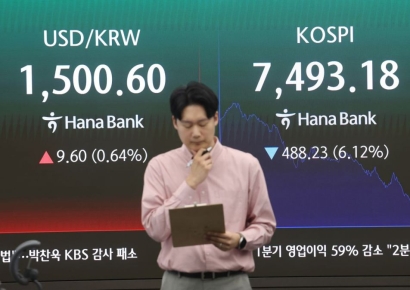 After Topping 8,000 Instead of Hitting 10,000... KOSPI Plunges—When Will It Rebound?
- "Samsung and Hynix Were Once for the Underachievers"... Hyundai Motor Employee's Lament
- [Breaking] Court Rules Against Samsung Electronics Union...1 Billion Won per Day Penalty for Exceeding Strike Scope
- Stronger Fines for Personal Data Leaks Start Tomorrow... Higher Sales Standards Applied
- "That? It's Already Stashed" Nightlife Scene Crosses the Line [ChwiYak Nation] ③
As the home appliance industry has created an era of 'lifetime appliances' by making durable products, it is now time to change the free warranty policy. It should be possible to build an image of sturdy products that can be used longer than European brands. To solidify the image of Korean-made appliances as premium products that are expensive but can be updated and used for a long time after purchase, confidence to extend the free warranty period is necessary. Otherwise, it will be impossible to gain an advantage in competition against Chinese products, which are narrowing the gap with our companies' products in terms of functionality. Moreover, it is an eco-friendly era where waste appliances must be reduced. Enabling consumers to use products longer is also beneficial for companies' ESG management.
© The Asia Business Daily(www.asiae.co.kr). All rights reserved.







