Chinese Solar Power Company GCL Builds First Overseas Power Plant in Saudi Arabia
China and Saudi Arabia Strengthen Close Cooperation in Energy and More
Chinese solar material company GCL Technology plans to build its first overseas power plant in Saudi Arabia, Bloomberg reported on the 4th (local time).
Lan Tiansi, CEO of GCL Technology, said in an interview with Bloomberg TV on the same day, "Saudi Arabia has mature infrastructure and experience in the industrial and manufacturing sectors," revealing the plan.
GCL Technology is the world's second-largest producer of polysilicon, a key material for solar panels. The company plans to produce 120,000 tons of polysilicon annually through the Saudi power plant, aiming to start operations as early as 2025. It is currently negotiating related matters with the Saudi government and the Royal Commission. CEO Lan emphasized, "Saudi Arabia's abundant sunlight will also support the transition from an oil giant to a solar energy producer."
This announcement came amid accelerating close ties between the two countries, following Chinese President Xi Jinping's visit to Saudi Arabia in December last year, where he met Crown Prince Mohammed bin Salman. Bloomberg views this as a sign of strengthened energy cooperation between the two countries since President Xi's visit. Previously, China invited Saudi Arabia and major oil-exporting countries to the BRICS summit last month.
CEO Lan also noted that competition in the Chinese solar industry has overheated. He mentioned that solar companies are struggling due to fierce competition and shrinking margins, predicting that only 5 to 10 companies will survive through solar supply chain integration. In fact, polysilicon prices have declined since the beginning of the year, and some companies have halted production since June.
Hot Picks Today
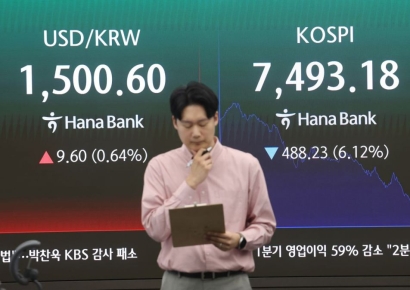 After Topping 8,000 Instead of Hitting 10,000... KOSPI Plunges—When Will It Rebound?
- "Samsung and Hynix Were Once for the Underachievers"... Hyundai Motor Employee's Lament
- [Breaking] Court Rules Against Samsung Electronics Union...1 Billion Won per Day Penalty for Exceeding Strike Scope
- Global Big Tech Joins AI Firms in Full-Scale AI Agent Showdown
- "That? It's Already Stashed" Nightlife Scene Crosses the Line [ChwiYak Nation] ③
However, Bloomberg forecasts that demand for low-cost solar energy will increase in China and various regions due to the energy transition. Bloomberg stated, "By building new infrastructure in Saudi Arabia, GCL will be able to tap into Saudi Arabia's large potential market," adding, "Moreover, in the Middle East, this material (polysilicon) will be more easily accessible to consumers in Africa and Europe."
© The Asia Business Daily(www.asiae.co.kr). All rights reserved.