'Consignment Contract' Sales Managers at Eye Level Lose 10 Billion Won Wage Lawsuit Against Daekyo
At Daekyo Noonopi Learning Center, hundreds of current and former sales managers, including learning center directors and business team leaders who worked under consignment contracts, filed a civil lawsuit worth over 10 billion KRW, demanding recognition as workers under the Labor Standards Act. However, they lost in both the first and second trials. The court ruled that "this case differs from situations where specific instructions, supervision, and work evaluations are received through an employment contract."

According to the legal community on the 4th, the Seoul High Court Civil Division 38-1 (Presiding Judge Jeong Gyeong-geun) recently upheld the first trial’s decision in the appeal case where about 300 plaintiffs, including Mr. Kang, sued Daekyo Co., Ltd. for approximately 11.339 billion KRW in wages and other claims. The court stated, "The claims by Mr. Kang’s side are similar to those in the first trial. Even with the newly submitted evidence, it cannot be considered that they provided labor to Daekyo as workers in a subordinate relationship for wages."
Mr. Kang and others worked as learning center directors or business team leaders under consignment contracts with Daekyo. The Noonopi Learning Center operates differently from the existing home-visit learning service, functioning as a tutoring academy run by Daekyo. Mr. Kang and others were called so-called 'business division managers' who renewed contracts with Daekyo every one to two years. In 2021, they filed a civil lawsuit against Daekyo, claiming, "We perform essentially the same work as 'employee managers' who entered under employment contracts, so we should be recognized as workers under the Labor Standards Act." They demanded payment of weekly holiday allowances, annual leave allowances, holiday work allowances, and severance pay for those already retired between 2019 and 2022. On the other hand, Daekyo argued, "Mr. Kang and others worked under consignment contracts and earned commissions as independent business operators, not as workers under the Labor Standards Act," and "They cannot be seen as subordinated to the company’s direction or supervision for wages."
The first trial dismissed all claims by Mr. Kang and others. The first trial court stated, "Unlike business division managers, Daekyo regularly conducted personnel evaluations for employee managers and reflected these in promotion reviews. Employee managers had specified working hours and break times in their employment contracts, but business division managers had no set hours. Business division sales managers had more freedom in using leave."
The court also noted, "Business division managers received commissions strictly linked to sales performance, such as changes in membership numbers, regardless of work content or hours," and "Daekyo did not restrict their concurrent businesses, and some actually performed consigned tasks while running other businesses."
Furthermore, "Mr. Kang and others had considerable discretion when performing consigned tasks," and "It is difficult to see that Daekyo gave constant, specific work instructions beyond what a principal can exercise under a consignment contract," the court added.
Hot Picks Today
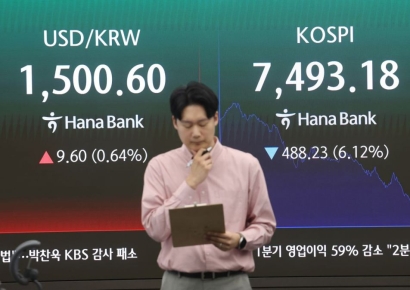 After Topping 8,000 Instead of Hitting 10,000... KOSPI Plunges—When Will It Rebound?
- "Samsung and Hynix Were Once for the Underachievers"... Hyundai Motor Employee's Lament
- [Breaking] Court Rules Against Samsung Electronics Union...1 Billion Won per Day Penalty for Exceeding Strike Scope
- Stronger Fines for Personal Data Leaks Start Tomorrow... Higher Sales Standards Applied
- "That? It's Already Stashed" Nightlife Scene Crosses the Line [ChwiYak Nation] ③
The second trial court also agreed that the first trial’s judgment was correct.
© The Asia Business Daily(www.asiae.co.kr). All rights reserved.







