[Practical Finance] To Buy or Not to Buy an Officetel, Caution Still Prevails
Atmosphere Slightly Reviving Mainly in the Seoul Metropolitan Area
Still Low Transaction Volume and Tax Disadvantages Compared to Apartments
Subscription Performance Varies by Location
As the real estate market begins to rebound mainly in Seoul and the metropolitan area, the officetel market atmosphere also seems to have somewhat revived. Recently, most officetels launched for sale in the Seoul area have been sold out, and some officetels in certain areas have even seen premiums (extra charges) attached.
However, caution is required when investing as the burden of interest rates continues and transaction volumes remain minimal. In particular, except for some areas such as Seoul, sales demand is still low, and it is essential to keep in mind that officetels are disadvantaged compared to apartments in terms of loans and taxes.
Success or failure in subscription divided by location and price... many struggle
![[Image source=Yonhap News]](http://www.asiae.co.kr/news/img_view.htm?img=2022043015204950516_1651299648.jpg)
Recently, more officetel complexes have succeeded in selling out in the subscription market. Last month, the Shin Young Ziwell Prugio Technopolis Central Officetel in Cheongju, Chungbuk, recorded an average competition rate of 28.2 to 1, with 6,606 applicants for 234 units in the first-priority subscription.
The 'Yongsan Hoban Summit Edition' officetel in Hangangno 2-ga, Yongsan-gu, Seoul, which was launched in July, attracted 5,225 applicants for 49 units in the first-priority subscription. In June, the 'DMC Gajaeul I-Park' officetel in Namgajwa-dong, Seodaemun-gu, recorded a highest competition rate of 41 to 1 and an average of 4 to 1. The 'Pyeongtaek Station Gyeongnam Honorsville Diart' officetel launched in Pyeongtaek, Gyeonggi, in May closed contracts for all units in a short period with a competition rate of 21.9 to 1.
However, all these officetels gained popularity due to their advantageous location and sale prices. They are far from the generally struggling officetel market.
In fact, this year, the officetel market has seen both supply volume and subscription competition rates drop to historically low levels. According to the Korea Real Estate Board's Subscription Home, the nationwide newly supplied officetel units from January to July this year totaled 2,641 units (18 projects). A significant number of these officetels struggled in subscriptions.
An officetel launched in Busan in June received only 4 subscription applications for 49 units, and an officetel in Sinheung-dong, Incheon, launched in April, had only 3 applicants for 161 units. Another officetel in Daejeon conducted a subscription for 832 units in April but had only 7 applicants.
Sales prices are also continuously falling. According to the Korea Real Estate Board's officetel price trend survey, the officetel sale price in the second quarter of this year dropped by 0.85% compared to the previous quarter (first quarter). Although the decline narrowed from -1.19% in the first quarter, the downward trend has continued for nine consecutive months. The average officetel sale price as of the second quarter was 210.52 million KRW nationwide, 225.92 million KRW in the metropolitan area, and 146.87 million KRW in provincial areas.
The sharp contraction in prices and transactions is mainly influenced by the housing market. It is analyzed that the decline continues due to still high interest rates and uncertain overall housing market recovery expectations.
The market estimates that the number of unsold units for officetels is much higher than for apartments. Since non-apartment types like officetels are not included in unsold statistics, it is difficult to know the exact figures. According to the 2020 Population and Housing Census by Statistics Korea, the apartment residence ratio was only 43%. This means unsold status can be identified for only four out of ten housing units.
Advantages disappear due to apartment regulation easing
It is expected to take time for the officetel market to fully recover. Officetels have structural disadvantages compared to apartments. Officetels are classified as housing under tax law. Acquiring an officetel makes one a homeowner. They are subject to acquisition tax and capital gains tax surcharges and are disadvantaged in apartment subscriptions. However, when taking out loans, officetels are considered non-housing and cannot use special home mortgage loans like the Special Bogeumjari Loan.
In particular, officetels were popular as substitutes for apartments during housing price increases, but demand has recently cooled as it has concentrated on apartments during the real estate downturn. Moreover, residential officetels are included in the count of housing units but excluded from benefits such as the Special Bogeumjari Loan, making them less advantageous than apartments in many ways.
Because of this, there are many pessimistic views on officetel investment in the market. Therefore, it is advisable to carefully consider the conditions and approach it as a long-term source of income. Also, even if verified from a profitability perspective, exit strategies can be obstacles. Factors such as the liquidity of single-person households, preference for new buildings in monthly rent, and conversion to apartments should be considered.
Hot Picks Today
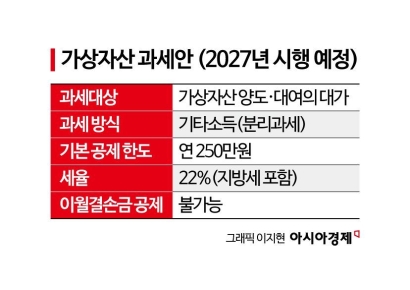 "Stocks Are Not Taxed, but Annual Crypto Gains Over 2.5 Million Won to Be Taxed Next Year... Investors Push Back"
- "Not Jealous of Winning the Lottery"... Entire Village Stunned as 200 Million Won Jackpot of Wild Ginseng Cluster Discovered at Jirisan
- "Even With a 90 Million Won Salary and Bonuses, It Doesn’t Feel Like Much"... A Latecomer Rookie Who Beat 70 to 1 Odds [Scientists Are Disappearing] ③
- General Strike D-1: Final Negotiations Between Samsung Electronics Labor and Management Over One Key Issue
- "How Did an Employee Who Loved Samsung End Up Like This?"... Past Video of Samsung Electronics Union Chairman Resurfaces
Yoon Ji-hae, senior researcher at Real Estate R114, said, “Officetels are rental income-type products that recover investment through rental income, so they are sensitive to rent levels,” adding, “With recent high interest rates, it has become difficult for officetels to achieve an annual rental yield exceeding 5%.” She further predicted, “It will be possible to judge the officetel market only after the apartment market fully recovers in the second half of the year.”
© The Asia Business Daily(www.asiae.co.kr). All rights reserved.







