[Peace&Chips] 'Semiconductors Reduce Electricity Costs'... The Rise of 'Universal Chips' in Mobile DRAM
LPDDR DRAM Rising with Mobile Growth
Focus on Overcoming 'Low Power' Challenges in Battery Environments
Mobile DRAM Market Size to Reach $25.5 Billion by 2027
Low Power and High Performance Needed Across All Potential Application Areas
![SK Hynix's 24-gigabyte (GB) package product made by combining 12 LPDDR5X chips / <br>[Photo by SK Hynix]](http://www.asiae.co.kr/news/img_view.htm?img=2023081400542338988_1691942062.jpg)
SK Hynix's 24-gigabyte (GB) package product made by combining 12 LPDDR5X chips /
[Photo by SK Hynix]
Last week, semiconductor issues surged as usual. Especially, there were many news items related to memory semiconductors. In the DRAM sector, SK Hynix attracted market attention by announcing achievements in mobile DRAM called 'Low Power Double Data Rate (LPDDR)'. They revealed that they have supplied or completed pre-supply processes (certification) for their latest mobile DRAM products such as LPDDR5X and LPDDR5T to customers.
LPDDR refers to a DRAM standard used in mobile products like smartphones and tablet PCs. DRAM is categorized by application such as PC and servers, and mobile DRAM began to be widely used since the 2000s. Along with the growth of mobile devices, it has rapidly increased its share in the DRAM market.
The key feature of mobile DRAM is its focus on low power consumption. Since mobile devices rely on batteries with limited power, minimizing power consumption is crucial. This is why the mobile DRAM standard adds the prefix LP (Low Power), unlike the PC DRAM standard (DDR) used in desktops and laptops.
![[Peace&Chips] 'Semiconductors Reduce Electricity Costs'... The Rise of 'Universal Chips' in Mobile DRAM](http://www.asiae.co.kr/news/img_view.htm?img=2022102115122077720_1666332740.jpg)
Thanks to its characteristics of reducing power consumption while maximizing performance, LPDDR DRAM is gradually increasing its market value. Not only for existing mobile devices but also for the growing number of wearable devices and virtual reality (VR) and augmented reality (AR) products, LPDDR DRAM is expected to be widely used. As we enter the era of artificial intelligence (AI), the demand for higher performance in various mobile devices is also expected to increase opportunities for LPDDR-related markets.
![[Peace&Chips] 'Semiconductors Reduce Electricity Costs'... The Rise of 'Universal Chips' in Mobile DRAM](http://www.asiae.co.kr/news/img_view.htm?img=2023081408173539145_1691968655.jpg)
Given this situation, market outlooks are positive. Market research firm Omdia forecasts that the share of mobile DRAM shipments in total DRAM will increase from 44% this year to 51% by 2027. They recently revised their previous 2027 forecast of 38% upwards. The mobile DRAM market size is also expected to surge by 106.65%, from $12.34 billion this year to $25.5 billion in 2027.
Park Myung-su, Vice Chairman of SK Hynix, also predicted, "As the pace of technological advancement accelerates across the entire IT industry, the use of LPDDR products will expand beyond mobile devices to PCs, servers, high-performance computing (HPC), and automotive sectors." In each field, the importance of low power and high performance is increasing, leading to new applications for LPDDR DRAM that have never existed before.

The latest standard for mobile DRAM is the 7th generation LPDDR5X. Over time, the technology has advanced with numbers following LPDDR in the order of '1-2-3-4-4X-5-5X'. Samsung Electronics, the market leader in DRAM, has showcased its technological prowess by being the first in the industry to introduce LPDDR5 (2018) and LPDDR5X (2021).
SK Hynix, ranked second, has recently been focusing on related businesses by launching LPDDR5T, an enhanced version of LPDDR5X, ahead of the next generation LPDDR6, in January. Currently, the JEDEC Solid State Technology Association is finalizing the standardization registration for LPDDR5T. As market expectations for LPDDR DRAM grow, competition in the industry is expected to intensify.
![[Peace&Chips] 'Semiconductors Reduce Electricity Costs'... The Rise of 'Universal Chips' in Mobile DRAM](http://www.asiae.co.kr/news/img_view.htm?img=2023010207180970420_1672611489.jpg)
This article is from [Peace & Chips], published weekly by Asia Economy. Click subscribe to receive articles for free.
Hot Picks Today
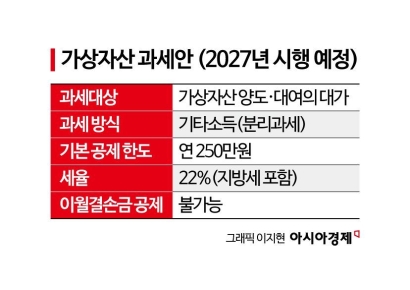 "Stocks Are Not Taxed, but Annual Crypto Gains Over 2.5 Million Won to Be Taxed Next Year... Investors Push Back"
- "Not Jealous of Winning the Lottery"... Entire Village Stunned as 200 Million Won Jackpot of Wild Ginseng Cluster Discovered at Jirisan
- "Even With a 90 Million Won Salary and Bonuses, It Doesn’t Feel Like Much"... A Latecomer Rookie Who Beat 70 to 1 Odds [Scientists Are Disappearing] ③
- "Rather Than Endure a 1.5 Million KRW Stipend, I'd Rather Earn 500 Million in the U.S." Top Talent from SNU and KAIST Are Leaving [Scientists Are Disappearing] ①
- "How Did an Employee Who Loved Samsung End Up Like This?"... Past Video of Samsung Electronics Union Chairman Resurfaces
☞Subscribe
© The Asia Business Daily(www.asiae.co.kr). All rights reserved.







