Jeonnam Province Fully Committed to Designating Specialized Complexes for Semiconductors and Secondary Batteries
Jeonnam Province announced on the 27th that it is steadily promoting four major advanced strategic industries, including re-challenging to attract the Gwangju-Jeonnam semiconductor specialized complex and designating the Gwangyang Bay area as a national advanced strategic industry specialized complex for secondary batteries.

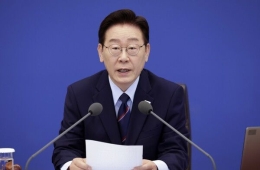
On the morning of the same day, Park Chang-hwan, Jeonnam Province’s Deputy Governor for Political Affairs, held a press briefing at the provincial government press room to explain the development strategies for advanced strategic industries such as secondary batteries, data clusters, advanced bio, and semiconductors.
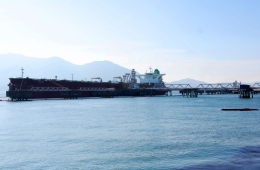
Regarding secondary batteries, the province is currently petitioning the government to establish a national industrial complex for future advanced materials in the Gwangyang Bay area. The province is directly developing the Sepung Industrial Complex and is putting all efforts into designating this area as an opportunity development special zone and a national advanced strategic industry specialized complex for secondary batteries.
Currently, the Gwangyang Bay area is scheduled to receive investments worth 15 trillion KRW in the secondary battery and hydrogen industries by 2030, making it optimally qualified for special zone designation.
Additionally, a specialized complex for secondary battery materials, parts, and equipment is being promoted in the Hampyeong Bitgreen Industrial Complex. Once all designations are completed, mutual synergy effects are expected.
The data cluster aims to be developed on a scale of 2.6GW (20 trillion KRW).
They are promoting the attraction of 25 renewable energy (RE)100 data centers (1000MW) in the Solarsido Enterprise City Composition District, 20 data centers (800MW) in the Sampo District data center cluster, and 20 data centers (800MW) in the Hampyeong Wolya General Industrial Complex.
Data center constructions are already underway in Gwangyang by KT (40MW, 700 billion KRW), in Suncheon by NHN (40MW, 300 billion KRW), in Haenam by TGK (200MW, 2.6 trillion KRW), and in Jangseong by Kakao (40MW, 490 billion KRW).
For advanced bio, a request was made to include 1 billion KRW in next year’s budget for feasibility study expenses to designate an advanced medical complex.
They are also promoting a digital healthcare cluster linking Muan International Airport and Hwasun Chonnam National University Hospital, as well as the designation of a national advanced strategic industry bio specialized complex. The Hwasun Global Bio Campus will be developed as a hub for workforce training.
In semiconductors, efforts are underway to create a compound power semiconductor ecosystem and attract foundries. The province has decided to re-challenge the attraction of the Gwangju-Jeonnam semiconductor specialized complex, which is the first cooperative pledge between the city and province in the 8th local government administration.
Deputy Governor Park said, “The reason for not applying for secondary battery designation in this specialized complex is that government guidelines made it difficult to support overlapping applications in two fields, and to honor the cooperation agreement with Gwangju City and focus all efforts on semiconductor specialized complex designation.” He added, “The future car complex designated to Gwangju City is a materials, parts, and equipment industry specialized complex, which offers relatively fewer incentives than the national advanced strategic industry specialized complex. This designation was made after much deliberation and was applied for on the last day at the request of the Gwangju regional economic community.”
Deputy Governor Park also stated that, besides the advanced power industry, the investment attraction of Vestas, the world’s number one offshore wind turbine company, is expected to materialize around September to promote balanced development in the western region. Regarding the National Maritime Fisheries Museum, which the Ministry of Culture, Sports and Tourism evaluated as inappropriate in the preliminary feasibility study, he said they will do their best to build it in cooperation with the Ministry of Oceans and Fisheries, which filed an objection.
Hot Picks Today
 "Stocks Are Not Taxed, but Annual Crypto Gains Over 2.5 Million Won to Be Taxed Next Year... Investors Push Back"
- "Don't Throw Away Coffee Grounds" Transformed into 'High-Grade Fuel' in Just 90 Seconds [Reading Science]
- Signed Without Viewing for 1.6 Billion Won... Jamsil and Seongbuk Jeonse Prices Jump 200 Million Won in a Month [Real Estate AtoZ]
- [Breaking] Lee Targets Samsung Electronics Union: "Collective Bargaining Should Not Be Abused... There Is an Appropriate Limit"
- "Even With a 90 Million Won Salary and Bonuses, It Doesn’t Feel Like Much"... A Latecomer Rookie Who Beat 70 to 1 Odds [Scientists Are Disappearing] ③
Among other major government project achievements in the 8th local government administration, he cited passing the Ministry of Strategy and Finance’s re-investigation of the preliminary feasibility study for establishing the National Cardiovascular and Cerebrovascular Research Institute, attracting the Global Bio Campus, selection of the Gwangju-Naju metropolitan railway as a preliminary feasibility study project by the Ministry of Strategy and Finance, passing the preliminary feasibility study for the National Subtropical Arboretum project, attracting the National Mahan History and Culture Center to Yeongam, passing the preliminary feasibility study for the Naju Energy National Industrial Complex, and attracting the National Tidal Flat World Natural Heritage Conservation Headquarters to Sinan.
© The Asia Business Daily(www.asiae.co.kr). All rights reserved.