Lee Jae-myung Appeals as "Reading Sutras to a Bull's Ear"... Is the Democratic Party 'Sincere' About the Supplementary Budget?
Democrats Launch All-Out Effort for Supplementary Budget to Resolve Household Debt
"1 in 7 Citizens Uses All Income Except Food, Clothing, and Housing to Repay Interest"
Experts Say "Need to Raise National Bond Issuance Limit to Address Tax Revenue Shortfall"
Amid controversies surrounding the discharge of contaminated water from the Fukushima nuclear power plant in Japan and allegations of special favors to the family of Kim Geon-hee, the Democratic Party of Korea is making an all-out effort to draft a supplementary budget (추경). Since the beginning of this year, starting with the New Year's press conference, Lee Jae-myung, the leader of the Democratic Party, has been continuously urging the formation of a supplementary budget of around 35 trillion won. However, the ruling party and government have expressed reluctance to draft the supplementary budget. The Democratic Party is countering the government and ruling party's emphasis on fiscal soundness with a focus on economic soundness.
According to political circles on the 16th, Lee stated at the 'Expert Debt Crisis Meeting' held at the Democratic Party's Yeouido Central Party Office on the 13th, "Considering the risks on the ground and especially the explosiveness of the debt problem, I once again urge the government and ruling party to promptly engage in supplementary budget negotiations." At the subsequent party meeting, he reiterated, "I hope you will immediately start negotiations on the supplementary budget so as not to waste the 'golden time' for the people's economy." He also targeted the government, which is not considering the supplementary budget, saying, "It really feels like preaching to deaf ears," and emphasized, "Nevertheless, I will continuously urge the government to devise measures and strive tirelessly to bring out practical solutions."
Why is the Democratic Party concentrating its efforts on drafting the supplementary budget?
"Household debt reaches 2,000 trillion won... 1 in 7 citizens uses all income except for food, clothing, and shelter to repay interest"
![[Image source=Yonhap News]](http://www.asiae.co.kr/news/img_view.htm?img=2023071311092196403_1689214160.jpg)
At the debt crisis meeting, Hong Seong-guk, the Democratic Party's economic spokesperson, presented a detailed statement outlining the grounds for the party's call for a supplementary budget. Hong said, "The government says the first and second quarters are the low points and expects a 'sangjeohago' (上低下高, low growth in the first half and high growth in the second half), but the industries corresponding to this are large corporations and export companies," adding, "For the people, the commoners, small and medium enterprises, and small merchants, it is a 'sangjeoharak' (上低下落, low growth in the first half and a plunge in the second half), meaning this year's growth rate will be only 1.4% (the revised economic growth rate forecast by the government and the Bank of Korea)."
He said, "I think the gap between the large corporations and the upper class and the lower class, which occupy the top, is the largest in history at this point," emphasizing, "Therefore, various policies are needed to help vulnerable groups."
Hong particularly pointed out household debt and the resulting interest burden as the biggest obstacles to the common economy. He said, "Compared to the COVID-19 period, household debt is 2,000 trillion won and corporate debt is 2,500 trillion won, and if interest rates rise by just 2 percentage points, the burden increases by 90 trillion won," adding, "Whether corporate or individual, 40 to 50 trillion won is already being spent on interest, so there is no money left in hand." He further stated, "The debt service ratio (DSR) exceeding 100% accounts for 8.9% of all borrowers, and those exceeding 70% account for 6.3%," adding, "One in seven people uses all income except for food, clothing, and shelter to repay debt."
He also raised the possibility that the government might face a shortage of related budgets in the second half of the year, as it has already concentrated spending on vulnerable groups in the first half. Hong said, "As of the 15th of last month, the government has spent 48.8% of this year's budget, of which 62% is related to people's livelihood and 67% is for essential living expenses of vulnerable groups," and criticized, "The treasury is empty, and the Ministry of Economy and Finance will be in chaos moving taxes here and there."
Hong also introduced the argument that in advanced countries, government debt remains higher than corporate and household debt, and during the global economic crisis from 2008 to 2012, advanced countries actively intervened in the economy, playing a role as an economic primer, emphasizing that the government's fiscal role determines the nation's fate during economic crises.

Representative Lee Jae-myung, Floor Leader Park Kwang-on, and other members of the Democratic Party of Korea are shouting slogans demanding a government investigation into the change of the terminus of the Seoul-Yangpyeong Expressway at the policy members' meeting held at the National Assembly on the 13th. Photo by Hyunmin Kim kimhyun81@
View original imageDemocratic Party "Pushing for 35 trillion won supplementary budget"… 12 trillion won for emergency living loans for financially vulnerable groups, etc.
The Democratic Party is demanding a supplementary budget of 35 trillion won. On the 19th of last month, Lee stated in a parliamentary negotiation group speech, "We will push for a supplementary budget of 35 trillion won for people's livelihood and economic recovery," proposing approximately 12 trillion won for emergency living loans for financially vulnerable groups and interest and fixed cost support for small and medium enterprises and self-employed individuals; about 11 trillion won for energy price support centered on price-affected groups, gas and electricity bill support for small business owners and self-employed, agricultural electricity bill support for farmers, and increased local currency budget; and a total of 7 trillion won for purchasing unsold houses and converting them to public rental housing, interest support for jeonse deposits, project financing (PF), and establishing a bad bank.
Lee said, "If the government has the will, it can minimize the issuance of government bonds by reducing global surplus funds, business promotion expenses, or special activity expenses, and cutting confirmed unused projects," introducing ways to secure funds for the supplementary budget. He added, "Considering the current economic recession, the people's livelihood difficulties, and the efficiency of fiscal management, it is time for fiscal policy to play a role in economic recovery, even if it means increasing government bonds somewhat."
Experts: "Discussion on supplementary budget reflecting revenue shortfall should start quickly"
Experts point out that since the tax revenue shortage is already worsening, a supplementary budget reflecting the revenue shortfall by increasing the government bond issuance limit should be implemented. There are concerns that delaying this could negatively affect the financial market.
According to the Ministry of Economy and Finance, as of May this year, the cumulative managed fiscal balance recorded a deficit of 52.5 trillion won. The managed fiscal balance is the integrated fiscal balance excluding social security funds, indicating the overall state of the national finances. The deficit increased by 7.1 trillion won from 45.4 trillion won in the previous month. This amount corresponds to 90.2% of the government's projected annual managed fiscal deficit of 58.2 trillion won for this year.
Lee Sang-min, senior research fellow at the National Fiscal Research Institute, said, "Currently, there is a tax revenue shortfall in the tens of trillions of won, and this cannot be covered by natural budget non-use or implicit budget non-use alone," emphasizing the need for a supplementary budget reflecting revenue shortfall. This means that since taxes have not been collected, expenditures should be reduced through expenditure cuts or the shortfall budget should be procured through government bonds.
He also said, "If the supplementary budget reflecting revenue shortfall is decided around October this year, a large amount of government bonds will be released to the market at once, which could raise the interest rates for bond issuance," adding, "It would be better to decide on the supplementary budget reflecting revenue shortfall earlier so that government bonds can be issued in installments, easing the market burden." This is because if a large amount of government bonds are released in an unstable bond market, not only government bond interest rates but also prices of other bonds could become unstable.
Hot Picks Today
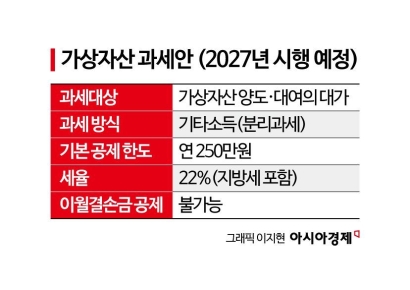 "Stocks Are Not Taxed, but Annual Crypto Gains Over 2.5 Million Won to Be Taxed Next Year... Investors Push Back"
- "Not Jealous of Winning the Lottery"... Entire Village Stunned as 200 Million Won Jackpot of Wild Ginseng Cluster Discovered at Jirisan
- "Rather Than Endure a 1.5 Million KRW Stipend, I'd Rather Earn 500 Million in the U.S." Top Talent from SNU and KAIST Are Leaving [Scientists Are Disappearing] ①
- "How Did an Employee Who Loved Samsung End Up Like This?"... Past Video of Samsung Electronics Union Chairman Resurfaces
- "Even With a 90 Million Won Salary and Bonuses, It Doesn’t Feel Like Much"... A Latecomer Rookie Who Beat 70 to 1 Odds [Scientists Are Disappearing] ③
There are also concerns that if the Democratic Party insists on a supplementary budget that increases expenditures, discussions on the supplementary budget could stall. The researcher said, "If the Democratic Party only demands a supplementary budget that increases expenditures, the government and ruling party will oppose it citing fiscal soundness, and the situation will proceed accordingly," adding, "In this case, it could devolve into mere political disputes, which is worrisome."
© The Asia Business Daily(www.asiae.co.kr). All rights reserved.