SEC Securities Controversy Ending with Ripple Victory... Crypto Market 'Buzzing'
Ripple Labs Wins Lawsuit After Over 2 Years
"Selling Ripple to General Investors Is Not a Violation of Securities Law"
"This Ruling Will Set a Standard for Future Cryptocurrency Securities Assessments"

The price of the virtual asset Ripple surged after a U.S. court ruled in favor of the issuer Ripple Labs in the securities controversy. While some argue that this ruling could mark the end of the downturn in the virtual asset market, others caution that premature optimism is unwarranted.
According to the global virtual asset market tracking site CoinMarketCap, as of 3:10 p.m. on the 14th, the price of Bitcoin rose 3.50% from the previous day to $31,375 (approximately 39.62 million KRW). Ethereum, the leading altcoin, increased by 7.49% to $2,009 (approximately 2.54 million KRW). Ripple, which was only around $0.47 the day before, surged over 60% to $0.76.
The rise in virtual asset prices was due to Ripple Labs winning the lawsuit against the U.S. Securities and Exchange Commission (SEC), which had been ongoing for more than two years. On the 13th (local time), New York District Court Judge Analisa Torres ruled in the SEC’s lawsuit against Ripple Labs, which claimed Ripple was an illegal security, stating, "Ripple Labs did not violate federal securities laws by selling Ripple to general investors on exchanges." She added, "Sales to general investors on (virtual asset) exchanges did not allow investors to reasonably expect profits from Ripple," and "Investors likely did not know whether the money they paid went to Ripple Labs or other sellers."
However, the judge ruled that sales of Ripple to institutional investors such as hedge funds violated federal securities laws. Judge Torres stated, "Sales of Ripple to institutional investors constitute investment contracts because investors expected Ripple’s price to rise," and added, "Therefore, federal securities laws must be complied with in these cases."

In the U.S., the existence of securities is determined by the Howey Test. This test includes criteria such as: ▲whether money was invested ▲whether there was an expectation of profit from the investment ▲whether the invested money was part of a common enterprise ▲whether the profit resulted from the efforts of others rather than the investor’s own efforts. The SEC has argued that the Howey Test is met because investors invested money expecting profits from Ripple Labs’ efforts to develop the Ripple ecosystem and increase its value. In December 2020, the SEC sued Ripple Labs, claiming Ripple was issued in violation of securities laws.
In contrast, Ripple Labs has argued that Ripple is not a security but a digital currency or medium of exchange, and that it does not grant holders ownership stakes or rights in Ripple Labs. They also explained that Ripple’s value is determined by the market, not by the efforts of Ripple Labs or its executives.
With the SEC and Ripple Labs’ claims sharply opposed, the market found it difficult to predict who would win. However, with the court ultimately ruling in favor of Ripple Labs, there is speculation that virtual asset prices will follow an upward trajectory. This is because the U.S. Commodity Futures Trading Commission (CFTC), which has relatively lighter regulations than the SEC, is more likely to oversee most virtual assets.
Of course, some caution that excessive optimism is premature. Professor Hong Ki-hoon of Hongik University’s Business Administration Department expressed concern, saying, "If the SEC appeals, we will have to wait for the outcome again, which could lead to a rollback of the price gains."
Nevertheless, the lawsuit’s outcome is expected to set a precedent for determining the securities status of virtual assets. Professor Hong said, "Except for coins that are clearly securities, this ruling will influence the securities controversy surrounding virtual assets," adding, "For coins created for general purposes similar to Ripple, rather than for specific projects, this ruling could be advantageous in securities determinations." The Korbit Research Center also noted in a report dated the 11th, "In ongoing rulings on the securities status of virtual assets represented by the Ripple lawsuit, the key point is not who wins between the SEC and Ripple Labs, but whether Ripple itself is judged to be a security."
Researcher Oh Jae-young of KB Securities said, "In the cryptocurrency market, regulatory intensity varies depending on whether a cryptocurrency is considered a security, so this ruling on Ripple’s securities status was highly anticipated. This ruling appears to have eased securities concerns not only for cryptocurrencies with securities issues but also for most coins," but he also explained, "However, this ruling is indirectly important for altcoins in general but is limited to Ripple itself, and a formal trial remains, so securities issues in the cryptocurrency market are not yet resolved."
Hot Picks Today
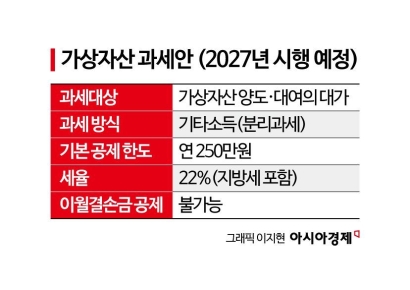 "Stocks Are Not Taxed, but Annual Crypto Gains Over 2.5 Million Won to Be Taxed Next Year... Investors Push Back"
- "Not Jealous of Winning the Lottery"... Entire Village Stunned as 200 Million Won Jackpot of Wild Ginseng Cluster Discovered at Jirisan
- "Rather Than Endure a 1.5 Million KRW Stipend, I'd Rather Earn 500 Million in the U.S." Top Talent from SNU and KAIST Are Leaving [Scientists Are Disappearing] ①
- "How Did an Employee Who Loved Samsung End Up Like This?"... Past Video of Samsung Electronics Union Chairman Resurfaces
- "Even With a 90 Million Won Salary and Bonuses, It Doesn’t Feel Like Much"... A Latecomer Rookie Who Beat 70 to 1 Odds [Scientists Are Disappearing] ③
Previously, the SEC filed lawsuits against global exchanges Binance and Coinbase for securities law violations, stating that 19 coins listed on these platforms?including Solana, Polygon, Binance Coin, and ADA?are securities. When the SEC declared these coins as securities, the total virtual asset market capitalization dropped by more than 100 trillion KRW, causing significant impact.
© The Asia Business Daily(www.asiae.co.kr). All rights reserved.







