[New York Stock Market] Rise on US Inflation Slowdown... Nasdaq Up 1.58%
The three major indices of the U.S. New York stock market all closed higher on the 13th (local time) after the Producer Price Index (PPI), a key inflation indicator following the Consumer Price Index (CPI), came in below expectations. The value of the dollar and Treasury yields slipped.
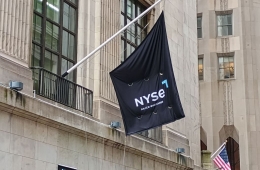
At the New York Stock Exchange (NYSE) that day, the Dow Jones Industrial Average closed at 34,395.14, up 47.71 points (0.14%) from the previous session. The large-cap-focused S&P 500 index rose 37.88 points (0.85%) to 4,510.04, and the tech-heavy Nasdaq index ended the day at 14,138.57, up 219.61 points (1.58%).
In the S&P 500, nine sectors excluding energy and healthcare closed higher. Notably, the gains in tech and telecommunications stocks, which are sensitive to interest rates, stood out. Alphabet (Google) rose 4.72%, Amazon increased by 2.68%, and Nvidia climbed 4.74%. PepsiCo gained more than 2% on strong earnings. On the other hand, Delta Air Lines closed slightly lower despite announcing record quarterly profits and raising its annual earnings guidance. Walt Disney, which announced CEO Bob Iger’s term extension until 2026, closed with a slight gain.
![[Image source=Reuters Yonhap News]](http://www.asiae.co.kr/news/img_view.htm?img=2023071405141697341_1689279256.jpg)
Investors closely watched the PPI released that morning following the previous day’s CPI data, as well as corporate earnings. Inflation indicators have shown a continuous slowdown, easing concerns about tightening monetary policy.
According to the U.S. Department of Labor, the wholesale price index for June rose 0.1% year-over-year, the smallest increase since August 2020. This was below Wall Street’s forecast of 0.4% and also smaller than May’s 0.9% rise. The month-over-month PPI also rose by only 0.1%, below the market expectation of 0.2%, indicating a slowdown. Core PPI, which excludes volatile energy, food, and trade services, increased 2.6% year-over-year and 0.1% month-over-month.
This wholesale price data was released following the June CPI report from the previous day, which showed a 3.0% year-over-year increase, below market expectations. This confirms additional evidence that the Federal Reserve’s monetary tightening policy, ongoing for over a year, is gradually taking effect. Typically, increases in wholesale prices are passed on to consumer prices. Major foreign media reported that "there is further evidence that the U.S. economy has entered a disinflation phase."
Following the CPI and PPI confirming the inflation slowdown trend, the Fed’s indication of two more rate hikes this year has strengthened expectations that tightening could end earlier than the dot plot forecast. However, the prevailing view is that this will not affect the rate hike scheduled for July 25-26.
The market also largely expects a rate hold in September after the July hike. According to the Chicago Mercantile Exchange (CME) FedWatch tool, federal funds (FF) futures reflected about a 93% chance of a 0.25 percentage point rate hike (a "baby step") in July. The probability of a hold in September was in the 80% range. The hold expectation has been elevated since the CPI release the previous day. The chance of an additional baby step in September was only around 12%.
Within the Fed, concerns remain about core inflation pressures and an overheated labor market. The Department of Labor reported that initial jobless claims last week fell by 12,000 to 237,000, contrary to market expectations of a 250,000 increase.
Mike Lowengart of Morgan Stanley Global Investment Office said, "The PPI confirmed the inflation cooling shown by the previous day’s CPI, but the lower-than-expected weekly initial jobless claims reminded us of labor market concerns. The Fed still plans to raise rates within two weeks (at the July FOMC), and investors will focus on corporate balance sheets as earnings season begins." Fed officials including Thomas Barkin, president of the Richmond Federal Reserve Bank, also expressed caution, saying, "If we retreat too quickly, inflation will strengthen again, and the Fed will have more work to do."
Delta Air Lines and PepsiCo, which reported second-quarter earnings that day, both posted results exceeding expectations and raised their annual guidance. The earnings reports of major banks such as JPMorgan, Wells Fargo, and Citigroup, typically seen as the kickoff to Wall Street’s earnings season, will begin the following day on the 14th. According to FactSet, net earnings of S&P 500 companies for the second quarter are estimated to decline 7.2% year-over-year.
In the New York bond market, Treasury yields declined. The yield on the 10-year U.S. Treasury note hovered around 3.76%. The 2-year Treasury yield, sensitive to monetary policy, fell to about 4.61%. The dollar index, which measures the dollar’s value against six major currencies, dropped nearly 0.8% to 99.7, breaking below the 100 level.
Hot Picks Today
 As Samsung Falters, Chinese DRAM Surges: CXMT Returns to Profit in Just One Year
- "Most Americans Didn't Want This"... Americans Lose 60 Trillion Won to Soaring Fuel Costs
- Trump Puts Iran Strike on Hold One Day Before Attack... "Full-Scale Offensive If Talks Fail"
- Samsung Union Member Sparks Controversy With Telegram Post: "Let's Push KOSPI Down to 5,000"
- "Why Make Things Like This?" Foreign Media Highlights Bizarre Phenomenon Spreading in Korea
International oil prices closed higher on news of easing U.S. inflation. On the New York Mercantile Exchange, August delivery West Texas Intermediate (WTI) crude oil rose $1.14 (1.50%) to close at $76.89 per barrel, the highest closing price since April 25.
© The Asia Business Daily(www.asiae.co.kr). All rights reserved.