Still at the level of situation management... "Yellen also couldn't find a breakthrough between the US and China" (Comprehensive)
"There are significant disagreements." Janet Yellen, the U.S. Treasury Secretary, who concluded her four-day visit to China, reaffirmed the fundamental differences that make ongoing U.S.-China conflicts inevitable. While it is meaningful that high-level dialogue channels between the two countries have been restored not only in diplomacy but also in the economic sector, this visit also failed to produce any breakthrough or agreement to ease U.S.-China tensions. Major foreign media outlets have positively evaluated efforts to improve bilateral relations but have also pointed out these limitations. The U.S. is expected to announce additional investment restrictions targeting Chinese advanced technology within this month.
![[Image source=EPA Yonhap News]](http://www.asiae.co.kr/news/img_view.htm?img=2023070923542291349_1688914461.jpg)
"Constructive Dialogue with China" Yellen Also Signals Continuation of 'Derisking'
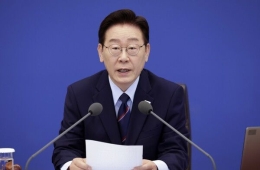
At a press conference held at the U.S. Embassy in Beijing on the 9th (local time), Secretary Yellen described her talks with key Chinese officials as "direct, substantive, and constructive." During her visit, she held a series of meetings with core figures in China's economic leadership, including Premier Li Qiang, Vice Premier He Lifeng, and Minister of Finance Liu Kun. The discussions reportedly covered a wide range of issues, including advanced technology and investment regulations?key economic concerns between the two countries?high tariffs, the Ukraine war, climate change, and global debt problems.
Yellen's visit attracted attention as it followed U.S. Secretary of State Antony Blinken's visit to Beijing last month, which reactivated diplomatic dialogue channels, and aimed to establish new dialogue channels in the economic sector as well. On that day, Yellen emphasized, "The United States does not seek decoupling from China," adding, "We know that decoupling the world's two largest economies would be disastrous for both countries, would destabilize the world, and is practically unfeasible." She actively clarified that U.S. policy toward China is not an attempt to hinder China's economic growth.
However, significant differences remained on key issues. While drawing a line against the decoupling that China fears, Yellen confirmed, "We will continue targeted measures necessary to protect the national security interests of ourselves and our allies." She made clear the intention to continue 'derisking'?removing risk factors originating from China?instead of decoupling China from critical industrial supply chains. This aligns with her April speech on China, where she stated, "National security is paramount in our relationship with China," and "We will not compromise when it conflicts with economic interests."
Both sides reportedly stood firm on issues such as the high tariffs imposed during the Trump administration, regulations focused on advanced industries including semiconductors, sanctions on Micron, and China's export controls on rare earth minerals. Although there had been expectations that the high tariffs, which contribute to U.S. inflation, might be eased soon, Yellen dismissed this by saying, "Assessments are still ongoing." China also showed no signs of hesitation regarding its planned export controls on gallium and germanium, effective August 1. The only consensus reached was the need for communication to stabilize bilateral relations, with no breakthroughs emerging, which explains the widespread assessment that the visit yielded no significant progress.
![[Image source=EPA Yonhap News]](http://www.asiae.co.kr/news/img_view.htm?img=2023070923593391350_1688914773.jpg)
"Will Not Lead to Improved Relations" Limitations Highlighted
Experts from both countries have pointed out the limitations, stating that this visit is unlikely to lead to meaningful easing. The New York Times (NYT) reported, "Economic tensions between the two countries are unlikely to ease significantly," adding, "Secretary Yellen returned to Washington without announcing any breakthroughs or agreements to resolve the ongoing rift between the two nations."
Mark Sobel, former U.S. Treasury Deputy Assistant Secretary, told the NYT, "Yellen's visit will temporarily lower the temperature in economic relations and remind that the U.S. and China share some commercial interests," but he predicted, "It will hardly change the fundamental dynamics and trajectory of economic relations." Wu Xinbo, Dean of the School of International Studies at Fudan University in Shanghai, also expressed concern, saying, "Unless there is a change in the Biden administration's China policy, Yellen's visit will not lead to improved relations," and "So far, China has seen no signs that President Biden will reconsider his economic policy toward China."
The Wall Street Journal (WSJ) pointed out that despite high-level dialogues, "Relations remain unstable," and "The U.S. and China are still far apart on core national security issues." The official economic dialogues that Yellen predicted would be activated in the future fall far short of the level of past U.S.-China engagements, according to the WSJ. The Washington Post (WP) described the meeting between Yellen and Vice Premier He Lifeng on Saturday as "a first step toward easing relations," but also noted, "That is the limitation of this visit."
There are numerous factors that could push U.S.-China conflicts to extremes at any time. The U.S. is expected to unveil new regulations this month that will block American companies and capital from investing in Chinese advanced technology. Yellen reaffirmed on CBS's Face the Nation that national security remains a priority for the U.S., stating, "President Biden is reviewing potential controls related to outbound investment in a narrow range of advanced technology sectors."
China is also expected to expand its export controls beyond the recently announced gallium and germanium restrictions on rare metals and minerals. Since these measures are justified on national security grounds rather than economic logic, they are unlikely to be easily relaxed. He Weiyuan, a senior researcher at the China Institute for Globalization, told the state-run Global Times, "It is positive that both countries show willingness to maintain dialogue to manage disagreements and avoid conflict," but he assessed, "The U.S. will find it difficult to abandon so-called national security-based technology blockades against China."
Hot Picks Today
 "Stocks Are Not Taxed, but Annual Crypto Gains Over 2.5 Million Won to Be Taxed Next Year... Investors Push Back"
- "Don't Throw Away Coffee Grounds" Transformed into 'High-Grade Fuel' in Just 90 Seconds [Reading Science]
- Signed Without Viewing for 1.6 Billion Won... Jamsil and Seongbuk Jeonse Prices Jump 200 Million Won in a Month [Real Estate AtoZ]
- "Groups of 5 or More Now Restricted"... Unrelenting Running Craze Leaves Citizens and Police Exhausted
- "Even With a 90 Million Won Salary and Bonuses, It Doesn’t Feel Like Much"... A Latecomer Rookie Who Beat 70 to 1 Odds [Scientists Are Disappearing] ③
Moreover, even as the U.S.-China policy and competitive dynamics summarized as derisking continue, the possibility that the two countries will individually cooperate on global issues such as climate change and developing countries' debt problems, as Yellen requested, is considered low. Bloomberg noted, "Yellen's mission in Beijing was complex," and warned, "The next test for bilateral relations is imminent," highlighting the potential for tensions to escalate at any time.
© The Asia Business Daily(www.asiae.co.kr). All rights reserved.