Yoon Administration Youth Policy Report Card... Excellent in Education-Job Linkage, Insufficient in Housing Supply Expansion
2023 Youth Policy Comprehensive Evaluation Results

Last year, the report card for 376 youth policies established by the central government was released. Policies strengthening the linkage between education and employment and guaranteeing educational opportunities received positive evaluations, while opinions suggested that youth housing supply policies need improvement.
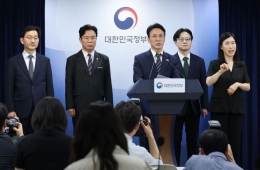
According to the '2023 Comprehensive Evaluation Results of Youth Policies' announced by the Office for Government Policy Coordination on the 30th, among the 376 youth policy tasks promoted by central ministries, 83 received an S grade, 224 an A grade, and 68 a B grade. This evaluation was conducted by a panel consisting of 38 experts and 19 youths, reviewing youth policies across five major areas (employment, housing, education, welfare & culture, participation & rights).
The field with the highest number of excellent evaluations was education. Among 107 policies, 36 (33.6%) received an S grade. In particular, policies strengthening the linkage between education and employment received the highest evaluation among subfields, with 16 out of 31 (51.6%) rated S. The Office for Government Policy Coordination explained, “Education for talent development linked to new industries such as software, smart factories & smart farms, and information security received positive evaluations as it aligned with youths’ preferences for these occupations and led to employment.”
The representative excellent task selected was the Ministry of Science and ICT’s ‘Software (SW) Maestro Program.’ This program provides intensive mentoring by experts to outstanding talents in the software field to nurture them as leaders. The Military Manpower Administration’s policy offering self-development opportunities such as credit acquisition to social service agents was also recognized as an excellent task.
Housing Policies Need More Youth Feedback and Close Support
On the other hand, in the housing policy area, among 27 projects, 15 (55.5%) received a B grade, the highest proportion. Especially, policies for expanding youth housing supply and promoting youth-friendly housing models had 66.6% rated B. It was pointed out that when preparing housing supply plans, communication with the target group should be strengthened based on youth opinions, and close services supporting contract, relocation, and settlement, in addition to cash support, are necessary.
In the employment sector, 30 out of 148 policies (20.2%) received an S grade. While youth startup support projects and vocational training opportunities were well received, there were calls for expanding government-level incentives for small and medium-sized enterprises and reducing early closure rates. In the welfare & culture sector, policies supporting vulnerable youths and emerging artists and reducing transportation costs were praised, and in the participation & rights area, the implementation of the Youth Basic Act received positive evaluations.
In the local government agency evaluation conducted for the first time this year, among 17 cities and provinces, Gyeongsangbuk-do, Gwangju Metropolitan City, Seoul Special City, Sejong Special Self-Governing City, and Busan Metropolitan City were selected as excellent local governments.
Hot Picks Today
!["Not Everyone Can Afford This: Inside the World of the True Top 0.1% [Luxury World]"](https://cwcontent.asiae.co.kr/asiaresize/93/2026051507261063923_1778797570.png) "Not Everyone Can Afford This: Inside the World of the True Top 0.1% [Luxury World]"
"Not Everyone Can Afford This: Inside the World of the True Top 0.1% [Luxury World]"
- While All Eyes Were on Samsung and Hynix, This Company Surged 50% to New Highs in Four Days [Weekend Money]
- "Now Our Salaries Are 10 Million Won a Month" Record High... Semiconductor Boom Drives Performance Bonuses at Major Electronic Component Firms
- "Heading for 2 Million Won": The Company the Securities Industry Says Not to Doubt [Weekend Money]
- Experts Already Watching Closely..."Target Price Set at 970,000 Won" Only Upward Momentum Remains [Weekend Money]
Meanwhile, awards will be given on Youth Day, September 16, to the persons in charge of excellent youth policy tasks and outstanding local government agencies, and tasks requiring improvement will have improvement plans prepared with the relevant ministries to be reflected in the following year.
© The Asia Business Daily(www.asiae.co.kr). All rights reserved.