Establishing the Framework for Urban Spatial Structuring in Changwon and Laying the Foundation for the Future of the National Industrial Complex
Changwon Special City, Rust Belt Region Universities
Engage in Heated Discussions with Development Agency and Experts
Changwon Special City in Gyeongnam is making full-scale moves to establish an urban spatial structuring system for the next 50 years and to lay the foundation for the future of the national industrial complex.
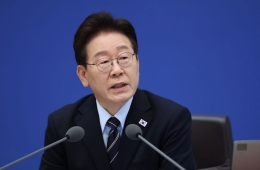
Led by Vice Mayor Jo Myeong-rae, the delegation, including the urban planning department, industrial complex department, and the city research institute, visited Detroit and three other cities in the United States from the 21st to the 29th, gathering expert opinions from related organizations such as universities, development agencies, the World Bank, and KOTRA.

Led by Jo Myung-rae, the 2nd Deputy Mayor of Changwon Special City, Gyeongnam, a delegation visited Detroit, USA, and three other cities, and heard opinions from experts of related organizations.
View original imageThe delegation observed that Detroit was a hub of manufacturing and shipping industries in the 1950s, with a population reaching 1.8 million, becoming a global center of the automobile industry thanks to Henry Ford. However, from the 1980s, many factories and residents moved to the suburbs, leading to urban decline characterized by the closure of the Packard automobile plant and surrounding vacant houses. They also examined the revitalization efforts such as the Ford automobile plant and the reconstruction of Michigan Central Station, which serve as catalysts for urban regeneration in a city that had defaulted.
Additionally, during a visit to the KOTRA trade office, the delegation heard from Jang Chung-sik, director of the Detroit trade office, about the current urban conditions in Detroit and other Rust Belt areas in the U.S., as well as efforts toward urban regeneration.
In Pittsburgh, the delegation learned that the city, once the largest inland port and transportation hub in the U.S., was a center for the steel industry and coal production based on natural resources. However, in the 1970s, traditional American industries were overtaken by emerging industrial countries, causing Pittsburgh to become part of the Rust Belt. The steel and nuclear industries declined, and the population fell from 700,000 to 300,000.
Experts such as Professor Carissa Schively Slotterback from the Graduate School of Public and International Affairs at the University of Pittsburgh and Cody Gill, manager of the Pittsburgh Regional Alliance (PRA), shared their insights. Regarding Changwon Special City's current plans to integrate AI and robotics as part of the Fourth Industrial Revolution, the delegation met with Professor Philip Lehman of Carnegie Mellon University to discuss the university’s initiatives in the Fourth Industrial Revolution.
At the World Bank (IBRD) in Washington D.C., the delegation held policy discussions and informal talks with Dr. Lee Ji-seon from the Korea Transport Institute and Yoon Sung-eop from the Ministry of Land, Infrastructure and Transport regarding Changwon’s hydrogen mobility policies and promotion.
Hot Picks Today
 "Stocks Are Not Taxed, but Annual Crypto Gains Over 2.5 Million Won to Be Taxed Next Year... Investors Push Back"
- "Don't Throw Away Coffee Grounds" Transformed into 'High-Grade Fuel' in Just 90 Seconds [Reading Science]
- Signed Without Viewing for 1.6 Billion Won... Jamsil and Seongbuk Jeonse Prices Jump 200 Million Won in a Month [Real Estate AtoZ]
- "Groups of 5 or More Now Restricted"... Unrelenting Running Craze Leaves Citizens and Police Exhausted
- "Even With a 90 Million Won Salary and Bonuses, It Doesn’t Feel Like Much"... A Latecomer Rookie Who Beat 70 to 1 Odds [Scientists Are Disappearing] ③
Vice Mayor Jo said, “Changwon represents South Korea’s advanced machinery and manufacturing city. However, it has lost much of its economic vitality because it has not led the major changes of the Fourth Industrial Revolution.” He added, “In this era of the Fourth Industrial Revolution, we must reorganize the industrial structure and become a city that leads the entire industry proactively. We visited three major cities, including Detroit, a key city for industrial complex regeneration and the medical bio industry, to directly experience advanced administration. We will review the 50-year history of Changwon Special City’s national industrial complex and accelerate preparations for a second leap forward toward a grand vision and sustainable future for Changwon Special City.”
© The Asia Business Daily(www.asiae.co.kr). All rights reserved.