Citizen Groups Oppose Establishment of Changwon International School ... Changwon City to Decide Through Feasibility Study and Public Opinion Survey
Provincial Office of Education: "Address Concerns Over Worsening Educational Inequality First"
Gyeongnam Changwon City is facing opposition from the Gyeongnam Education Solidarity regarding the establishment of an international school within the Jinhae Free Economic Zone.
The Gyeongnam Education Solidarity, composed of 18 organizations including the Education Hope Gyeongnam Parents' Association, Masan YMCA, and the Gyeongnam branch of the National Education Public Officials Union, held a press conference on the afternoon of the 25th at the Changwon Special City Hall press room to voice their opposition to the establishment.
![Gyeongnam Education Solidarity is holding a press conference opposing Changwon City's plan to establish an international school. <br>[Photo by Lee Se-ryeong]](http://www.asiae.co.kr/news/img_view.htm?img=2023052517305343719_1685003452.jpg)
Gyeongnam Education Solidarity is holding a press conference opposing Changwon City's plan to establish an international school.
[Photo by Lee Se-ryeong]
The solidarity stated, “International schools are criticized for being called elite schools due to their exorbitant tuition fees and serving as stepping stones for admission to prestigious foreign universities,” adding, “Attracting international schools could expand educational polarization and further deepen educational inequality.”
“Although 30% of the enrollment quota is designated for domestic students and 70% for foreign students, with the superintendent of education’s discretion allowing up to a 20% increase so that domestic students can fill up to 50% of the quota, currently, foreign schools in operation have over 60% of their students as domestic children from affluent families,” they said, emphasizing, “Attracting international schools means using citizens’ tax money to benefit a very small number of students with tuition fees in the hundreds of millions of won.”
They urged, “The city should not spend taxpayers’ money to attract international schools but rather spare no effort in supporting all citizens to grow into healthy individuals in an equal educational environment.”
Earlier, on January 25, Changwon City announced plans to attract and establish an integrated international school for elementary, middle, and high school levels within the Jinhae Free Economic Zone, and to commence a feasibility study and basic plan for establishing foreign educational institutions in the Jinhae area.
The feasibility study for the establishment of the international school, funded with 81 million won, began on the 15th and will hold a kickoff report meeting on the 26th, with completion expected by March next year.
According to the city, as of the previous year, 23 international schools are being planned for establishment across 12 regions, and Jeonbuk Province and Gangwon Province, where the Special Self-Governing Province Act was passed last year, are preparing international schools where 100% of students can be domestic.
![Kim Tae-ho, Director of Lifelong Education at Changwon Special City, Gyeongnam, is discussing the feasibility study service related to the establishment of an international school and the plan to conduct a public opinion survey targeting citizens. <br>[Photo by Lee Se-ryeong]](http://www.asiae.co.kr/news/img_view.htm?img=2023052517405243734_1685004052.jpg)
Kim Tae-ho, Director of Lifelong Education at Changwon Special City, Gyeongnam, is discussing the feasibility study service related to the establishment of an international school and the plan to conduct a public opinion survey targeting citizens.
[Photo by Lee Se-ryeong]
A city official stated, “Foreign educational institutions have various establishment and operation methods depending on site location, scale, educational corporation, and operational direction,” adding that they plan to conclude related matters such as whether to proceed with the establishment of the international school, its scale, and operational plans based on the results of the feasibility study.
He continued, “With large-scale national projects underway such as the Gadeokdo New Airport, Jinhae New Port, and Changwon National Industrial Complex 2.0, foreign educational institutions are necessary to improve living conditions for foreigners, attract foreign capital, and revitalize the local economy,” adding, “To address the rapid population decline and enhance Changwon’s global appeal, educational infrastructure befitting a city of one million is required.”
“We will carefully review the establishment scale, location, costs, and solutions to concerns in the feasibility study and conduct public opinion surveys targeting citizens to proceed with the project prudently,” he added.
Hot Picks Today
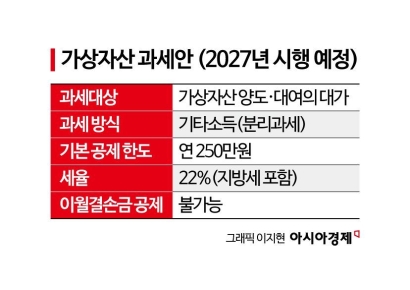 "Stocks Are Not Taxed, but Annual Crypto Gains Over 2.5 Million Won to Be Taxed Next Year... Investors Push Back"
- "Not Jealous of Winning the Lottery"... Entire Village Stunned as 200 Million Won Jackpot of Wild Ginseng Cluster Discovered at Jirisan
- "Rather Than Endure a 1.5 Million KRW Stipend, I'd Rather Earn 500 Million in the U.S." Top Talent from SNU and KAIST Are Leaving [Scientists Are Disappearing] ①
- "How Did an Employee Who Loved Samsung End Up Like This?"... Past Video of Samsung Electronics Union Chairman Resurfaces
- "Even With a 90 Million Won Salary and Bonuses, It Doesn’t Feel Like Much"... A Latecomer Rookie Who Beat 70 to 1 Odds [Scientists Are Disappearing] ③
An official from the provincial education office said, “The establishment of schools or educational institutions requires the formation of social consensus, municipal budget support necessary for the establishment and operation of international schools, thorough analysis of the feasibility of curriculum operation, and sufficient opinion-gathering procedures from parents, residents, and the educational community,” emphasizing, “The establishment of international schools should be approached cautiously after measures to address concerns such as high tuition fees, the burden of establishment and operation costs, and the deepening of educational inequality are put in place.”
© The Asia Business Daily(www.asiae.co.kr). All rights reserved.