[Reporter’s Notebook] Filing Complaints with the FSC Just Because of a Sell Recommendation
![[Reporter’s Notebook] Filing Complaints with the FSC Just Because of a Sell Recommendation](http://www.asiae.co.kr/news/img_view.htm?img=2023051907582935886_1684450709.jpg)
'Ecopro target price set at 455,000 KRW, investment rating downgraded to sell'.
This is part of a report from H Securities on April 12. At that time, Ecopro's stock price had surpassed 760,000 KRW, continuously hitting new highs. It was a period when market analysis was divided between short-term overheating and sufficient upside potential. This was when the securities industry first issued a 'sell' rating report.
However, the analyst recently had to explain to the Financial Supervisory Service (FSS) the circumstances behind issuing the 'sell' rating. The situation was as follows: an individual investor filed a complaint with the FSS regarding the 'sell' report. The complaint alleged a suspicious relationship between the analyst and the short-selling parties of Ecopro. The FSS, upon receiving a complaint, must verify the matter and respond to the complainant within 14 business days. It is currently known that the FSS is reviewing the complaint.
Was the 'sell' rating on Ecopro inappropriate? Stock price forecasts are fundamentally based on performance. Future income value is conservatively evaluated and discounted to present value. Ecopro's quarterly report states that its main business includes stock investments in subsidiaries and financial support. As a holding company, Ecopro's stock price is subject to a certain discount rate because dividends from subsidiaries are its primary income source.
Ecopro's operating profit in the first quarter of this year was 182.4 billion KRW, about half that of SK Innovation (375 billion KRW). At that time, Ecopro's market capitalization exceeded 20 trillion KRW, higher than SK Innovation's. The sell report from H Securities stated, "The fair market capitalization in 2027 is estimated at 11.8 trillion KRW, but the current stock price already reflects this." Currently, Ecopro's market capitalization has fallen to around 15 trillion KRW.
Next, did the analyst collude with short-selling forces? So far, there is no evidence of involvement, and H Securities internally judged that he has no connection to short selling.
In fact, it is not easy for securities firms to issue 'sell' ratings because their main clients are corporations. Securities firms earn significant revenue from companies through corporate bond issuance, acquisition financing, and rights offerings. Even if securities firms respect analysts' independence, they inevitably consider corporate interests. Nevertheless, the 'sell' rating was issued because there was sufficient basis. 'Sell' ratings are given when there is clear evidence of stock price overheating or disclosed negative factors.
Hot Picks Today
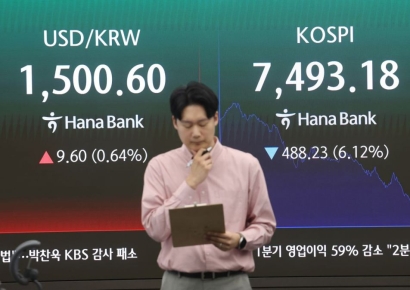 After Topping 8,000 Instead of Hitting 10,000... KOSPI Plunges—When Will It Rebound?
- "Samsung and Hynix Were Once for the Underachievers"... Hyundai Motor Employee's Lament
- [Breaking] Court Rules Against Samsung Electronics Union...1 Billion Won per Day Penalty for Exceeding Strike Scope
- Six Economic Organizations Urge Withdrawal of Samsung Electronics Strike Plan...Warn of National Loss of Opportunity
- "That? It's Already Stashed" Nightlife Scene Crosses the Line [ChwiYak Nation] ③
However, the emergence of 'fandom shareholders' who reject sell ratings and react angrily is concerning. Being fixated on stock prices and dismissing other opinions is undesirable. A detached and long-term perspective to calmly reassess corporate value is necessary.
© The Asia Business Daily(www.asiae.co.kr). All rights reserved.







