US Fed Raises Key Interest Rate by 0.25%P... Signals Possible Pause Ahead (Update)
The U.S. central bank, the Federal Reserve (Fed), carried out a so-called ‘baby step’ by raising the benchmark interest rate by 0.25 percentage points as initially expected, despite renewed concerns over risks in the banking sector. By removing the phrase 'additional policy firming may be appropriate' from the monetary policy statement, it also hinted at a pause in future rate hikes.
On the 3rd (local time), following the regular May Federal Open Market Committee (FOMC) meeting, the Fed announced in its policy statement that it would raise the federal funds rate by 0.25 percentage points from the previous 4.75?5% range to 5?5.25%. This marks the 10th rate hike since the rate hike cycle began in March last year and the highest level in 16 years. The FOMC members unanimously decided on the baby step at the meeting.
![[Image source=Reuters Yonhap News]](http://www.asiae.co.kr/news/img_view.htm?img=2023050403000720389_1683136807.jpg)
The FOMC stated, "The U.S. banking system is sound and resilient," but added, "Recent events may weigh on economic activity, employment, and inflation through tighter credit conditions for households and businesses, although the extent of these effects is highly uncertain." It also emphasized that it is "closely monitoring inflation risks." This is similar to the statement from the March FOMC, the first after the Silicon Valley Bank (SVB) collapse, but with the addition of the word 'tighter' before credit conditions, indicating concerns about credit tightening triggered by the SVB incident.
Additionally, the phrase added in March, "some additional policy firming may be appropriate to achieve a sufficiently restrictive monetary policy stance," was removed this time. Instead, the FOMC stated, "When determining the appropriate extent of additional policy firming, the Committee will consider the cumulative tightening of monetary policy, the lags with which monetary policy affects economic activity and inflation, and economic and financial developments."
This baby step had been anticipated early on. After the Fed presented a year-end rate forecast of 5.1% (median) in the March dot plot, the market widely expected a pause following the May rate hike. In the March dot plot, a majority of the 18 FOMC members indicated a pause after one more rate hike.
The market is currently awaiting the press conference of Fed Chair Jerome Powell. With the Fed choosing a 0.25 percentage point increase as expected, attention is focused on whether Chair Powell’s remarks will provide specific hints about the future course of monetary policy. If the rate hike cycle that has lasted over a year comes to a halt, market expectations for a rate cut within the year are likely to spread again.
Hot Picks Today
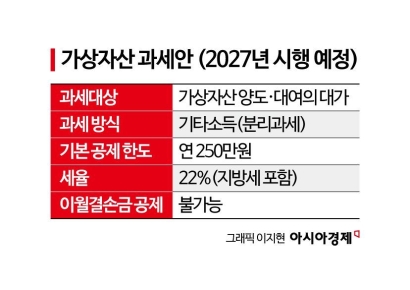 "Stocks Are Not Taxed, but Annual Crypto Gains Over 2.5 Million Won to Be Taxed Next Year... Investors Push Back"
- "Not Jealous of Winning the Lottery"... Entire Village Stunned as 200 Million Won Jackpot of Wild Ginseng Cluster Discovered at Jirisan
- "Even With a 90 Million Won Salary and Bonuses, It Doesn’t Feel Like Much"... A Latecomer Rookie Who Beat 70 to 1 Odds [Scientists Are Disappearing] ③
- "Rather Than Endure a 1.5 Million KRW Stipend, I'd Rather Earn 500 Million in the U.S." Top Talent from SNU and KAIST Are Leaving [Scientists Are Disappearing] ①
- "How Did an Employee Who Loved Samsung End Up Like This?"... Past Video of Samsung Electronics Union Chairman Resurfaces
Meanwhile, as the U.S. upper interest rate limit has risen to 5.25%, the interest rate gap with South Korea has widened to a record high of 1.75 percentage points. The Bank of Korea is scheduled to hold its last Monetary Policy Committee meeting of the first half on the 25th.
© The Asia Business Daily(www.asiae.co.kr). All rights reserved.







