Cho Tae-yong: "Korea-US, Nuclear Control Alliance... Goal to Deploy Strategic Assets 365 Days if North Korea Plays with Fire"
Washington Declaration, Promise of Retaliation on First North Korean Nuclear Attack
NCG Meets More Than Four Times a Year
Nuclear Sharing Controversy... Expression Errors Between South Korea and the US
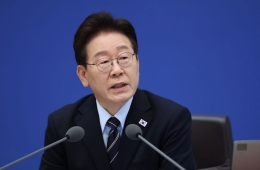
Cho Tae-yong, Director of the National Security Office, stated that thanks to the 'Washington Declaration' adopted with U.S. President Joe Biden during President Yoon Suk-yeol's state visit to the United States, the two countries have been strengthened as a 'nuclear control alliance.' However, he clarified that there was a misunderstanding related to the usage of the term 'nuclear sharing,' which had sparked controversy.
On the 1st, Cho appeared on YTN and spoke about the Washington Declaration, which strengthens extended deterrence against North Korea, saying, "The only person authorized to issue orders regarding nuclear weapons in the U.S. is the President. It is important that the U.S. President personally made this promise with his own words and signature."
He continued, "If North Korea attacks the Republic of Korea with nuclear weapons, the U.S. President has promised in writing that the U.S. will retaliate immediately, decisively, and firmly using all capabilities it possesses against North Korea," adding, "In other words, the U.S. President said that if North Korea attacks South Korea with nuclear weapons, it means the end of the North Korean regime. This is the first time such a statement has been made."
Cho explained that the existing ROK-U.S. alliance, which was based on conventional military power, has been remarkably developed into a 'nuclear deterrence alliance' based on nuclear capabilities. He particularly highlighted the achievement of meeting more than four times a year through the Nuclear Consultative Group (NCG) to discuss specific matters such as joint planning, joint execution, information sharing, and training related to nuclear weapons operations, and reporting directly to the two heads of state.
Regarding the deployment of nuclear assets related to deterring North Korea's nuclear threats, he said that not only nuclear submarines equipped with strategic nuclear weapons at the intercontinental ballistic missile (ICBM) level but also air force bombers and naval vessels "will effectively operate in a situation equivalent to the constant deployment of strategic assets."
He emphasized, "The goal is to maintain a posture of deploying strategic assets that can certainly punish North Korea if it plays with fire 365 days a year."
In response to criticism that the Nuclear Consultative Group (NCG) is a level below NATO's Nuclear Planning Group (NPG), he said, "NATO's 29 countries meet once a year for planning, whereas the NCG meets quarterly, that is, four times a year, and consultations are one-on-one. Considering South Korea's voice and influence, which method allows for more in-depth discussions is obvious."
![[Image source=Yonhap News]](http://www.asiae.co.kr/news/img_view.htm?img=2023040322595176827_1680530391.jpg)
He corrected that there was some misunderstanding between the South Korean and U.S. governments regarding the term 'nuclear sharing.' Previously, Kim Tae-hyo, First Deputy Director of National Security, stated that the Washington Declaration might give the impression of 'practically sharing nuclear weapons,' but a White House official drew a line by saying to the media that 'it is not nuclear sharing.'
Regarding this, Cho said, "Deputy Director Kim said, 'What I meant was to establish a tightly knit nuclear deterrence posture so that our people feel as if we are sharing nuclear weapons. It is written as a feeling.' The U.S. only has the NATO-style concept of nuclear sharing, which is different from this. So, they said it is different."
He added, "NATO-style nuclear sharing requires tactical nuclear weapons to be brought in and stationed. Since we do not have tactical nuclear weapons coming in, and they would be outside the Korean Peninsula, there is a difference. Therefore, the term 'nuclear sharing' could cause unnecessary misunderstandings, so as I mentioned earlier, it would be more accurate to express it as a nuclear control alliance or nuclear deterrence alliance."
Regarding the controversy over whether to provide weapons support to Ukraine, which arose following President Yoon's interview with foreign media just before his visit to the U.S., he said, "There are various options."
Cho explained, "Depending on how the situation in Ukraine unfolds or if a large-scale humanitarian issue arises, we always have flexibility in our policies and enough room to review options. Currently, the President said there is space to consider various policies."
Meanwhile, in response to criticism that no concrete discussions were held between the South Korean and U.S. leaders regarding the Inflation Reduction Act (IRA) and the CHIPS and Science Act (CSA), he said, "(President Joe Biden) said he would give special consideration to Korean companies," adding, "there is already a trend, such as allowing commercial vehicles in electric vehicles and providing benefits if minerals from Korea are used to make batteries."
Hot Picks Today
 "Stocks Are Not Taxed, but Annual Crypto Gains Over 2.5 Million Won to Be Taxed Next Year... Investors Push Back"
- "Don't Throw Away Coffee Grounds" Transformed into 'High-Grade Fuel' in Just 90 Seconds [Reading Science]
- Signed Without Viewing for 1.6 Billion Won... Jamsil and Seongbuk Jeonse Prices Jump 200 Million Won in a Month [Real Estate AtoZ]
- "Groups of 5 or More Now Restricted"... Unrelenting Running Craze Leaves Citizens and Police Exhausted
- "Even With a 90 Million Won Salary and Bonuses, It Doesn’t Feel Like Much"... A Latecomer Rookie Who Beat 70 to 1 Odds [Scientists Are Disappearing] ③
He also said, "Among the remaining tasks, the most important is the semiconductor export controls, which received a one-year grace period last October," and added, "In my view, there will be good results that sufficiently respect the interests of our companies in that matter as well."
© The Asia Business Daily(www.asiae.co.kr). All rights reserved.