Germany and Japan Move to Curb Semiconductors... China Calls It "Self-Harm"
As the United States moves to impose export controls aimed at curbing China's "semiconductor rise," China has criticized Japan and Germany for joining these efforts, calling it an act of "self-harm."
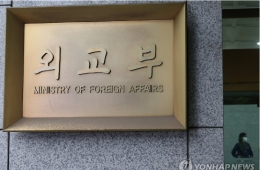
According to major foreign media on the 29th, Mao Ning, spokesperson for the Chinese Ministry of Foreign Affairs, said at a regular briefing the previous day, "China is an important global semiconductor market, and the method of some countries imposing export control measures on China under the pretext of reducing so-called dependence is not constructive."

Mao Ning, Spokesperson of the Chinese Ministry of Foreign Affairs
Photo by Yonhap News
He continued, "China advises these countries to respect the laws of the market economy and to jointly uphold the international economic and trade order with China," emphasizing, "Economic and trade cooperation is mutually beneficial," and "China is an important market for the global semiconductor industry."
Earlier, it was reported through foreign media that the traffic light coalition government (Social Democratic Party, Free Democratic Party, Green Party) led by German Chancellor Olaf Scholz is considering measures to block China's access to goods and services necessary for the development and manufacturing of high-performance semiconductors. Robert Habeck, Germany's Vice Chancellor and Minister of Economic Affairs, reportedly instructed officials to take steps to reduce dependence on China.
If Germany implements export restrictions, exports of semiconductor manufacturing chemicals produced by global chemical companies such as Germany's Merck KGaA and BASF to China will be limited.
Additionally, on the 28th, a spokesperson for the China Council for the Promotion of International Trade issued a statement expressing "solemn opposition and firm resistance" to Japan's semiconductor equipment export control measures.
They pointed out that the items for which Japan decided to strengthen export controls include those not listed in the Wassenaar Arrangement (an agreement controlling exports of conventional weapons and strategic goods and technologies).
They further claimed, "Japan is effectively taking discriminatory measures against China's semiconductor industry under the pretext of 'the existence of risks that undermine international security and peace,' which is a clear violation of international norms."
They warned, "Although Japan claims that the amendments are not targeted against specific countries, Japan will adopt case-by-case approval procedures and methods except for 42 friendly countries and regions. Countries and regions not included in the list of 42, including China, will face discriminatory measures set by Japan, which could violate WTO obligations such as the Most-Favored-Nation principle and the principle of quantitative restrictions."
Wu Jianghao, Chinese Ambassador to Japan, warned at a press conference on the same day, "If Japan insists on semiconductor equipment export restrictions, it will lose not only the Chinese market but also the future of Japan's semiconductor industry."
He also emphasized that Japan is a victim of protectionism and unilateral sanctions. Ambassador Wu said, "Japan once suffered from the unfair and harsh oppression by the United States," adding, "The suffering continues. Japan should not become an accomplice of the United States."
Hot Picks Today
!["Stock Set to Double: This Company Smiles Every Time a Data Center Is Built [Click e-Stock]"](https://cwcontent.asiae.co.kr/asiaresize/93/2026050416112750184_1777878687.jpg) "Stock Set to Double: This Company Smiles Every...
"Stock Set to Double: This Company Smiles Every...
- "Who Said It's an 'Old Man's Hobby'? Millennials and Gen Z Flock to Japan for Di...
- “Did They Bet Too Early?” Losses Snowball for ‘Geopverse Ants’ as KOSPI Soar...
- [Breaking] Axios: "US and Iran Close to One-Page Ceasefire Agreement"
- "Prime Minister in Underwear?"... Italy's Meloni Posts Herself to Warn of Deepfa...
Earlier, Japan announced a revision to its export trade control order at the end of last month, adding 23 types of advanced semiconductor manufacturing equipment, including lithography and etching machines, to the list of export control targets. The Japanese government plans to promulgate the revised regulations in May after a public consultation process and implement them in July.
© The Asia Business Daily(www.asiae.co.kr). All rights reserved.