US Q1 Growth Rate 1.1%, Below Expectations...High Interest Rates Deal Direct Blow to Investment (Comprehensive)
Inflation that rarely falls and the impact of high-intensity interest rate hikes have caused the US first-quarter economic growth rate to drop to the 1% range on an annualized basis. This result significantly missed initial market expectations. In particular, the slowdown in investment by private companies and real estate, which are greatly affected by interest rates, was confirmed to have pulled down the overall growth rate for the first quarter. This signals that the Federal Reserve's (Fed) rapid tightening is impacting the real economy.
![[Image source=Reuters Yonhap News]](http://www.asiae.co.kr/news/img_view.htm?img=2023042605410811031_1682455267.jpg)
The US Department of Commerce announced on the 27th (local time) that the preliminary estimate of the first-quarter Gross Domestic Product (GDP) growth rate was 1.1% annualized. As a result, the US economy continued positive growth for three consecutive quarters, but this was far below the expert forecasts (2.0%) compiled by Dow Jones and The Wall Street Journal (WSJ). The quarterly growth rate of 1.1% annualized is also sharply lower compared to the previous quarter (2.6%). The average annual growth rate of the US economy over the 10 years before the pandemic was 2.2%.
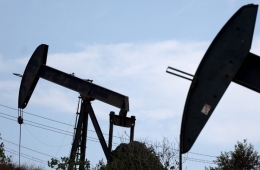
The slowdown in growth is mainly attributed to a decrease in investment in the private sector and real estate. It is analyzed that private companies reducing investment and production pulled down the overall GDP by 2.3 percentage points. The New York Times (NYT) pointed out that these are all sectors heavily influenced by interest rates. Since March last year, when the Fed began its rate hike cycle, it has raised the benchmark interest rate by 4.75 percentage points over the past year. This confirms that the historically high interest rates due to aggressive tightening are burdening the overall economy.
Consumption expenditure was the factor that at least drove positive growth. First-quarter consumption expenditure increased by 3.7%, proving the resilience of the US economy. Consumption, which accounts for two-thirds of the US real economy, is considered a comprehensive indicator for assessing overall economic health. The increase in consumption expenditure in the first quarter also expanded compared to the fourth quarter of last year (1%). Specifically, spending on services such as travel and dining continued to rebound from the lows recorded during the pandemic, and goods expenditure showed an upward trend after four consecutive quarters of decline. The NYT analyzed that a strong labor market and wage increases offset high inflation, supporting this consumption expenditure. During the same period, US exports also increased by 4.8%, surpassing the import growth of 2.9%.
![[Image source=EPA Yonhap News]](http://www.asiae.co.kr/news/img_view.htm?img=2023042800072114500_1682608042.jpg)
The key issue is the outlook. Even consumption expenditure, which currently supports the US economy, is showing a slowing trend toward the end of the quarter, darkening the prospects. Jeffrey Roach, Chief Economist at LPL Financial, said, “The US economy may be at a turning point,” adding “Consumers are becoming increasingly pessimistic about the future and are reducing their spending.” Ben Herson, an economist at S&P Global Market Intelligence, also expressed concern, saying, "I don't know how long the consumption expenditure growth can continue."
Concerns about a banking crisis that weighed on the market after last month's Silicon Valley Bank (SVB) incident have not yet dissipated. The consecutive failures of SVB and Signature Bank earlier were seen as cases confirming that the Fed's rapid tightening could damage not only the real economy but also the financial system. If banking sector lending regulations tighten further and lead to credit crunches, it will inevitably burden not only consumption expenditure but the overall economy. Leverage issues such as household loans and real estate, which have increased during the prolonged low-interest-rate environment, are also considered potential time bombs that could explode at any time.
Meanwhile, next week, the Federal Open Market Committee (FOMC) meeting is scheduled to decide whether to raise interest rates further. According to the Chicago Mercantile Exchange (CME) FedWatch, the federal funds futures market currently reflects an over 80% probability that the Fed will implement a baby step (a 0.25 percentage point increase in the benchmark interest rate) in May. If this happens, the US benchmark interest rate will rise to 5.0?5.25%. Prior to this, on the 28th, the Fed's preferred inflation indicator, the March Personal Consumption Expenditures (PCE) price index, is scheduled to be released.
After the first-quarter GDP announcement, concerns about 'stagflation' have also emerged on Wall Street. This is because the weak economic growth and high inflation signals were confirmed in the first-quarter GDP. The first-quarter PCE price index and core PCE price index rose by 4.4% and 4.9%, respectively. This is an increase from the previous quarter (PCE 3.7%, core PCE 4.4%). CNBC, an economic media outlet, reported, "The GDP report points to fears of stagflation," adding that stagflation in the 1970s and 1980s was characterized by low growth, high inflation, and high unemployment, with the current situation not yet including high unemployment. However, increasing corporate layoffs are also causing fear.
Hot Picks Today
 "Is Yours Just Gathering Dust at Home? Millenni...
- "Stock Set to Double: This Company Smiles Every Time a Data Center Is Built [Cli...
- "Continuous Groundwater Pumping Causes Mexico City to Sink 24cm Annually... 'Gia...
- "I Take Full Responsibility"... Seongjae Ahn Issues Direct Apology for 'Wine Swi...
- “She Shouted, ‘The Rope Isn’t Tied!’... Chinese Woman Falls from 168m Cliff ...
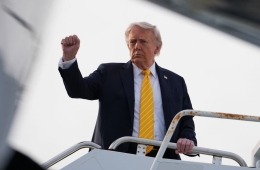
Meanwhile, US President Joe Biden stated in a statement on the day, "Despite the overall slowdown in growth, real disposable income for individuals increased in the first quarter, and American consumers continued to spend," adding, "The US economy remains strong amid a steady and stable growth transition." Having officially declared his candidacy for the 2024 presidential election earlier, President Biden emphasized, "My 'Investing in America' agenda is about rebuilding an economy that strengthens the middle class and lifts up those in need." This is interpreted as a defense of his economic policies amid growing recession concerns.
© The Asia Business Daily(www.asiae.co.kr). All rights reserved.