'77% of South Korea's Trade Deficit Last Year Due to This Country'... "Energy Controls Trade"
Korea Employers Federation: "Energy Import Unit Price Up 64.5%"
Total Import Unit Price Also Rises 20%
Increase in 3 Major Energy Imports (Approx. 103 Trillion Won)
Accounts for About 68% of Total Import Increase

Last year, South Korea recorded a trade deficit of $47.8 billion (approximately 63 trillion won), with an increase in energy import prices contributing to the rise in the deficit.
The Korea Employers Federation analyzed on the 13th in its report "Key Features and Implications of the 2022 Trade Balance" that last year's trade deficit was mainly due to a significant rise (20%) in import prices. In particular, the import prices of the three major energy sources?coal, oil, and gas?increased by 65.4% compared to the previous year (2021). The increase in imports of these three major energy sources amounted to $78.5 billion, exceeding 1.6 times the size of last year's trade deficit.
![[Photo by Korea Employers Federation]](http://www.asiae.co.kr/news/img_view.htm?img=2023041309004187203_1681344042.png)
Last year, South Korea recorded the largest trade deficit in its history. Total imports reached $731.4 billion, up 18.9% from the previous year. Meanwhile, exports amounted to $683.6 billion, increasing by only 6.1% compared to the previous year. Compared to 2017, when the trade surplus was at its highest ($95.2 billion surplus), imports increased by 52.7%, but exports only rose by 19.2%.
The Korea Employers Federation analyzed that the sharp rise in import prices last year had the greatest impact on the trade deficit. Analyzing changes in export and import prices and volumes compared to the previous year, overall import prices rose by 20%, while export prices increased by only 7.3%.
The organization reports that the significant rise in energy prices greatly influenced the increase in South Korea's import prices. Imports of the three major energy sources increased by $78.5 billion compared to the previous year. While import volume rose by 3.2%, import prices surged by 64.5%. Consequently, the increase in imports of the three major energy sources ($78.5 billion) accounted for 67.5% of the total increase in South Korea's imports ($116.3 billion) last year.
![[Photo by Korea Employers Federation]](http://www.asiae.co.kr/news/img_view.htm?img=2023041309005487205_1681344054.png)
Key export items such as memory semiconductors and electronic integrated circuits saw increases in both export prices (0.9%) and export volumes (2.3%) compared to the previous year. However, since the export price increase was lower than the exchange rate rise (12.9%), it did not significantly contribute to the trade balance.
Related Articles
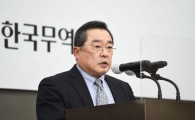 Gu Ja-yeol, Chairman of Muhyeop, "Low-interest financial support worth 50 billion won within this month"
The rise in energy prices is also evident in the trade balance by country. Among South Korea's five major trade deficit countries (Saudi Arabia, Australia, Japan, Qatar, Germany), the trade deficit with Saudi Arabia increased by 75.6% ($15.8 billion), from $21 billion in 2021 to $36.8 billion last year. On the other hand, the trade surplus with the five major surplus countries (Vietnam, the United States, Hong Kong, India, Singapore) increased by only 6% to $107.8 billion compared to the previous year.
![[Photo by Korea Employers Federation]](http://www.asiae.co.kr/news/img_view.htm?img=2023041309010487206_1681344064.png)
Ha Sang-woo, head of the Economic Research Department at the Korea Employers Federation, stated, "Last year, our economy recorded the largest trade deficit in history, and the trade deficit has continued into the first quarter of this year due to semiconductor export sluggishness and high energy prices, causing great concern among companies." He emphasized, "It is necessary for the government to actively support measures to help Korean companies discover and secure choke points (key materials or technologies that only a few countries or companies worldwide can possess) that will lead the global economy, thereby strengthening South Korea's export competitiveness in the restructured trade environment."
© The Asia Business Daily(www.asiae.co.kr). All rights reserved.







