'Economy Over Inflation'... Final Interest Rate at 3.5% Expected as Tightening Ends (Comprehensive Report 2)
Bank of Korea Holds Monetary Policy Direction Meeting
Decides to Freeze Rates for Two Consecutive Times
Influenced by Inflation Rate and Economic Slowdown
Annual Growth Rate Falls Below February Forecast (1.6%)
![[Image source=Yonhap News]](http://www.asiae.co.kr/news/img_view.htm?img=2023041109565684442_1681174616.jpg)
On the 11th, the Bank of Korea (BOK) decided to keep the base interest rate steady at 3.5% per annum during the Monetary Policy Committee meeting. The committee halted the rate hike streak that had lasted for one and a half years since February and decided to maintain the rate for two consecutive times this month, reinforcing the market view that the BOK's rate hike cycle has effectively come to an end.
At the monetary policy direction meeting held that day, the BOK's Monetary Policy Committee decided to keep the base rate at 3.50% per annum. Previously, the committee had raised the rate by 3.00 percentage points over 18 months since August 2021. In February this year, amid ongoing economic uncertainties, the rate was held steady to take a breather, and with the consecutive freeze this month, market expectations grew that the tightening phase is nearing its conclusion. With the BOK's decision to hold the rate steady, the interest rate gap with the United States (4.75~5.00%) remains at an upper limit of 1.5 percentage points.
The main reason for the BOK's decision to hold rates this month is the recent slowdown in consumer price inflation, which has gradually eased inflationary pressures. The consumer price inflation rate in March dropped to 4.2%, the lowest in a year and in the low 4% range, showing signs of easing inflation and weakening the need for further tightening. Park Seok-gil, an economist at JP Morgan, said, "Inflation is expected to stabilize gradually in the second half of the year," adding, "Given the increased uncertainty in international financial markets, it appears the BOK froze rates to wait for the stabilizing effects of previous hikes."
On the same day, BOK Governor Lee Chang-yong forecasted, "This year's growth rate will slightly underperform the February projection of 1.6%, and the consumer price inflation rate will fall to the 3% range after the second quarter, aligning with the annual forecast of 3.5% made in February." Governor Lee emphasized, "We will operate monetary policy carefully to ensure inflation stabilizes at the target level over the medium term while monitoring growth and paying attention to financial stability."
Decision to 'Hold' Due to Slowing Inflation and Domestic Economic Slowdown
In particular, the visible slowdown in domestic economic activity, including exports and domestic demand, also contributed to the decision to hold rates. With continued export sluggishness, South Korea's real GDP growth rate recorded a negative -0.4% in the fourth quarter of last year, and it remains uncertain whether the economy escaped contraction in the first quarter of this year. The current account deficit reached a record high of $4.52 billion in January, followed by continued deficits in February, sustaining the downturn.
Another factor behind the freeze was the easing expectations for further rate hikes by the U.S. Federal Reserve (Fed) due to global banking risks such as the Silicon Valley Bank (SVB) and Credit Suisse (CS) incidents. Kang Seung-won, a researcher at NH Investment & Securities, said, "The option for accelerated Fed tightening, which was a major reason for additional hikes, has effectively disappeared," adding, "With inflation falling below the BOK's forecast and a focus shifting to the economy, the BOK's rate hike cycle has already ended."
With the committee's decision to hold rates this month, the market is accepting the end of the rate hike cycle as a given. Joo Won, head of economic research at Hyundai Research Institute, said, "The rate hike cycle has effectively ended due to easing inflation and recession concerns," and predicted, "The BOK may start cutting rates in the second half of this year ahead of the U.S. Fed." On the other hand, Cho Young-moo, a research fellow at LG Economic Research Institute, forecasted, "The U.S. economy will enter a recession by mid-year, and the Fed's rate hikes will end in the first half. Given the historically wide interest rate gap between Korea and the U.S., Korea will find it difficult to cut rates before the U.S., and the BOK is unlikely to lower the base rate until the end of the year."
Record High Korea-U.S. Interest Rate Gap and Rising International Oil Prices as Variables

However, the possibility of further rate hikes has not been completely eliminated. With the BOK holding rates steady, the interest rate gap between Korea and the U.S. remains at 1.50 percentage points. If the U.S. Fed raises the base rate by 0.25 percentage points at the May Federal Open Market Committee (FOMC) meeting, the gap with the U.S. (5.00~5.25%) will widen to an upper limit of 1.75 percentage points. This would surpass the previous record high gap of 1.5 percentage points recorded from May to October 2000, setting a new historic high, which could become a burden. A wider interest rate gap with the U.S. could increase pressure on foreign investors to withdraw funds from the Korean won, which is not a global reserve currency, causing exchange rate volatility.
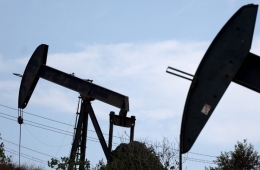
Another variable is the recent sharp rise in international oil prices following the production cut announcement by the Organization of the Petroleum Exporting Countries (OPEC) and the OPEC Plus (+) group, which includes Russia and other major non-OPEC oil producers. If oil prices rise again, airfares and transportation costs will surge, and energy prices such as electricity will also fluctuate, negatively impacting inflation. According to the New York Mercantile Exchange, the price of Dubai crude, one of the world's top three oil benchmarks, rose from $74.1 per barrel on the 24th of last month to $84.28 per barrel recently, while West Texas Intermediate (WTI) crude increased from $66.74 per barrel on the 17th of last month to around $80 per barrel.
Smaller oil-producing countries such as Iran, Norway, Kazakhstan, and Nigeria have increased production regardless of the production cut agreement, keeping international oil prices in the $80 per barrel range. However, this is considered a temporary factor, and there are many concerns that prices could rise further in the medium to long term. Kang Sam-mo, a professor of economics at Dongguk University, explained, "The government is shifting its focus more toward economic growth than inflation, and the BOK cannot completely ignore the government's concerns," adding, "If oil prices rise again and inflation does not show a downward stabilization trend, the BOK may resume rate hikes."
In fact, the BOK's stance is that it can end tightening on the premise that consumer price inflation will fall to the low 3% range by the end of this year and move toward the 2% target, which is based on the assumption that international oil prices will stabilize in the $70 to $80 per barrel range. If oil prices approach $100 per barrel as they did last year, the BOK's monetary policy will inevitably return to tightening. The government is also closely monitoring the impact of recent production cut decisions by oil-producing countries on oil prices and inflation. President Yoon Suk-yeol urged Prime Minister Han Duck-soo the day before to "carefully manage energy supply and demand and make thorough preparations for vulnerable groups," which is interpreted as a directive to respond so that rising oil prices do not burden the economy.
Persistent 'Core Inflation' Concerns

Although the overall inflation trend is slowing, the 'broad and sticky' phenomenon of inflation persistence continues. According to Statistics Korea, among 458 consumer price items last month, 395 items (86.2%) recorded price increases compared to a year ago. While the overall inflation rate is slowing, the number of items with higher prices has actually increased.
Core inflation, which reflects underlying price trends, is also not falling easily. Excluding petroleum products and agricultural products, core inflation rose 4.8% year-on-year last month, exceeding the consumer price inflation rate of 4.2%. Core inflation excluding food and energy, which the BOK uses as a key indicator, remained at 4.0%, unchanged from the previous month. Additionally, increases in public utility fees such as electricity and gas are cited as major variables. Although the second-quarter fee hikes were postponed, considering the worsening management of Korea Electric Power Corporation and Korea Gas Corporation, public utility fee increases seem inevitable.
However, as the economic recession is becoming more pronounced, some believe that despite rising oil prices and public utility fees, inflation is unlikely to surge again. Kim Young-ik, a professor at Sogang University Graduate School of Economics, said, "Even if oil-producing countries cut production, the U.S. is likely to enter negative growth centered on consumption from the second quarter, making a significant rise in oil prices difficult," adding, "It is appropriate to view the rate hike phase as nearing its end in both the U.S. and Korea."
Hot Picks Today
 "Is Yours Just Gathering Dust at Home? Millenni...
- "Stock Set to Double: This Company Smiles Every Time a Data Center Is Built [Cli...
- "Continuous Groundwater Pumping Causes Mexico City to Sink 24cm Annually... 'Gia...
- "I Take Full Responsibility"... Seongjae Ahn Issues Direct Apology for 'Wine Swi...
- “She Shouted, ‘The Rope Isn’t Tied!’... Chinese Woman Falls from 168m Cliff ...
Regarding the final interest rate, Governor Lee said, "Five of the Monetary Policy Committee members expressed the view that it is necessary to keep the possibility of 3.75% for the time being," and "One member believed that holding at 3.5% was appropriate." He elaborated that the reason five members kept the possibility of 3.75% open was twofold. He said, "Although the inflation slowdown trend will continue, we must consider the significant uncertainty that additional production cuts by oil-producing countries and public utility fee hikes could have on the inflation path in the second half," and "Secondly, we need to observe how major countries and the U.S. Fed will conduct monetary policy following the Silicon Valley Bank (SVB) incident." He added, "Current market expectations for the end of rate hikes and rate cuts are excessive," emphasizing, "It is inappropriate to mention rate cuts until inflation converges to the medium- to long-term target."

© The Asia Business Daily(www.asiae.co.kr). All rights reserved.