Due to rising oil prices, KOSPI slightly falls to the 2470s, exchange rate surges by 14.6 won
On the 3rd, the KOSPI closed in the 2470 range. The won-dollar exchange rate showed weakness in the won, rising sharply by 14.6 won in one day.
On that day, the KOSPI closed at 2472.34, down 4.52 points (0.18%) from the previous session. Individual investors net bought 478.6 billion won, but foreigners and institutions net sold 155.1 billion won and 341.9 billion won, respectively.
Among the top 10 groups by market capitalization in the KOSPI, Samsung Electronics closed at 63,000 won, down 1.41% from the previous trading day, and SK Hynix closed at 87,200 won, down 1.58%, showing a sluggish trend. While most stocks remained flat, POSCO Holdings closed at 392,000 won, up 6.52% in one day. This is interpreted as reflecting expectations for a recovery in steel demand and new businesses related to secondary battery materials such as lithium and nickel.
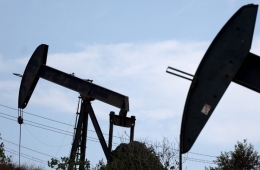
By industry, cyclical stocks such as non-metallic minerals (4.49%), steel and metals (3.90%), and construction (2.24%) showed top gains and losses. In particular, oil prices surged as OPEC Plus, a consultative group of major oil-producing countries including the Organization of the Petroleum Exporting Countries (OPEC) and Russia, announced voluntary production cuts. West Texas Intermediate (WTI) crude oil rose 8% intraday to $81 per barrel.
In the Seoul foreign exchange market that day, the won-dollar exchange rate closed at 1316.5 won, up 14.6 won from the previous session.
Unlike the KOSPI, the KOSDAQ closed at 854.96, up 7.44 points (0.88%) from the previous session. Individual investors and foreigners bought 102.3 billion won and 9.1 billion won, respectively, while institutions net sold 89.6 billion won. Top market cap stocks in the KOSDAQ such as EcoPro BM (3.34%), EcoPro (0.20%), and L&F (4.63%) showed an upward trend. On the other hand, Celltrion Healthcare (-1.99%), HLB (-3.31%), and Kakao Games (-1.08%) underperformed.
Hot Picks Today
!["Stock Set to Double: This Company Smiles Every Time a Data Center Is Built [Click e-Stock]"](https://cwcontent.asiae.co.kr/asiaresize/93/2026050416112750184_1777878687.jpg) "Stock Set to Double: This Company Smiles Every...
"Stock Set to Double: This Company Smiles Every...
- "Continuous Groundwater Pumping Causes Mexico City to Sink 24cm Annually... 'Gia...
- “She Shouted, ‘The Rope Isn’t Tied!’... Chinese Woman Falls from 168m Cliff ...
- Samsung Electronics Officially Decides to Withdraw Some Home Appliance Businesse...
- "Prime Minister in Underwear?"... Italy's Meloni Posts Herself to Warn of Deepfa...
Kim Seok-hwan, a researcher at Mirae Asset Securities, explained, "The won's weakness and foreigners selling more than 1 trillion won in futures during the session increased downward pressure on the KOSPI." He added, "However, as uncertainty eased with the announcement of detailed bills of the U.S. Inflation Reduction Act (IRA), secondary battery material stocks showed strength, helping the KOSDAQ maintain its upward trend."
© The Asia Business Daily(www.asiae.co.kr). All rights reserved.