Knee Disorders: Even Young People Should Not Be Careless as Cartilage Can Tear
If you do not use your knees much or if a young person feels pain, 'chondromalacia' should be suspected.
Knee-related diseases commonly occur due to degenerative conditions caused by aging, excessive joint use, or trauma. However, knee diseases such as chondromalacia can also occur in office workers who mainly sit and do not frequently use their knee joints.
It is especially known that women have a higher risk of occurrence due to frequently wearing high heels or excessive dieting.
If you have been sitting in a chair for a long time while working, it means that although you are not using your knee joints, you have maintained a bent knee posture for an extended period. In such cases, the surrounding muscles may weaken due to less knee use, and the risk of damage increases if sudden activity or impact occurs.
Chondromalacia of the knee refers to a condition where the cartilage located in the lower part inside the knee weakens, ranging from simple cartilage swelling to a damaged state where cracks occur throughout the entire thickness of the cartilage.
The main symptom is a dull pain in the front of the knee, often appearing after sitting in one position for a long time, such as watching a movie or sitting on a train or airplane for an extended period, and then standing up.
Pain tends to worsen when kneeling, squatting, using stairs, or performing weight-bearing activities. Additionally, a clicking sound may be heard from the knee when walking or standing up from a seated position.
![Knee pain. [Image source=Clipart Korea]](http://www.asiae.co.kr/news/img_view.htm?img=2023032817271369866_1679992033.jpg)
Dr. Seo Jin-hyeok, head of the Joint Center at Daedong Hospital, advised, “Some people neglect knee pain because they are young or have low activity levels, but cartilage has no regenerative ability, so secondary problems such as tearing or joint collision can occur. Therefore, it is best to get an early diagnosis and receive appropriate treatment.”
Knee chondromalacia can be diagnosed through patient consultation and radiological examinations such as X-rays or MRI. Under medical judgment, drug therapy such as anti-inflammatory analgesics or extracorporeal shock wave therapy can be performed.
Rehabilitation treatments such as thigh strengthening exercises and stretching can also be combined to prevent damage to weakened joints and strengthen the muscles around the knee.
If symptoms do not improve despite conservative treatment and are severe enough to interfere with daily life, surgery can be considered.
In particular, if there is an abnormality in knee alignment or shape, arthroscopy is used to check the cartilage condition inside the knee joint, correct the patella that is off-center, or perform treatment by drilling tiny holes to allow cartilage regeneration. In cases of severe cartilage damage, knee joint replacement surgery may be performed.
Hot Picks Today
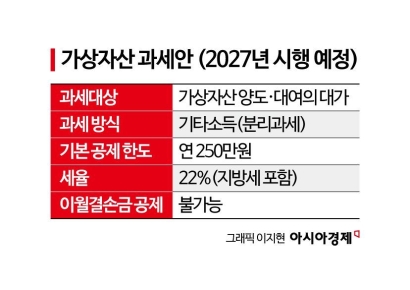 "Stocks Are Not Taxed, but Annual Crypto Gains Over 2.5 Million Won to Be Taxed Next Year... Investors Push Back"
- "Not Jealous of Winning the Lottery"... Entire Village Stunned as 200 Million Won Jackpot of Wild Ginseng Cluster Discovered at Jirisan
- "Rather Than Endure a 1.5 Million KRW Stipend, I'd Rather Earn 500 Million in the U.S." Top Talent from SNU and KAIST Are Leaving [Scientists Are Disappearing] ①
- "How Did an Employee Who Loved Samsung End Up Like This?"... Past Video of Samsung Electronics Union Chairman Resurfaces
- "Even With a 90 Million Won Salary and Bonuses, It Doesn’t Feel Like Much"... A Latecomer Rookie Who Beat 70 to 1 Odds [Scientists Are Disappearing] ③
To prevent knee chondromalacia, avoid postures that put strain on the knees, such as sitting cross-legged, bending the knees for long periods, or climbing steep slopes, and maintain a standard body weight. It is recommended to do exercises such as swimming and walking to strengthen the muscles around the knees.
© The Asia Business Daily(www.asiae.co.kr). All rights reserved.







