US Interest Rate Hikes Expected to Last 'Longer and Higher,' Say Securities Firms
Chairman Powell: "Final Interest Rate Will Be Higher Than Previous Forecast"
US Final Interest Rate Expected at 5.25~5.50% in June
US Economic Recession Expected in Q3...Intensity Likely Mild
Jerome Powell, Chairman of the U.S. Federal Reserve (Fed), reinforced tightening measures on the 7th (local time) by stating that "the terminal interest rate will be higher than previously predicted." During his semiannual monetary policy report to the Senate Banking Committee that day, Powell said, "Recent economic indicators have all come out stronger than expected," and made this remark. He explained, "This suggests that the terminal interest rate level may be higher than previously anticipated," adding, "If the overall data requires faster tightening, we are prepared to accelerate the pace of rate hikes."
In the domestic securities industry, revised forecasts are gaining traction that the U.S. terminal interest rate level will be higher than expected and that the timing of reaching it may be pushed beyond June. The initial expectation that rate hikes would conclude around this month has effectively disappeared. Although rate hikes are generally interpreted as negative for investor sentiment, analyses suggest that the impact will be limited due to the complex movements in the macroeconomic environment.
According to the financial investment industry on the 8th, Samsung Securities stated in a recently published economic analysis report that "at the March Federal Open Market Committee (FOMC) meeting, the 2023 dot plot, which effectively indicates the terminal rate, is expected to be revised upward by 25 basis points (1bp = 0.01 percentage point) from the previous 5.1% (upper bound 5.25%) to 5.4% (upper bound 5.50%)."
The current U.S. benchmark interest rate is 4.50?4.75%. Assuming a 25bp rate hike, the last hike would occur in June if the terminal rate reaches 5.25%. If a big step (a 0.5 percentage point increase in the benchmark rate) is taken at the FOMC meeting scheduled for the 21st?22nd, the timing could be earlier; however, considering the U.S. employment and other economic conditions, this possibility currently appears low.
Daishin Securities also projected in a recent report that "the timing of the U.S. recession entry has been delayed from the first quarter to the third quarter of this year," and "the global recession is likely to be mild." Although they did not specify the exact timing of rate hikes, the delay in recession entry suggests that the timing of changes in the Fed's monetary policy stance may also be postponed.
Heungkuk Securities expects the Fed to raise the benchmark rate by 25bp increments until May, reaching a terminal rate of 5.00?5.25%. This is 0.25 percentage points lower than the terminal rate suggested by Samsung Securities. However, Hyun-gi Chae, a researcher at Heungkuk Securities, added, "This is based on the assumption that the disinflation pace will accelerate in the second quarter compared to the first quarter, and ultimately, the uncertainty of monetary policy could extend until the May meeting."

Fed Chair Powell Suggests Possibility of Interest Rate Hike. Photo by Yonhap News
View original imageUltimately, the key depends on the trends of various U.S. economic indicators to be announced soon. The consensus on the rate hike size at the upcoming FOMC meeting this month is expected to be determined by the February employment and consumer price index data released on the 10th and 14th, respectively. Indicators that showed better-than-expected results in previous releases are judged to be due to seasonality, and if the trend returns to the previous slowdown, a baby step hike is almost certain. Since four additional employment and inflation data releases are scheduled by June, there remains significant uncertainty about when the rate hikes will stop.
Even if the U.S. rate hike trend extends somewhat, the market impact is expected to be limited compared to last year. Jin-wook Heo, a researcher at Samsung Securities, said, "Last year, when the global economy was experiencing a trend slowdown and inflation was surging simultaneously, the best investment strategy was to reduce allocations in both stocks and bonds and increase cash holdings. However, in the current situation where the global economic outlook is improving but the pace of inflation decline is slower than expected, the stock market's sensitivity to rate hikes is weaker than last year."
Hot Picks Today
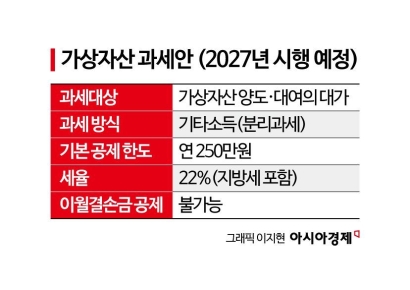 "Stocks Are Not Taxed, but Annual Crypto Gains Over 2.5 Million Won to Be Taxed Next Year... Investors Push Back"
- "Not Jealous of Winning the Lottery"... Entire Village Stunned as 200 Million Won Jackpot of Wild Ginseng Cluster Discovered at Jirisan
- "Even With a 90 Million Won Salary and Bonuses, It Doesn’t Feel Like Much"... A Latecomer Rookie Who Beat 70 to 1 Odds [Scientists Are Disappearing] ③
- "Rather Than Endure a 1.5 Million KRW Stipend, I'd Rather Earn 500 Million in the U.S." Top Talent from SNU and KAIST Are Leaving [Scientists Are Disappearing] ①
- "How Did an Employee Who Loved Samsung End Up Like This?"... Past Video of Samsung Electronics Union Chairman Resurfaces
He continued, "While rate hikes still increase concerns about valuation compression in the stock market, on the other hand, the improving global economic outlook helps alleviate worries about corporate profit declines." He also added, "In the U.S. Treasury market, the terminal rate forecast has risen by more than 50bp over the past month, already pricing in about a 40% chance of a 25bp hike in July. If the 25bp increase is made as expected in March, it is assessed that the possibility of it causing additional shocks to the financial market is limited."
© The Asia Business Daily(www.asiae.co.kr). All rights reserved.







