Resolution on '70th Anniversary of the Korea-US Alliance' Passed: "Strengthening Cooperative Relations"
Diplomacy and Security → Expansion of Economic Security and Technical Cooperation
"Efforts for Dialogue Must Continue While Deterring North Korea's Nuclear Threat"
[Asia Economy Reporter Jang Hee-jun] The National Assembly Foreign Affairs and Unification Committee held a plenary session on the 17th and passed the "Special Resolution Urging the Continued Development of Bilateral Relations Commemorating the 70th Anniversary of the Korea-US Alliance." This resolution commemorates the 70th anniversary of the Korea-US alliance, which began with the signing of the "Korea-US Mutual Defense Treaty" in 1953, and calls for strengthening the alliance and cooperative relationship not only in diplomacy and security but also in economic security and technology sectors.
The preamble of the resolution states, "The National Assembly reaffirms that the Korea-US alliance has been the foundation of South Korea's democratization and economic growth, and functions as a core axis of peace and prosperity on the Korean Peninsula, in the region, and globally. On the occasion of the 70th anniversary of the alliance, it declares domestically and internationally the need for a mutually beneficial expansion and development of the alliance relationship for the joint prosperity of both countries."
![Handshake between the South Korean and U.S. leaders <span>[Image source=Yonhap News]</span>](http://www.asiae.co.kr/news/img_view.htm?img=2022120217173138694_1669969051.jpg)
It also includes content urging the governments of both Korea and the US to further solidify cooperation in advanced semiconductors, quantum technology, AI, nuclear power, space sectors, and cyber security as an economic security and technology alliance, and to deepen economic and energy security cooperation including the stabilization of global supply chains.
Furthermore, expressing concern over North Korea's nuclear threat, the resolution calls on the governments of both Korea and the US to effectively deter the increasingly sophisticated nuclear and missile threats from North Korea, while simultaneously making substantial and continuous efforts to establish lasting peace through dialogue with North Korea. It also includes proposals to promote legal and institutional support to implement the "Global Comprehensive Strategic Alliance" agreed upon by the two heads of state last year, and to strengthen exchanges at the parliamentary level by proposing the formation of the "Korea-US Parliamentary Alliance."
Meanwhile, at the plenary session on the same day, the bill for the "Act on the Designation and Operation of Peace Economic Special Zones" (Peace Economic Special Zone Act), which allows the creation of economic special zones in border areas, was also passed. This bill aims to realize a South-North economic community through economic exchanges between South and North Korea.
Hot Picks Today
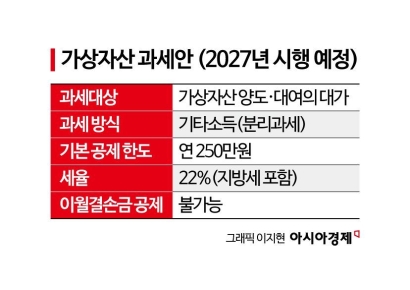 "Stocks Are Not Taxed, but Annual Crypto Gains Over 2.5 Million Won to Be Taxed Next Year... Investors Push Back"
- "Not Jealous of Winning the Lottery"... Entire Village Stunned as 200 Million Won Jackpot of Wild Ginseng Cluster Discovered at Jirisan
- "Rather Than Endure a 1.5 Million KRW Stipend, I'd Rather Earn 500 Million in the U.S." Top Talent from SNU and KAIST Are Leaving [Scientists Are Disappearing] ①
- "How Did an Employee Who Loved Samsung End Up Like This?"... Past Video of Samsung Electronics Union Chairman Resurfaces
- "Even With a 90 Million Won Salary and Bonuses, It Doesn’t Feel Like Much"... A Latecomer Rookie Who Beat 70 to 1 Odds [Scientists Are Disappearing] ③
The Peace Economic Special Zones are jointly designated by the Minister of Unification and the Minister of Land, Infrastructure and Transport upon request from city or provincial governors. Once designated as a Peace Economic Special Zone, benefits such as tax and levy reductions and financial support are provided to develop industrial complexes or tourism special zones. Expected areas include Incheon Ganghwa and Ongjin, Gyeonggi Gimpo, Goyang, Paju, Yeoncheon, Dongducheon, Pocheon, Yangju, and Gangwon Cheorwon, Hwacheon, Yanggu, Inje, Goseong, and Chuncheon.
© The Asia Business Daily(www.asiae.co.kr). All rights reserved.