[Report] University Area Restaurants Quiet Down Due to Rising Prices
Visiting Seoul Sinchon Yonsei-ro Hit Hard by High Prices
Youths "Cook Instead of Eating Out" "Drink Less Coffee"
Self-Employed "Worried About Raising Menu Prices"
[Asia Economy Reporter Hwang Seoyul] "Both we who run the restaurant and the customers who come to eat definitely feel the impact of rising prices. Since this place is near a university area, we couldn't raise food prices, so we reduced the number of side dishes by one or two. We're holding on with loans, but it's bleak as to how long we can manage."

On the afternoon of the 3rd, I visited the Yeonse-ro area. Although it was around lunchtime, only cars were passing through the streets.
Photo by Hwang Seoyul chestnut@
At 12 PM on the 3rd in Sinchon Yonsei-ro, Mapo-gu, Seoul. This area, where universities such as Yonsei University, Ewha Womans University, and Sogang University are gathered, was quiet with only a handful of people passing by despite lunchtime starting. As dining-out prices continue to rise, even the restaurant districts near university areas, considered relatively affordable, are seeing fewer visitors. With a decrease in customers and rising ingredient costs, self-employed business owners met on-site were also contemplating whether to raise prices. Mr. Lee (53), who has been running a business targeting students here for over 10 years, complained that due to soaring prices, he had no choice but to reduce the side dishes served. Mr. Eom Yangheum (42), who runs a donburi restaurant nearby, also said, "Lunch business has been meaningless for almost a week," adding, "The only conversations with nearby merchants on KakaoTalk are things like 'Is something going on today? Why aren't customers coming?'"
According to Statistics Korea, last year's consumer price index was 107.7, up 5.2 points from the previous year (102.5). Considering that the index rose 4.9 points over four years from 2017 (97.6) to 2021, it is clear that prices have been rising sharply recently. As prices rise significantly, the dining habits of the demand group using university areas are changing greatly. Citizens said they choose cheaper menus to reduce expenses even slightly. Baek Dongjun (18), a student preparing for exams nearby, hinted, "To save costs, I mainly buy kimbap at snack bars or try to keep my food expenses under 10,000 won." University student Hwang Mia (25) also said, "When choosing a menu, if I eat alone, I tend to pick cheaper food."

There were no people on Sinchon Yonsei-ro, a street lined with restaurants. Some stores were also closed during lunchtime.
Photo by Seoyul Hwang chestnut@
Some citizens said they have significantly reduced dining out frequency. Hwang Hyeji (27), an office worker living alone nearby, said, "Sometimes I have a meal with the lunchbox provided at work." She added, "I usually didn't cook much, but now I try to cook as much as possible," and "Since ingredient prices have risen a lot, there are about three supermarkets nearby, but I only use the cheapest one continuously." Last month, the consumer price indices for vegetables, livestock products, seafood, and processed foods rose by 5.5%, 0.6%, 7.8%, and 10.3% respectively compared to the same month last year.
Beverage prices, including coffee, also rose, making the burden considerable. Last month, the consumer price index for coffee rose 17.5% compared to the previous month. Takeout coffee shops, known for their cost-effectiveness, recently raised prices by a few hundred won. University student Park Jisoo (26) said, "When I eat alone, I try not to have coffee as a dessert and go straight home." Baek also said, "Recently, my monthly coffee expenses seem to have increased by about 10,000 won compared to before."
Hot Picks Today
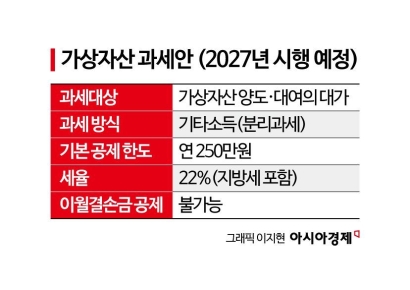 "Stocks Are Not Taxed, but Annual Crypto Gains Over 2.5 Million Won to Be Taxed Next Year... Investors Push Back"
- "Not Jealous of Winning the Lottery"... Entire Village Stunned as 200 Million Won Jackpot of Wild Ginseng Cluster Discovered at Jirisan
- "Even With a 90 Million Won Salary and Bonuses, It Doesn’t Feel Like Much"... A Latecomer Rookie Who Beat 70 to 1 Odds [Scientists Are Disappearing] ③
- "Rather Than Endure a 1.5 Million KRW Stipend, I'd Rather Earn 500 Million in the U.S." Top Talent from SNU and KAIST Are Leaving [Scientists Are Disappearing] ①
- "How Did an Employee Who Loved Samsung End Up Like This?"... Past Video of Samsung Electronics Union Chairman Resurfaces
Self-employed business owners are troubled not only by the reduced consumption of the university demand group but also by rising ingredient costs. Mr. Eom said, "For example, salmon was 11,000 won per kg at the beginning of COVID-19, but now it's 20,000 won," adding, "I raised prices once in April last year, but with prices rising again recently, I'm considering whether to raise prices again." Mr. Jung Seokwon (37), who runs a takeout snack bar, said, "Although customers haven't decreased significantly because it's a takeout store, the prices of main ingredients like mayonnaise and tuna have steadily increased over the past year, greatly reducing profit margins."
© The Asia Business Daily(www.asiae.co.kr). All rights reserved.







